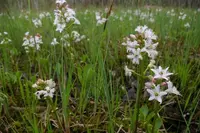
white arrow arum Care (Peltandra sagittifolia)

white arrow arum

About white arrow arum

White arrow arum, Peltandra sagittifolia, is a semi-aquatic perennial native to wetlands and slow-moving waters in the southeastern United States. It typically grows along pond edges, marshes, and shallow streams. The plant forms clumps of upright, arrow-shaped leaves on thick stalks, creating a bold, architectural look near water features. In season, it produces pale, hooded flower structures followed by decorative seed clusters. This species is adapted to consistently wet or shallowly flooded conditions and does best in rich, mucky or loamy substrates. For gardeners who want to care for white arrow arum successfully, the key challenges are providing enough moisture and avoiding dry, compacted soil.

Main Plant Requirements

Care Difficulty

Moderate Care

Light Preference

Partial Shade

Water Requirements

Aquatic

Temperature Preference

Warm Climate

Hardiness Zone

7–10

Soil Texture

Loamy, Silty, Organic-rich

Soil pH

Acidic (5.5–6.5), Slightly acidic (6.5–7.0)

Soil Drainage

Waterlogged tolerant

Fertilization

Minimal (feed rarely)

Get Personalized Care Plan

Scan your plant to receive care tips personalized for your specific plant

Available on iOS and Android

How to Care for the white arrow arum

This wetland aroid prefers bright conditions with gentle, filtered exposure rather than harsh direct sun.

  • Provide 4–6 hours of bright, indirect light or light dappled sun, ideally with morning sun and afternoon shade along a pond edge or boggy area.
  • Plant white arrow arum where taller plants or reeds cast partial shade, especially during the strongest midday sun in summer to prevent leaf scorch.
  • In cooler seasons, allow more open sky exposure, but in hot climates increase shade to maintain leaf color and prevent yellowing from light stress.

This semi-aquatic species thrives in consistently saturated conditions rather than fluctuating wet–dry cycles.

  • Grow along pond margins, slow streams, or in bog gardens where roots stay submerged or in soil that remains constantly wet without drying out between waterings.
  • If grown in very wet garden soil, surface should feel wet or lightly puddled; avoid letting the top 2–3 cm dry out, which leads to wilting or browning edges.
  • Signs of overwatering are rare in true bog or pond settings, but foul odor or rotting rhizomes indicate stagnant, low-oxygen water that needs better circulation.

This wetland perennial prefers mild to warm conditions and is sensitive to hard frost.

  • Best growth occurs at 68–80°F (20–27°C), when leaves expand quickly and the plant actively produces new shoots in shallow warm water or saturated soil.
  • Avoid temperatures below 40°F (4°C); Peltandra sagittifolia foliage is damaged by frost, and rhizomes may die if exposed to prolonged freezing in shallow, unprotected sites.
  • In hot periods above 90°F (32°C), ensure ample water depth or constant saturation so the root zone stays cooler, which helps prevent stress and leaf collapse.

This semi-aquatic species prefers high humidity and stays healthiest in consistently moist air.

  • Aim for 60–90% humidity, matching the naturally swampy habitat of white arrow arum.
  • It tolerates brief dips to 40–50%, but prolonged dry air leads to browning leaf tips and curling edges.
  • Increase humidity with nearby water trays, grouped plants, or a humidifier rather than misting, which adds little long-term moisture.

This plant thrives in saturated, organic-rich substrates rather than typical potting soils.

  • Use a heavy loam rich in organic matter, such as garden loam mixed with compost and leaf mold, to mimic marsh soil.
  • Allow little to no drainage in pond baskets or tubs so the root zone stays constantly wet or shallowly submerged.
  • If grown in a pot with drainage, stand the pot in a watertight outer container kept filled to just below the rim to maintain saturation.
  • Avoid sandy, fast-draining, or highly compacted mixes and keep pH roughly neutral to slightly acidic, around 6.0–7.0, for best nutrient uptake in Peltandra sagittifolia.

This species can grow in containers if the setup maintains constant root-zone saturation and stability.

  • Choose a wide, weighty container or aquatic basket to prevent tipping as foliage and flower stalks gain height and act like sails in wind.
  • Select non-porous materials such as plastic or glazed ceramic when possible, as they slow evaporation and help keep the root zone waterlogged.
  • Use an outer reservoir tub deep enough to cover most of the inner pot, ensuring the water line consistently reaches the root area without overflowing the plant crown.

This wetland species grows in nutrient-rich substrates and benefits from modest, targeted feeding when grown in controlled conditions.

  • Use a balanced, slow-release aquatic or general-purpose fertilizer (for example 10-10-10) at low label rates in spring and early summer.
  • Feed container-grown white arrow arum about every 6–8 weeks during active growth, skipping doses if foliage looks very dark green or growth is soft.
  • Dilute liquid feeds to 1/2–1/4 strength, applying to the water or substrate, never directly onto leaves.
  • Stop fertilizing in late summer to early fall so plants can slow growth naturally before dormancy.

Pruning needs for Peltandra sagittifolia are light and mainly focused on sanitation and keeping clumps tidy.

  • Best time for pruning is late winter to early spring, before strong new growth starts.
  • Remove dead, yellowing, or damaged leaves at the base using clean, sharp pruners to limit disease entry.
  • Thin out crowded or leaning shoots to improve air flow and maintain a stable, upright clump form.
  • Avoid heavy cutting into healthy green tissue, as this reduces leaf area and can weaken the rhizomes over time.

This rhizomatous wetland plant is more often transplanted in ponds or bog gardens than repotted as a houseplant.

  • Plan transplanting for early spring when water is warming and new growth just starts, minimizing shock.
  • Move plants when clumps become congested, growth slows, or roots circle within aquatic baskets or containers.
  • Lift the clump gently, keeping as much root and rhizome system intact as possible, and replant at the same depth in rich, mucky soil.
  • Water or flood the new site immediately after planting to remove air pockets and help roots re-establish quickly.

Propagation of this species is usually done by division of rhizomes rather than from seed for reliable results.

  • Divide mature clumps in early spring as new shoots appear, when plants are naturally ready to resume growth.
  • Lift the clump and cut rhizomes into sections, each with at least 1–2 healthy buds and a portion of roots.
  • Replant divisions into saturated, organic-rich soil, setting rhizomes just below the surface for stable anchoring.
  • Keep water levels consistent and temperatures mild, as fluctuating conditions slow establishment and new root formation.

In suitable climates this hardy aquatic needs limited winter care once established in a pond or consistently wet site.

  • Plants tolerate typical temperate frosts if rhizomes remain below the freeze line in mud or submerged soil.
  • Allow foliage to yellow and die back naturally, then trim spent leaves to reduce decaying material in the water.
  • In colder regions, mulch shallow plantings with 5–8 cm of wet leaves or straw to insulate the crown.
  • Move container-grown plants into a frost-free but cool space, keeping the substrate just wet enough to prevent complete drying.

Care Tips

Aquatic Container Setup

Grow plants in wide, shallow tubs or ponds with 10–20 cm of still or very slow-moving water above the soil surface to keep rhizomes submerged but leaves well above water level.

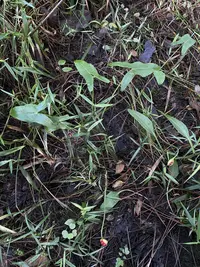
Rhizome Division Timing

Divide rhizomes only in late spring, when new growth starts, cutting clean sections with at least 2–3 healthy buds and replanting them immediately to avoid desiccation.

Edge Containment

Install solid plastic or rubber barriers 20–30 cm deep around planting zones in lined ponds or bog beds to limit rhizome spread and keep the plant from invading nearby areas.

Nutrient Control Strategy

In lined ponds, place the plant in heavy loam inside fabric or perforated baskets and top with washed gravel so nutrients stay near the roots instead of clouding the water or favoring algae.

Cold-Weather Protection

In colder regions, overwinter containers by sinking them into the deepest frost-free part of a pond or moving them into an unheated but sheltered space where the water does not freeze solid, which is essential when caring for white arrow arum long term.

Common Pests and Diseases

Leaf spot fungi

This disease causes brown to black water-soaked spots that often enlarge and merge on the foliage, especially on older or shaded leaves. Symptoms include premature yellowing and deterioration of the leaf blade along pond or bog margins.

Solution

Remove and discard badly affected leaves to reduce inoculum, and avoid overhead watering or splashing that keeps foliage wet for long periods. Improve spacing and water movement around the clump, and if the problem is persistent in ornamental plantings, use a labeled broad-spectrum fungicide for aquatic or marginal plants according to local regulations.

Bacterial soft rot

This disease leads to soft, foul-smelling, water-soaked areas at the base of petioles and rhizomes, often causing entire shoots to collapse in warm, stagnant water. Symptoms include mushy tissue and a noticeable odor when affected parts are disturbed.

Solution

Cut out and discard all rotted tissue and any obviously infected rhizome segments, and thin dense stands to improve water circulation and oxygen levels. Avoid mechanical injury when dividing or moving plants, disinfect cutting tools between plants, and maintain cleaner, less nutrient-overloaded water to reduce bacterial buildup.

Aquatic snails

These pests chew irregular holes and notches in leaves, sometimes skeletonizing young foliage along pond edges. This pest is often more active at night and may hide under debris or at the waterline during the day.

Solution

Hand-pick snails at dusk or early morning and remove egg masses from plant stems, pots, and pond walls. Reduce hiding places by clearing decaying plant matter, and if necessary, use snail barriers or targeted, pond-safe molluscicides labeled for aquatic use, applied exactly as directed.

Caterpillars

These insects feed on the leaf blades, leaving ragged edges, large holes, or sections eaten down between veins. This pest may be more prevalent where the plant grows near natural wetlands with abundant moth or butterfly populations.

Solution

Inspect foliage regularly and hand-remove caterpillars where practical, especially on smaller ornamental groupings. Encourage natural predators such as birds, and if defoliation becomes severe, use a biological control like Bacillus thuringiensis (Bt) labeled for aquatic-safe use, applied in calm conditions to limit drift into open water.

Interesting Facts

Specialized wetland habitat

This species is naturally restricted to shallow, slow-moving blackwater streams, swamps, and floodplain wetlands of the southeastern United States, where it grows rooted in saturated soils or standing water rather than on dry ground.

Arrow-shaped leaf adaptation

The strongly sagittate (arrow-shaped) leaves and sturdy petioles shed flowing water efficiently and resist damage from periodic flooding, an adaptation that helps the plant remain stable in current-prone aquatic habitats.

Insect-guided pollination

Like many aroids, this plant uses a spadix and surrounding spathe to guide small pollinating insects, which visit the inflorescences in sequence and help transfer pollen between separate flowering individuals.

FAQs about white arrow arum

Lack of flowering usually comes from insufficient maturity, low light, or poor nutrition. This wetland species needs strong growth in a consistently moist, nutrient-rich substrate before it diverts energy to flowers, which may remain modest even in good conditions.

Grow Healthy Plants with Botan Care

Keep your plants happy and healthy with plant identification, disease detection, and easy care guidance.

Botan plant care app — identify plants on mobile

Explore More Plants