Substrate anchoring
Press small pieces of the thallus gently onto rough, stable surfaces like damp bark or porous rock so the lichen can form good contact and develop its own attachment structures instead of sliding or drying at the edges.

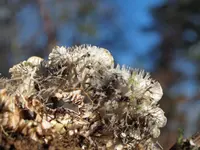
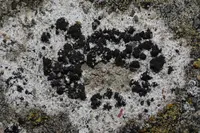
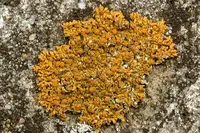
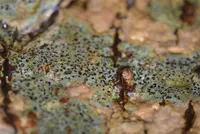
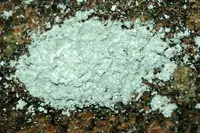
Felt lichen, Peltigera praetextata, is a foliose lichen, not a true plant, formed by a partnership between a fungus and photosynthetic algae or cyanobacteria. It grows as soft, felt-like, overlapping lobes that spread across soil, moss, rocks, or decaying wood, often forming dull gray to brown patches with pale margins.
This species commonly occurs in temperate regions, especially in moist, shaded forests, along paths, and in mossy lawns or woodland gardens. It is sensitive to air pollution and disturbance, which makes it slower to establish.
Those who care for felt lichen usually focus on providing stable moisture, good air quality, and low disturbance in a cool, shaded site with organically rich, undisturbed substrate.

Care Difficulty
Hard Care

Light Preference
Partial Shade

Water Requirements
Keep Soil Moist

Temperature Preference
Cold Hardy

Hardiness Zone
3–8

Soil Texture
Loamy, Silty, Organic-rich

Soil pH
Strongly acidic (4.5–5.5), Acidic (5.5–6.5)

Soil Drainage
Moist but well-drained

Fertilization
Minimal (feed rarely)
Scan your plant to receive care tips personalized for your specific plant
Available on iOS and Android
This lichen prefers cool, low-intensity light similar to shaded forest or rock habitats.
This species requires consistently moist conditions but is sensitive to prolonged saturation or complete drying.
This lichen is cold tolerant but performs best in cool to mild conditions without extreme heat or rapid freeze–thaw cycles.
This lichen requires consistently high ambient humidity and quickly declines in dry air.
Peltigera praetextata grows on stable, moist, organic-rich substrates rather than standard potting soil.
This species can survive in containers only as a specialized display that closely copies its natural substrate.
Peltigera praetextata gains most nutrients from rainwater and its habitat, so added fertilizer is rarely necessary.
Peltigera praetextata requires almost no pruning, since lichen thalli stay low and expand slowly.
This lichen is best established on stable outdoor substrates rather than kept as a potted specimen.
Peltigera praetextata spreads mainly by natural fragmentation, and intentional propagation is slow and specialized.
This lichen is very cold hardy and normally needs no specific winter care in outdoor settings.

Plant Health Check
Not sure what's wrong with your plant? Check your plant's health inside the app.
The lobes of this lichen have a characteristic pale, often whitish to bluish-gray margin that contrasts with the darker center, which helps distinguish it from other Peltigera species in the field.
It partners primarily with a green alga in the genus Coccomyxa, forming a foliose thallus whose color and growth pattern depend strongly on this specific photobiont association.
Dark, wart-like cephalodia on the thallus house cyanobacteria that fix atmospheric nitrogen, allowing this species to enrich low-nutrient substrates such as soil over rocks or decaying wood.

This species is widely used as a reference taxon in lichenological surveys across temperate North America and Europe because its diagnostic pale margin and cephalodia make it a reliable indicator for training and testing lichen identification skills.
Growth is slow. Thallus segments usually extend only a few millimeters per year, even in good conditions. Moist, cool, shaded sites with clean air support the best development, so patience is essential when growing felt lichen on purpose.
Keep your plants happy and healthy with plant identification, disease detection, and easy care guidance.