Early structural training
Select 1 strong central leader in the first 2–3 years and remove closely competing uprights or narrow crotch branches to build a stable framework for this fast-growing tree.

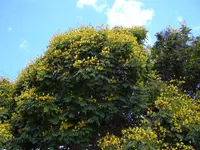
Peltophorum pterocarpum, often called yellow flame tree or copperpod, is a fast-growing tropical tree known for its bright yellow flower clusters and wide, umbrella-like crown. It is commonly used as a shade and avenue tree in warm coastal and subtropical regions.
The tree has fine, fern-like leaves and forms decorative brown seed pods after flowering, giving it strong ornamental value in streetscapes and large gardens. It naturally occurs in South and Southeast Asia and adapts best to consistently warm, frost-free climates.
This species prefers full sun, moderate moisture, and well-drained soil, and it can tolerate some drought once established. These traits make it relatively straightforward to care for peltophorum in suitable outdoor conditions.

Care Difficulty
Moderate Care

Light Preference
Full Sun

Water Requirements
Moderate Water

Temperature Preference
Tropical / Frost Sensitive

Hardiness Zone
10–12

Soil Texture
Sandy, Loamy, Organic-rich

Soil pH
Acidic (5.5–6.5), Slightly acidic (6.5–7.0)

Soil Drainage
Well-drained

Fertilization
Minimal (feed rarely)
Scan your plant to receive care tips personalized for your specific plant
Available on iOS and Android
This fast-growing tropical tree depends on strong sunlight for dense foliage and abundant flowering.
This tree prefers evenly moist, well-drained soil while establishing, then becomes moderately drought tolerant.
This species thrives in consistently warm, frost-free climates and slows growth when temperatures drop.
This species prefers warm, moderately humid air but tolerates short dry spells once established.
Soil should be loose, draining, and moderately fertile to support fast growth and deep rooting.
This tree can be grown in large containers for its early years if managed for space and stability.
This tropical tree benefits from light, balanced feeding during its active warm-season growth, especially in poor soils.
Pruning helps maintain structure, clearance, and flowering performance on Peltophorum pterocarpum, especially in landscapes or streetscapes.
This fast-growing tree is usually transplanted from containers to the landscape when young, then left undisturbed.
New Peltophorum pterocarpum plants are most often raised from seed, which is straightforward under warm conditions.
This tropical species is frost-sensitive and needs protection in regions with cool or cold winters.

Plant Health Check
Not sure what's wrong with your plant? Check your plant's health inside the app.
This species produces large, hanging clusters of yellow, crinkled flowers that often bloom almost simultaneously, creating a striking canopy effect that leads to its common name golden flame tree or yellow flamboyant.
Like many legumes, it forms root nodules that host nitrogen-fixing bacteria, allowing the tree to enrich poor soils and support surrounding vegetation in tropical coastal and urban landscapes.
The tree naturally occurs in coastal areas of South and Southeast Asia and shows good tolerance to wind and salt spray, which is why it is frequently planted as a street and shade tree in tropical seaside cities when growing peltophorum.

In several South and Southeast Asian regions, its durable, brownish heartwood has been used traditionally for construction, carts, and furniture, while the bright yellow flowers have served as natural dyes for textiles and ceremonial purposes.
This species is generally fast-growing in warm climates, often adding 60–120 cm of height per year once established. Growth slows in poor soil, cool temperatures, or when roots are restricted, such as in small containers.
Keep your plants happy and healthy with plant identification, disease detection, and easy care guidance.