Encourage Deep Roots
In the first growing season, irrigate less frequently but deeply to encourage a taproot that anchors plants against wind and improves long-term drought tolerance.

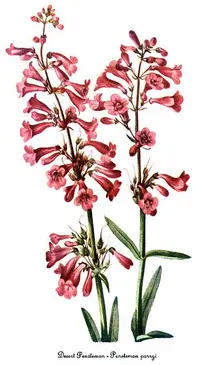
Parry's beardtongue (Penstemon parryi) is a short-lived perennial wildflower native to the desert regions of Arizona and northern Mexico. It forms clumps of narrow, gray-green leaves at the base. Tall flower spikes rise above the foliage, carrying tubular pink to rose flowers that attract hummingbirds and native pollinators. Plants usually bloom in late winter to spring in mild, dry climates. This species prefers full sun, fast-draining soil, and low to moderate water, which reflects its desert origin. Once its needs are understood, it is relatively straightforward to care for Parry's beardtongue in suitable climates.

Care Difficulty
Moderate Care

Light Preference
Full Sun

Water Requirements
Low Water

Temperature Preference
Warm Climate

Hardiness Zone
8–10

Soil Texture
Sandy, Loamy, Rocky

Soil pH
Slightly acidic (6.5–7.0), Slightly alkaline (7.0–7.5)

Soil Drainage
Well-drained

Fertilization
Minimal (feed rarely)
Scan your plant to receive care tips personalized for your specific plant
Available on iOS and Android
This desert perennial thrives in strong light and needs full sun in most climates.
This species is drought-tolerant and prefers deep, infrequent watering once established.
This desert native handles a wide temperature range but grows best in mild to warm conditions.
Humidity is rarely a concern for Penstemon parryi, which is adapted to dry desert air.
Penstemon parryi prefers lean, sharply drained soil that mimics rocky desert slopes.
This species can be grown in containers if drainage is extremely fast and the root zone stays airy.
This desert native needs very light feeding, as excessive nutrients reduce flowering and stress Penstemon parryi.
Thoughtful pruning supports vigorous growth and prolonged flowering in Penstemon parryi.
This species is usually grown in the ground; transplanting young plants carefully matters more than frequent repotting.
New plants are most often raised from seed, though short-lived clumps can also be renewed over time.
This species is fairly cold hardy in its native range and usually needs minimal winter attention.

Plant Health Check
Not sure what's wrong with your plant? Check your plant's health inside the app.
This species is native to the Sonoran Desert of southern Arizona and northern Mexico, where it exploits winter and early spring moisture to complete its flowering cycle before intense summer heat.
Its tubular, bright pink to rose flowers are shaped and positioned to favor hummingbird pollination, with nectar deep in the tube and strong stems that support repeated visits.
Seeds typically germinate with cool-season rains, and the plant forms a rosette and root system in winter, allowing rapid vertical growth and flowering in late winter to mid-spring when conditions are still relatively mild.

Parry's beardtongue often acts as a short-lived perennial or biennial in the wild, building a rosette in its first cool season and then producing a single, dramatic flowering display up to about 90 cm tall before declining, which helps it exploit brief favorable periods in its harsh desert habitat.
This species usually blooms in late winter to spring, often from February to April in warm climates. Flowering lasts several weeks, especially if plants are not overwatered and old stalks are removed after seeds mature.
Keep your plants happy and healthy with plant identification, disease detection, and easy care guidance.