Rhizome Division Timing
Divide established clumps in early spring just as new shoots emerge, keeping divisions with at least 2–3 growing points and replanting them immediately at the same depth to maintain vigor and uniform groundcover.

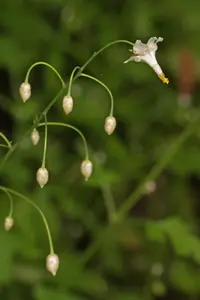
The white insideout flower, Vancouveria hexandra, is a low-growing woodland perennial valued for its delicate, airy look. It forms spreading mats of soft, divided foliage that stay attractive through the growing season.
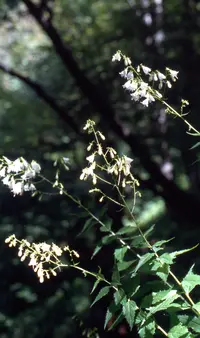
In late spring, it produces small white flowers held above the leaves on thin stems, giving a light, cloudlike effect in shaded beds. This species is native to the Pacific Northwest of North America, where it grows in cool, moist forests.
It is generally considered an easy, low-maintenance plant if given consistent moisture, shade to part shade, and humus-rich, well-drained soil. These traits make it straightforward to care for white insideout flower in suitable garden conditions.

Care Difficulty
Easy Care

Light Preference
Partial Shade

Water Requirements
Moderate Water

Temperature Preference
Cold Hardy

Hardiness Zone
5–7

Soil Texture
Loamy, Silty, Organic-rich

Soil pH
Acidic (5.5–6.5), Slightly acidic (6.5–7.0)

Soil Drainage
Moist but well-drained

Fertilization
Minimal (feed rarely)
Scan your plant to receive care tips personalized for your specific plant
Available on iOS and Android
This woodland groundcover thrives in cool, dappled conditions that mimic a light forest canopy.
This species prefers consistently moist but not saturated soil, especially during active spring growth.
This woodland perennial is cold hardy and prefers cool to mild conditions.
This woodland perennial handles a wide humidity range and rarely needs special adjustment outdoors.
This species prefers loose, humus-rich woodland-type soil that stays evenly moist but never soggy.
This species can grow in containers but performs best when conditions mimic cool, moist woodland soil.
This woodland perennial needs only light feeding in average garden soil.
Pruning needs for Vancouveria hexandra are minimal and mainly cosmetic.
This species is usually grown in the ground and is moved only when clumps outgrow their space.
New plants are most often produced by division, with seed used less commonly.
This hardy woodland perennial usually needs very little specific winter care in most temperate gardens.

Plant Health Check
Not sure what's wrong with your plant? Check your plant's health inside the app.
This species is native to the moist, deciduous and mixed forests of the Pacific Northwest, where it naturally forms low, spreading colonies under maples, Douglas-fir, and other canopy trees on cool, humus-rich soils.
Its seeds have small, nutrient-rich appendages called elaiosomes that attract ants, which carry the seeds away from the parent plant and help disperse them, a process known as myrmecochory.
The nodding white flowers appear with the petals reflexed backward and the inner structures pointing outward, giving rise to the common name inside-out flower and making it easy to recognize among woodland perennials.

Vancouveria hexandra is one of only a few species in a very small genus endemic to western North America, and molecular studies place it within the barberry family (Berberidaceae), making it a relatively unusual woodland groundcover compared with the more typical members of that family.
This species spreads slowly to moderately by rhizomes, forming loose colonies rather than dense mats. It is usually considered a polite ground cover and rarely becomes a nuisance when given partial shade and average garden care.
Keep your plants happy and healthy with plant identification, disease detection, and easy care guidance.