Use shallow pots
Choose wide, shallow pots with generous drainage holes so the shallow root system can spread horizontally and the trailing stems can drape cleanly over the rim without staying soggy at the base.

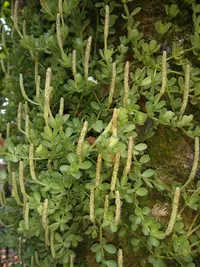
Peperomia berlandieri, often called the watermelon peperomia or trailing peperomia, is a compact, succulent-like houseplant in the pepper family. It naturally occurs in parts of Mexico, where it grows in warm, shaded habitats.
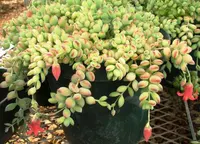
The plant forms low, trailing stems with small, elongated leaves that often have reddish undersides, making it suitable for hanging pots or shallow containers. Its semi-succulent leaves store water, so it tolerates short dry periods and is not demanding.
This species prefers bright, indirect light, a free-draining potting mix, and moderate moisture without waterlogging. These traits make it relatively straightforward to care for Peperomia berlandieri in typical indoor conditions.

Care Difficulty
Easy Care

Light Preference
Bright Indirect Light

Water Requirements
Moderate Water

Temperature Preference
Tropical / Frost Sensitive

Hardiness Zone
10–12

Soil Texture
Loamy, Peaty, Organic-rich

Soil pH
Acidic (5.5–6.5), Slightly acidic (6.5–7.0)

Soil Drainage
Well-drained

Fertilization
Light (every 4–6 weeks)
Scan your plant to receive care tips personalized for your specific plant
Available on iOS and Android
This trailing species prefers bright, indirect light with brief periods of gentle direct sun.
This plant prefers light, even moisture with partial drying between waterings.
This species prefers warm, stable conditions without abrupt temperature swings.
This species handles typical indoor humidity but benefits from slightly raised levels.
Peperomia berlandieri prefers a light, airy mix that drains quickly yet holds some moisture.
This trailing species is well suited to container and hanging basket culture.
This compact species stays healthy with light, dilute feeding during its active months.
Light pruning helps maintain a compact, trailing form and removes weak growth.
This plant prefers slightly snug pots and only occasional repotting.
Propagation is commonly done from stem cuttings taken during the growing season.
This species is frost-sensitive and needs mild, stable conditions in winter.

Plant Health Check
Not sure what's wrong with your plant? Check your plant's health inside the app.
This species is native to dry rocky habitats in northeastern Mexico and southern Texas, where it grows as a small trailing subshrub among stones and sparse vegetation.
It has unusually thin, wiry, red to maroon stems with small, thick, succulent leaves that store water, an adaptation to its seasonally dry environment.
The slender flower spikes produce many tiny, inconspicuous flowers, and some growers report a faint sweet fragrance especially detectable in the evening, despite the flowers lacking showy petals.
This species performs best as a sheltered houseplant or in protected patios, since it dislikes cold, intense sun, and heavy rain. In most climates, Peperomia berlandieri indoor care offers more stable conditions and stronger overall growth.
Keep your plants happy and healthy with plant identification, disease detection, and easy care guidance.