Use shallow pots
Choose a wide, shallow pot so the fine, surface-oriented roots can spread, and repot only when you see roots circling the top layer to avoid waterlogging the compact root zone.

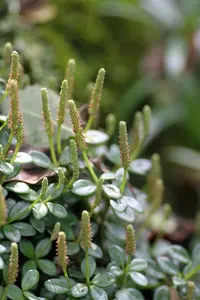
Peperomia retusa is a compact, trailing houseplant in the pepper family, valued for its small, narrow, succulent-like leaves and dense, mat-forming growth. It usually stays low and spreads outward, making it suitable for shelves, hanging containers, or as a tabletop accent.
This species is native to tropical regions of South America, where it grows in warm, humid understory conditions with dappled light. Its fleshy stems and leaves store moisture, so it tolerates brief dryness better than overwatering.
Peperomia retusa is generally considered easy for indoor growers, as long as it receives bright, indirect light, a well-drained potting mix, and moderate watering. Understanding how to care for Peperomia retusa mainly involves avoiding waterlogged soil and harsh direct sun.

Care Difficulty
Easy Care

Light Preference
Bright Indirect Light

Water Requirements
Moderate Water

Temperature Preference
Tropical / Frost Sensitive

Hardiness Zone
11–12

Soil Texture
Loamy, Sandy, Organic-rich

Soil pH
Acidic (5.5–6.5), Slightly acidic (6.5–7.0)

Soil Drainage
Well-drained

Fertilization
Light (every 4–6 weeks)
Scan your plant to receive care tips personalized for your specific plant
Available on iOS and Android
This plant prefers bright, indirect light with brief gentle sun exposure.
This species prefers lightly moist soil that dries slightly between waterings.
Stable, warm temperatures support compact, healthy growth.
This species prefers moderate indoor humidity and copes fairly well with typical home air.
Use a very airy, fast-draining mix that mimics a loose, organic forest floor.
This plant is well suited to container growing, especially shallow, wide pots that match its spreading habit.
Light feeding supports compact growth in Peperomia retusa without overwhelming its fine roots.
Pruning Peperomia retusa keeps the plant dense and tidy while removing weak growth.
Repotting maintains root health and stability for Peperomia retusa grown in containers.
Propagation of Peperomia retusa from cuttings is straightforward under stable indoor conditions.
Winter care for Peperomia retusa focuses on warmth, dryness control, and adequate light.

Plant Health Check
Not sure what's wrong with your plant? Check your plant's health inside the app.
This species develops very slender, elongated stems with small opposite leaves, an adaptation that allows it to drape or trail over rocks and debris in its native habitats while still exposing enough leaf surface to capture light under a forest canopy.
Its narrow, somewhat fleshy leaves store modest amounts of water, giving it a semi-succulent habit suited to brief dry spells on well-drained, often rocky substrates where roots cannot access deep moisture.
Peperomia retusa can grow both as a small terrestrial plant and as an epiphyte on tree trunks or decaying wood, using a relatively fine root system that anchors into organic debris rather than penetrating deep mineral soil.
Leaf curling usually comes from water stress, sudden temperature changes, or low humidity. Check that the root zone is not waterlogged, avoid letting the potting mix bone-dry, and keep the plant away from drafts or heat sources.
Keep your plants happy and healthy with plant identification, disease detection, and easy care guidance.