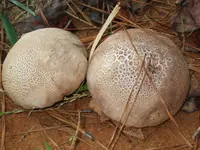
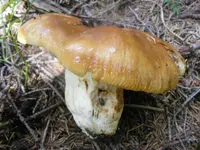
dune stinkhorn Care (Phallus hadriani)

Also known as: sand stinkhorn, Purple-egg Stinkhorn
dune stinkhorn

About dune stinkhorn

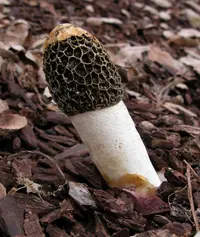
Dune stinkhorn, Phallus hadriani, is a saprophytic fungus that breaks down organic matter in sandy or coastal soils. It produces an egg-like structure that rapidly extends into a hollow, sponge-like stalk with a bell-shaped cap. The cap is coated with a dark, foul-smelling slime that attracts flies, which spread its spores. This species occurs mainly in coastal dunes and sandy grasslands in Europe, parts of North America, and other temperate regions. It is not a typical garden ornamental and can be unpredictable to establish, since it depends on the right soil organisms and decaying material. Those who want to learn how to care for dune stinkhorn should focus on recreating loose, sandy, well-drained soil with steady moisture and organic debris.

Main Plant Requirements

Care Difficulty

Moderate Care

Light Preference

Partial Shade

Water Requirements

Regular Water

Temperature Preference

Cool Climate

Hardiness Zone

5–9

Soil Texture

Sandy, Loamy, Organic-rich

Soil pH

Acidic (5.5–6.5), Slightly acidic (6.5–7.0)

Soil Drainage

Moist but well-drained

Fertilization

Minimal (feed rarely)

Get Personalized Care Plan

Scan your plant to receive care tips personalized for your specific plant

Available on iOS and Android

How to Care for the dune stinkhorn

Phallus hadriani fruits best in open, bright sites that mimic sunny, sandy dunes.

  • Provide 4–6 hours of direct sun, ideally gentle morning sun with light afternoon shade, especially in exposed coastal or sandy habitats.
  • Tolerates partial shade, but dense shade reduces fruiting bodies; choose spots with shifting light, such as edges of paths, grasses, or low shrubs.
  • In summer, protect from intense late-afternoon sun in hot regions to limit substrate overheating and drying, which can shorten the fruiting period.

Moist but free-draining sandy or gritty soil supports reliable development of Phallus hadriani fruiting bodies.

  • Maintain evenly moist conditions around the colonized substrate; allow the top 2–5 cm to dry slightly between natural rains or supplemental watering.
  • Use sharply drained soil or sand-rich mixes so water does not pool; standing water encourages rot of the underground egg stage.
  • During hot, dry spells, increase light watering frequency while avoiding heavy soaking; shrinking, leathery eggs indicate dryness, while sour odor in persistently wet soil suggests overwatering.

This species performs well in mild to warm climates and tolerates a moderate temperature range.

  • Optimal fruiting occurs around 60–77°F (16–25°C), typical of late spring to early autumn in many temperate regions.
  • Tolerates cool conditions down to about 40°F (4°C) in the soil, but hard frost below 32°F (0°C) can damage exposed fruiting bodies.
  • Handles short heat spells up to 86–90°F (30–32°C) if soil stays moist; extended high heat with dry substrate suppresses fruiting until conditions improve.

This fungus forms and fruits best in moderately moist air but does not need tightly controlled humidity.

  • Aim for ambient humidity around 50–70% to support reliable fruiting of dune stinkhorn structures from the buried egg stage.
  • In very dry air, eggs may shrivel and fruiting bodies can collapse quickly, showing wrinkling and pale, dull tissue.
  • Increase local humidity by watering the surrounding soil lightly, using coarse mulch that holds surface moisture, or situating the bed away from strong drying winds.

Phallus hadriani develops from an underground egg and needs loose, well-aerated soil to expand and fruit correctly.

  • Use sandy or sandy-loam soil with high organic content from compost or leaf mold to mimic coastal dune and disturbed ground habitats.
  • Ensure rapid drainage so water passes through within seconds, preventing persistent saturation that can rot the underground egg structure.
  • Maintain a slightly acidic to neutral pH around 6.0–7.0 for reliable fungal development and decomposition of organic material.
  • Improve aeration and drainage by mixing coarse sand and fine bark chips into the top 10–15 cm, avoiding compacted clay or heavily trampled areas.

This species is not ideal for typical container growing but can be fruited in pots for observation if conditions are controlled.

  • Select a deep, wide container to allow several buried eggs to form in a stable, undisturbed substrate layer.
  • Use a heavy or low-profile pot to resist tipping when tall fruiting bodies emerge rapidly from the substrate surface.
  • Drill or confirm multiple side and base drainage holes so brief heavy watering never leaves standing water near the developing eggs.

Phallus hadriani grows from nutrient-rich soil and usually needs no additional fertilizer in gardens or naturalistic beds.

  • In very poor sandy soils, mix in a light layer of mature compost before the growing season to support microbial life.
  • Avoid high-nitrogen or fast-acting synthetic fertilizers, which can disrupt the soil fungi community.
  • If grown in a container, use a low-strength balanced NPK at 1⁄4 dose once at season start, then stop feeding.
  • Focus mainly on organic matter and moisture rather than frequent feeding when caring for dune stinkhorn.

Phallus hadriani does not require true pruning, but spent fruiting bodies can be removed for hygiene and spore control.

  • Cut or twist off mature or collapsing fruiting bodies at the base once they finish releasing spores.
  • Remove any obviously decayed tissue using disposable gloves or clean tools to limit odor and mess.
  • Discard removed material in sealed bags or deep compost zones, away from areas where spread is unwanted.
  • Avoid disturbing the surrounding soil excessively, since the main fungal organism remains as an underground network.

This fungus is rarely kept in pots; management focuses on where its underground structures, called mycelium and eggs, are moved or left undisturbed.

  • Transplant only when growth appears in an unsuitable spot, such as near high-traffic paths or doors.
  • Best time for moving soil containing Phallus hadriani eggs is in cool, moist weather during spring or fall.
  • Lift and relocate clumps of soil gently to minimize disturbance of the mycelium network and underground eggs.
  • After transplanting, water the area thoroughly, then keep soil evenly moist and avoid heavy digging while it re-establishes.

Phallus hadriani propagation is usually passive, occurring naturally through spore spread and underground egg formation.

This species is cold hardy in most temperate climates and usually does not need special winter care.

Care Tips

Use sacrificial traps

Place small dishes with overripe fruit 1–2 m away from beds to draw flies away from developing fruiting bodies, then discard the traps daily to reduce spore spread near high-traffic areas.

Controlled bed containment

Line the planting zone with a 10–15 cm deep barrier of landscape edging or buried plastic to limit the spread of the underground egg-like structures into lawns, paths, or neighboring beds.

Timed fruiting removal

In ornamental areas, remove and bag the mature fruiting bodies as soon as the cap expands and before flies arrive, which limits odor issues without significantly impacting the existing underground mycelium network.

Mulch depth management

Maintain a relatively thin mulch layer of 2–4 cm if you want fewer visible mushrooms, or increase to 6–8 cm of wood-based mulch to encourage more fruiting bodies for observation or study when growing dune stinkhorn.

Hygienic tool handling

After handling slimy caps or cutting fruiting bodies, wash and disinfect tools, gloves, and containers with a mild bleach solution (about 1:10) to avoid unintentionally moving spores into new beds.

Common Pests and Diseases

fungus gnat larvae

This pest is attracted to the moist, organic substrates where the fruiting body develops and the larvae can feed on decaying tissue and mycelium. Symptoms include small black adult gnats hovering near the substrate and fine, threadlike larvae in the soil or culture medium.

Solution

Reduce excess surface moisture, use a well-draining, coarse substrate, and allow the top layer to dry slightly between heavy waterings of any associated container or bed. Sticky traps help capture adults, and a targeted biological control such as Bacillus thuringiensis israelensis (Bti) drench can reduce larval populations without harming the fungus.

mold contamination

This disease occurs when fast-growing molds colonize the same organic material, outcompeting the mycelium and distorting or suppressing fruiting bodies. Symptoms include fuzzy white, green, or gray growth on the substrate surface or directly on immature structures.

Solution

Improve airflow and avoid stagnant, overly humid pockets around the growing area, and promptly remove heavily contaminated material. Use clean tools and fresh, well-pasteurized organic matter for cultivation, and discard badly overrun cultures rather than trying to rescue them.

bacterial soft rot

This disease develops in very moist, warm conditions when bacteria break down tissue, causing the emerging or mature fruiting body to collapse into a slimy, foul-smelling mass more rapidly than normal decay. Symptoms include water-soaked areas at the base and rapid tissue liquefaction beyond the typical short-lived lifespan of the stinkhorn.

Solution

Limit standing water on and around the growth site, avoid overhead watering directly onto developing fruiting bodies, and remove and dispose of affected specimens and adjacent heavily softened material. Improve drainage and airflow in the bed or container to reduce repeated outbreaks and to support more stable Phallus hadriani care.

Interesting Facts

Sand dune specialist

This species often fruits in coastal sand dunes of Europe, especially around the North and Baltic Seas, where it can tolerate shifting, nutrient-poor sandy soils better than many related stinkhorns.

Purple egg stage

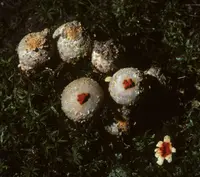
Before the characteristic mature fruiting body appears, it develops inside a distinct lilac to pinkish egg-like structure partially buried in sand, which helps distinguish it from the more common Phallus impudicus with its white egg.

Fly‑mediated spore dispersal

The olive-brown, foul-smelling slime on the cap mimics the odor of decaying organic matter, attracting flies that feed on the slime and then carry the fungal spores to new locations on their legs and mouthparts.

Botan icon

Did you know?

The smell of this fungus is often weaker and less penetrating than that of some other stinkhorn species, which has led mycologists to suggest that it may be adapted to a slightly different guild of insect visitors in its windy, open dune habitat.

FAQs about dune stinkhorn

This fungus spreads locally through spores and its underground mycelium but is not usually aggressive. It may appear in clusters where organic matter is rich, then disappear as conditions change or substrate is exhausted.

Grow Healthy Plants with Botan Care

Keep your plants happy and healthy with plant identification, disease detection, and easy care guidance.

Botan plant care app — identify plants on mobile

Explore More Plants