Cushion Bracket Care (Phellinus pomaceus)

Cushion Bracket

About Cushion Bracket

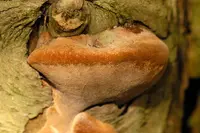
Cushion bracket, Phellinus pomaceus, is a perennial wood-decay fungus rather than a leafy houseplant. It forms hard, cushion-like brackets on trunks and branches, usually on plum, cherry, and other Prunus trees.

The surface is typically rough, brown, and zoned, with a thick, woody texture that persists for many years. It occurs mainly in temperate regions, especially in orchards, gardens, and hedgerows where host trees are common.

Because it is a parasitic and saprotrophic fungus that damages living trees, gardeners aim to manage or remove it rather than care for Cushion Bracket. It does not adapt to normal pot or container culture and is rarely grown intentionally.

Main Plant Requirements

Care Difficulty

Moderate Care

Light Preference

Partial Shade

Water Requirements

Moderate Water

Temperature Preference

Warm Climate

Hardiness Zone

Unknown

Soil Texture

Loamy, Organic-rich

Soil pH

Slightly acidic (6.5–7.0)

Soil Drainage

Well-drained

Fertilization

Minimal (feed rarely)

Get Personalized Care Plan

Scan your plant to receive care tips personalized for your specific plant

Available on iOS and Android

How to Care for the Cushion Bracket

This wood-decaying fungus relies on stable, moderate light rather than direct, intense sun.

  • Provide bright shade or dappled forest-style light with 1–3 hours of gentle morning sun and no harsh afternoon sun on the host tree bark.
  • Allow partial shade to near-full shade; Cushion Bracket persists well on shaded trunks but may fruit less in very dark, enclosed sites.
  • Avoid strong, unfiltered midday sun that can overheat and dry outer tissues; in exposed sites, use nearby shrubs or trees to cast protective shade, especially in summer.

This bracket fungus depends on natural moisture in the host tree and surrounding environment, not direct watering on the fruiting body.

  • Keep the host tree in soil that drains freely; avoid standing water around roots, which can worsen decay and promote unwanted competing fungi.
  • In dry periods, aim for soil that dries in the top 2–5 cm between rains or supplemental irrigation, then re-moistens deeply without becoming saturated.
  • Watch for signs of stress in the host tree, such as wilting foliage or dieback; adjust irrigation to support overall tree health rather than targeting Phellinus pomaceus directly.

This species prefers cool to mild conditions and tolerates a broad outdoor temperature range on host trees.

  • Support growth in climates where average temperatures stay roughly 40–75°F (4–24°C), typical of temperate woodlands and orchards.
  • Expect fruiting bodies to form or persist best in cool, moist seasons such as spring and fall, when daily highs often range 45–65°F (7–18°C).
  • Avoid sites with frequent extremes below 10°F (-12°C) or above 95°F (35°C); repeated hard freezes or intense heat can damage exposed brackets and slow internal decay activity.

Humidity has little practical impact on Cushion Bracket, a wood-decaying bracket fungus usually found outdoors on trees.

This wood-inhabiting fungus does not grow in conventional potting soil, but similar conditions can be simulated on woody substrates.

  • Use dense, lignin-rich hardwood pieces or logs rather than mineral soil, as Phellinus pomaceus naturally colonizes prunus wood.
  • Allow surfaces to drain freely and avoid waterlogged conditions, since prolonged saturation limits oxygen and slows fungal development.
  • Keep the wood slightly moist but not dripping; intermittent drying of the outer surface with a moist interior supports stable colonization.
  • Avoid chemically treated or painted wood, as preservatives and coatings can inhibit fungal growth and disrupt natural decomposition.

This species is not well suited to typical container growing, as it is a bracket fungus adapted to colonize living or dead wood rather than potting media.

This wood-decay fungus grows on host trees and does not need direct fertilization, so Cushion Bracket care focuses on tree health rather than feeding the fungus.

Phellinus pomaceus lives in woody tissue and is not shaped by pruning like a typical garden plant.

  • Remove affected branches or limbs from the host tree during dry weather to limit structural weakness.
  • Cut out dead, heavily decayed, or cracked wood first, using clean, sharp pruning saws or loppers.
  • Make clean cuts back to a healthy lateral branch or the branch collar, avoiding flush cuts that damage the trunk.
  • Dispose of removed, infected wood away from other trees to reduce spread of decay organisms.

This fungus is not grown as a potted specimen; management focuses on host trees rather than repotting.

  • Transplant only the young host tree if necessary, since the fungus itself is not intentionally moved or potted.
  • Schedule any tree transplanting for early spring or early fall, when temperatures are moderate and moisture is reliable.
  • Before moving a host tree, water it well, root prune months in advance if possible, and handle the root ball gently.
  • After transplanting, maintain steady soil moisture and apply a light mulch layer to reduce root stress and encourage recovery.

Intentional propagation of Phellinus pomaceus is generally avoided because it is a wood-decay pathogen rather than an ornamental or crop species.

This fungus is cold hardy on host trees and does not require specific winter care.

Care Tips

Monitor Host Trees

Inspect host plum or related Prunus trees 2–3 times per year for early signs of wood decay, such as oozing gum, cracking bark, or depressed lesions around old pruning cuts, so infected wood can be managed before brackets become extensive.

Sanitize Cutting Tools

Disinfect pruning saws and loppers with 70% isopropyl alcohol or a 1:10 bleach solution between trees and after cutting infected wood to reduce mechanical spread of the fungus to new hosts.

Time Pruning Carefully

Carry out major pruning on susceptible fruit trees in late winter or very early spring during dry weather, and avoid pruning in wet conditions, to lower the chance of new infections entering through fresh wounds.

Remove Infected Wood

Where practical, remove branches or trunks that bear active brackets by cutting well back into visibly sound wood, then dispose of all infected material off-site rather than chipping it for mulch.

Plan Replacement Plantings

In orchards or landscapes with repeated infections, gradually replace highly susceptible stone fruits with less susceptible species and rotate planting sites to limit future problems when growing Cushion Bracket is undesirable.

Common Pests and Diseases

Silver leaf

This disease causes a silvery sheen on leaves and can lead to branch dieback on stone and pome fruit trees that host the fungus. Symptoms include progressive decline of affected limbs as the wood is colonized and decayed.

Solution

Prune out affected branches well below discolored or dead wood during dry weather and disinfect pruning tools between cuts. Avoid large pruning wounds on host trees, remove and destroy heavily infected wood, and maintain tree vigor to reduce entry points for the fungus when growing Cushion Bracket near fruit trees.

Brown cubical rot

This disease produces a brown, cubical cracking of heartwood in trunks and large branches of host trees, leading to structural weakness. Symptoms include hard, dry, brown decay that breaks into cube-like blocks inside the wood while bark may still appear relatively sound at early stages.

Solution

Inspect older or stressed trees for signs of internal decay such as fruiting bodies at the base or on scaffold branches, and have an arborist assess structural safety. Remove and properly dispose of severely decayed trees or limbs, reduce mechanical stress such as heavy pruning, and avoid trunk injuries that facilitate new infections.

Canker formation

This disease results in sunken, dead patches of bark on trunks and branches where the fungus has entered, often around pruning cuts or wounds. Symptoms include cracked, discolored bark with underlying dead tissue and possible formation of bracket bodies along the margins.

Solution

Cut out small cankers by pruning back into healthy wood, making smooth cuts that allow good callus formation, and disinfect tools between trees. Limit bark damage, time pruning for dry weather, and monitor regularly so that expanding cankers or structurally compromised limbs can be removed before failure occurs.

Interesting Facts

Specialist plum pathogen

This fungus primarily infects cultivated plum and related Prunus trees, causing a distinctive white heart rot that selectively decays the inner wood while leaving the outer trunk relatively intact for some time.

Flat bracket fruitbodies

It typically forms thin, flat, hoof-like brackets tightly attached to the trunk or branches, often with a cracked, pale to mid-brown upper surface and a yellowish to cinnamon pore layer beneath.

Long-term wood decay

Infections may persist for many years within the same tree, gradually weakening the structural integrity of the trunk and main limbs while sometimes producing only a few visible brackets during that period.

Botan icon

Did you know?

This species is strongly associated with old and stressed orchard trees, and its presence in traditional European plum orchards has been used by field mycologists as an indicator of long-term continuity of fruit cultivation at a site.

FAQs about Cushion Bracket

This bracket fungus spreads slowly but persistently through infected wood. It does not jump rapidly between trees, yet once established it decays the trunk over many years and can eventually cause structural weakness or branch failure.

Grow Healthy Plants with Botan Care

Keep your plants happy and healthy with plant identification, disease detection, and easy care guidance.

Botan plant care app — identify plants on mobile

Explore More Plants