Devil's Stinkhorn Care (Phallus rubicundus)

Also known as: Red Stinkhorn, Yellow Stinkhorn
Devil's Stinkhorn

About Devil's Stinkhorn

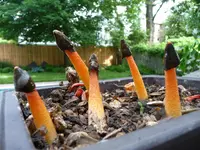
Devil's stinkhorn (Phallus rubicundus) is a fungus, not a true plant, known for its bright reddish-orange, finger-like fruiting bodies and strong odor. It typically emerges from a white, egg-like structure in mulch, lawns, and garden beds.

This species is native to tropical and subtropical regions but now appears in many warm, humid areas, especially in wood chip or bark mulch. It grows quickly, often appearing after rain and then collapsing within a day or two.

Its rapid, sporadic growth and reliance on organic mulch mean it cannot be controlled like a normal garden plant, so trying to care for Devil's Stinkhorn is rarely practical.

Main Plant Requirements

Care Difficulty

Moderate Care

Light Preference

Partial Shade

Water Requirements

Keep Soil Moist

Temperature Preference

Warm Climate

Hardiness Zone

8–11

Soil Texture

Loamy, Organic-rich

Soil pH

Acidic (5.5–6.5), Slightly acidic (6.5–7.0)

Soil Drainage

Moist but well-drained

Fertilization

Minimal (feed rarely)

Get Personalized Care Plan

Scan your plant to receive care tips personalized for your specific plant

Available on iOS and Android

How to Care for the Devil's Stinkhorn

This saprophytic fungus prefers bright, indirect conditions and forms best where light and shade alternate during the day.

  • Site Phallus rubicundus in dappled or filtered light, such as under shrubs or thin tree canopy, receiving roughly 2–4 hours of gentle morning sun.
  • It tolerates partial shade and can fruit in spots with as little as 1–2 hours of direct sun, provided ambient light remains moderate through the day.
  • Avoid harsh, all-day sun in exposed beds; intense afternoon sun can dry the substrate too fast, reducing mushroom formation, especially in hot summer months.

This fungus needs consistently moist, well-drained organic material rather than direct, frequent watering on the fruiting bodies.

  • Allow the top 2–5 cm of mulch or leaf litter to start drying before re-moistening the area with a gentle soak, then let excess water drain away.
  • In warm, dry weather, check the substrate every 1–2 days; in cooler or rainy seasons, reduce added water and rely more on natural rainfall.
  • Watch for sour smell, standing water, or slimy substrate as signs of overwatering, and crisp, pale, easily crumbling litter as an indicator of underwatering.

This species fruits best in warm, humid conditions typical of late spring to early fall in many temperate and subtropical regions.

  • Optimal fruiting occurs around 70–85°F (21–29°C), with mycelium growth continuing slightly outside this range if moisture remains stable.
  • Growth slows markedly below about 55°F (13°C), and hard frost around 30–32°F (-1–0°C) can damage surface structures, though deeper mycelium may survive.
  • The fungus tolerates short heat spikes up to about 90–95°F (32–35°C) if shaded and moist, but prolonged hot, dry periods shrink and halt fruiting bodies.

This fungus develops and fruits well in relatively humid outdoor conditions but does not demand strict humidity control.

  • Prefers ambient humidity around 50–80% in shaded, mulched garden beds where moisture is retained in the upper soil layer.
  • Tolerates short dry spells, but prolonged low humidity with hot wind can dry its substrate and reduce or interrupt fruiting of Devil's Stinkhorn.
  • Humidity stress shows as overly dry, crumbly mulch where eggs abort before emerging or collapse quickly after emergence.
  • Increase local humidity by adding a thicker organic mulch layer, watering the surrounding ground in the evening, and avoiding exposed, windy positions.

This saprophytic fungus grows best in loose, moist, organic-rich ground or mulch rather than typical potting soil.

  • Use a coarse, airy substrate made from shredded bark, wood chips, and leaf litter to mimic natural decomposing debris for Phallus rubicundus.
  • Ensure rapid drainage so water moves through within seconds, but retains slight moisture by mixing in partially decomposed composted wood or leaf mold.
  • Aim for slightly acidic to neutral conditions, roughly pH 6.0–7.0, and avoid strongly alkaline substrates or materials heavily limed.
  • Do not use compacted clay, fine sand-only mixes, or plastic sheeting barriers that block air exchange, as poor aeration suppresses fungal growth.

This species is generally unsuitable for conventional container growing and performs more reliably in open ground or mulched beds.

This fungus typically needs no fertilizer in garden or woodland settings, as it decomposes organic matter for nutrition.

Phallus rubicundus does not require true pruning, but spent fruiting bodies can be removed for hygiene and appearance.

  • Cut or snap off mature or collapsing fruiting bodies at the base using disposable gloves or clean scissors.
  • Place removed material in a sealed bag and discard with trash to limit odor and spore spread near sitting areas.
  • Avoid disturbing surrounding soil or wood mulch, since the underground mycelium is the active, living part.

This stinkhorn is rarely grown in containers; management focuses on relocating or discouraging colonies in beds or lawns.

  • Transplanting is seldom successful because the mycelium network extends irregularly through soil or mulch.
  • If removal is needed, dig out 10–15 cm of surrounding substrate and replace with fresh, well-drained material.
  • Work in cool, overcast conditions to reduce stress on nearby plants and soil microbes.
  • Dispose of infested mulch in green waste, and avoid spreading it to new areas where growth is unwanted.

Propagation of Phallus rubicundus is mainly by spores and usually happens on its own in suitable, mulched areas.

  • Fruiting bodies release spores that are spread by flies attracted to the spore-covered slime.
  • To encourage spread, leave some mature specimens in place on moist, organic-rich mulch during warm weather.
  • For controlled trials, small pieces of colonized mulch can be moved to a new site with similar moisture and shade.
  • Maintain consistent moisture but not waterlogged conditions so the underground mycelium can establish.

In mild to warm climates, this fungus needs little specific winter care, as the mycelium stays dormant in soil or mulch.

  • In regions with occasional light frost, a 2–5 cm mulch layer is usually adequate insulation.
  • Container displays of Devil's Stinkhorn should be shifted to a frost-free, shaded spot if hard freezes are expected.
  • Avoid waterlogged substrates in cool weather, since saturated, cold soil can reduce mycelium vigor.

Care Tips

Manage Odor Period

Collect and dispose of mature fruiting bodies in a sealed bag as soon as the slimy spore mass appears to reduce odor and prevent excessive spore spread near high-traffic areas.

Encourage Spore Partners

Leave some decaying wood, leaf litter, or coarse mulch undisturbed so the fungus can form stable colonies with soil microbes and continue fruiting reliably over several seasons.

Spot Safe Locations

Site this fungus away from doors, play areas, and seating, using the back of borders or under shrubs so the brief but strong odor does not interfere with daily use of the garden.

Use Targeted Irrigation

If watering is needed during dry spells, moisten only the mulch and top 5–10 cm of soil rather than drenching the whole bed to avoid creating anaerobic pockets that can suppress mycelium health.

Monitor New Introductions

When bringing in fresh mulch or wood chips, observe the area for a few weeks; if unwanted flushes appear, rake and thin the mulch layer to reduce the organic load instead of using fungicides, which are rarely necessary when caring for Devil's Stinkhorn.

Common Pests and Diseases

fungus gnat larvae

This pest uses the moist, organic substrate around the fruiting bodies as a breeding site, and larvae tunnel through decaying material and young fungal tissue. Symptoms include small black flies hovering nearby and soft, collapsing immature stinkhorn structures.

Solution

Reduce excess surface moisture, remove overly decomposed organic debris, and improve drainage or aeration of the substrate to limit breeding sites. Sticky traps can help capture adult gnats, and a biological control such as Bacillus thuringiensis israelensis (Bti) drench can be used to target larvae without disturbing the fungal colony heavily.

slugs and snails

These animals are attracted to the moist, nutrient-rich tissue and may chew on young or partially emerged fruiting bodies. Symptoms include ragged edges, missing sections, and slime trails on or near the fungi.

Solution

Hand-pick slugs and snails at dusk or early morning and remove leaf litter or dense ground cover that provides hiding places. If needed, use physical barriers such as copper tape, rough grit rings, or carefully placed iron phosphate pellets around the area where the fungi emerge, avoiding direct contact with the fruiting bodies.

maggot infestation

These insects are fly larvae that develop inside the sticky spore mass (gleba), quickly breaking it down and sometimes deforming the fruiting structure. Symptoms include soft, collapsing caps with visible small white larvae inside the gleba.

Solution

Remove and dispose of heavily infested fruiting bodies promptly in sealed bags to limit further fly breeding. To reduce future infestation, remove spent gleba residues and avoid leaving rotting organic material directly on the surface where the fungi emerge, while still keeping enough buried wood or mulch to support the mycelium.

bacterial soft rot

This disease affects injured or overly wet tissue, causing the fruiting body to become water-soaked, slimy, and foul-smelling beyond the normal odor. Symptoms include rapid collapse, discoloration, and liquefied tissue at the base or along the stem.

Solution

Collect and discard affected fruiting bodies before they break down completely, and avoid overhead watering or direct irrigation onto emerging structures. Improve air movement around the growth site and adjust watering so the substrate stays lightly moist but not saturated, following general Phallus rubicundus care instructions for moisture control.

Interesting Facts

Carrion mimic odor

The mature fruiting body produces a strong, foul smell closely resembling decaying animal tissue, which specifically attracts flies and other carrion-feeding insects that act as spore dispersers.

Egg-to-spike emergence

The fungus develops first as a whitish, gelatinous 'egg' partially buried in soil or mulch, then rapidly expands to form a hollow, reddish-orange stalk with a dark, slimy spore mass on top, often completing this transition within a few hours under suitable conditions.

Mulch and garden specialist

This stinkhorn commonly appears in urban and suburban landscapes in warm regions, especially in wood-chip mulch, compost-rich beds, and irrigated ornamental plantings, indicating active decomposition of woody organic matter.

Botan icon

Did you know?

This species is considered non-native in many parts of the southeastern United States and other warm regions, where it is thought to have spread internationally with transported soil, nursery stock, and wood-based mulches, leading to its sudden appearance in landscaped areas far from its original range.

FAQs about Devil's Stinkhorn

This fungus spreads by spores carried by insects attracted to its odor. It can appear suddenly in mulched beds but usually does not damage plants. Removing old fruiting bodies reduces spore load but rarely stops appearances completely.

Grow Healthy Plants with Botan Care

Keep your plants happy and healthy with plant identification, disease detection, and easy care guidance.

Botan plant care app — identify plants on mobile

Explore More Plants