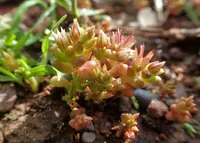
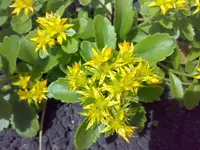
Two-Row Stonecrop Care (Phedimus spurius 'John Creech')

Also known as: Caucasian Stonecrop

About Two-Row Stonecrop

Phedimus spurius 'John Creech', commonly called two-row stonecrop, is a low, mat-forming perennial succulent grown mainly as a groundcover. It forms dense carpets of small, rounded green leaves that often flush pink or red in cooler weather, with clusters of star-shaped pink flowers in summer.

This species originates from rocky, well-drained habitats in Eastern Europe and western Asia, which explains its strong tolerance of drought and poor soils. It is considered easy to grow and suited to beginners who want to learn how to care for Two-Row Stonecrop without complex routines.

It prefers full sun, sharply drained soil, and infrequent watering once established, and it adapts well to rock gardens, edging, and containers.

Main Plant Requirements

Care Difficulty

Easy Care

Light Preference

Full Sun

Water Requirements

Low Water

Temperature Preference

Cold Hardy

Hardiness Zone

3–9

Soil Texture

Sandy, Loamy, Rocky

Soil pH

Slightly acidic (6.5–7.0), Neutral (7.0)

Soil Drainage

Well-drained

Fertilization

Minimal (feed rarely)

Get Personalized Care Plan

Scan your plant to receive care tips personalized for your specific plant

Available on iOS and Android

How to Care for the Two-Row Stonecrop

This low-growing succulent prefers bright outdoor exposure but handles some shade, especially in hotter regions.

  • Aim for 6–8 hours of sun daily, with morning sun and light afternoon shade ideal to protect foliage from scorching in hot summers.
  • In zones with intense afternoon sun, provide filtered light from a fence, rock, or neighboring plants to reduce leaf burn and moisture loss.
  • Two-Row Stonecrop tolerates partial shade (around 3–4 hours of direct sun), but growth becomes looser and flowering decreases if light stays too low.

This drought-tolerant succulent needs infrequent, careful watering to avoid root rot.

  • Outdoors in the ground, water deeply only when the top 3–5 cm of soil are completely dry, then allow excess to drain away.
  • In hot, dry weather, expect to water more often; in cool or rainy periods, skip watering if foliage looks firm and soil still feels dry beneath the surface.
  • For Phedimus spurius 'John Creech', persistent wet soil, yellowing leaves, or a mushy crown signal overwatering, while shriveling leaves indicate it stayed dry too long.

This hardy groundcover tolerates a wide range of outdoor temperatures once established.

  • Best active growth occurs around 60–80°F (16–27°C), with good color and compact form in these mild conditions.
  • The plant is cold-hardy to about -30°F (-34°C) in the ground, dying back in severe winter but re-sprouting from roots in spring.
  • During extreme heat above 90°F (32°C), growth may slow; provide afternoon shade and avoid additional stress from waterlogged or compacted soil.

This drought-tolerant succulent handles typical indoor humidity and does not need extra moisture.

This plant prefers lean, fast-draining, mineral-rich soil that dries quickly between waterings.

  • Use a gritty mix such as 50–60% cactus potting mix blended with coarse sand or small grit to mimic rocky ground.
  • Aim for slightly acidic to neutral pH, around 6.0–7.0, which supports nutrient uptake without promoting rot.
  • Improve drainage and aeration by adding extra perlite or pumice, especially in heavier garden or bagged mixes.
  • Avoid dense, water-retentive soils high in peat or clay, since these trap moisture and greatly increase root rot risk for Phedimus spurius 'John Creech'.

This species is very suitable for container growing due to its shallow, spreading root system.

  • Choose a wide, shallow pot to match its mat-forming habit and prevent wasted depth that stays wet too long.
  • Select a heavier material like ceramic if the container is elevated, so the spreading foliage does not tip the pot.
  • Ensure drainage holes are fully open and elevate the container slightly so runoff clears quickly from the base.

This succulent groundcover needs only light feeding to stay compact and healthy in typical garden soil.

  • Use a balanced, low-strength liquid fertilizer (for example 10-10-10) diluted to 25–50% during active growth in spring–early summer.
  • Apply at most 1–2 times per season for Two-Row Stonecrop grown in containers or very poor soils.
  • Skip feeding in fall and winter when growth slows or stops to avoid soft, weak tissue.
  • Compost or a small amount of slow-release fertilizer can be mixed into poor soil once each spring instead of liquid feeding.

Phedimus spurius 'John Creech' benefits from light pruning to keep the mat dense and tidy.

  • Best timing is early spring before strong new growth, or immediately after flowering flushes.
  • Shear or trim back leggy, sparse, or storm-damaged stems with clean scissors or hand pruners.
  • Remove dead or crowded patches to improve airflow and reduce rotting in damp climates.
  • Light reshaping encourages a thicker carpet of foliage and more even flowering across the planting.

This creeping sedum is usually grown as groundcover, with transplanting more common than container repotting.

  • Transplant in spring or early fall when temperatures are mild and soil is workable.
  • Move plants when mats become overcrowded, bare in the center, or when spreading beyond the desired area.
  • Lift shallow roots gently, replant divisions at the same depth in well-drained soil, and water lightly to settle soil.
  • Container plants need new soil every 2–3 years, especially if roots circle the pot or growth slows noticeably.

This mat-forming sedum is commonly multiplied to extend groundcover or fill gaps.

  • Take short stem cuttings in late spring–summer, then lay or insert them into gritty, well-drained soil.
  • Keep the medium barely moist and bright but not scorching until roots form, usually within a few weeks.
  • Division works well in spring; lift clumps, gently pull sections apart, and replant promptly.
  • Seeds are less consistent; if used, sow on the surface of a fast-draining mix and provide bright, cool conditions.

This hardy perennial usually needs minimal winter attention in most temperate gardens.

  • Tolerates typical freezes in USDA zones where it is commonly grown, with foliage often dying back naturally.
  • In very cold or exposed sites, a light 2–5 cm mulch around the root zone helps moderate soil temperature.
  • Container plants benefit from moving to a sheltered spot with good drainage to prevent waterlogged, frozen roots.

Care Tips

Edge Containment

Install a shallow edging strip 3–5 cm deep around beds to keep mats from creeping into lawns or paths while still allowing easy division and replanting of healthy sections.

Summer Shear Back

After flowering, lightly shear the top 2–3 cm of growth with clean shears to remove spent blooms, tighten the mat, and encourage dense new foliage rather than letting stems sprawl and thin out.

Rooted Pad Renewal

Every 2–3 years, lift and discard older, woody centers and replant the freshest, well-rooted outer pads to maintain a tight, vigorous groundcover instead of a patchy, open clump.

Rock Crevice Planting

Tuck small rooted pieces into narrow rock crevices or wall joints filled with gritty mix, pressing them firmly so roots contact the substrate and the mat quickly knits over stone surfaces.

Winter Drainage Check

Before winter, inspect sloped beds and rock gardens to ensure no low spots collect water, since prolonged winter wet around the crowns is more damaging than cold when growing Two-Row Stonecrop.

Common Pests and Diseases

Aphids

This pest feeds on young stems and leaves, causing distortion, sticky honeydew, and sometimes sooty mold on the dense mats of foliage.

Solution

Wash colonies off with a firm stream of water, then spot-treat remaining clusters with insecticidal soap or a neem-based spray, repeating weekly until numbers drop. Encourage natural predators such as lady beetles and avoid excess nitrogen fertilizer, which promotes soft, aphid-prone growth when growing Two-Row Stonecrop outdoors.

Mealybugs

These insects hide in leaf and stem joints, appearing as white cottony clusters that stunt growth and cause patches of yellowing foliage.

Solution

Dab visible insects with cotton swabs dipped in isopropyl alcohol, then follow with a thorough application of insecticidal soap to all plant surfaces, including stems and undersides of leaves. Isolate heavily infested plants and repeat treatments every 7–10 days until no new mealybugs appear.

Snails and slugs

This pest chews irregular holes in leaves and can strip tender new growth, especially in moist planting sites or near mulched borders.

Solution

Hand-pick at dusk or early morning and remove hiding places such as thick debris around the planting. Use iron phosphate slug baits labeled for ornamental beds and, if needed, create barriers with copper tape around small plantings to reduce access.

Powdery mildew

This disease causes white, powdery patches on leaves and stems, which can lead to dull, yellowing foliage and thinning of the mat in humid, crowded plantings.

Solution

Improve air circulation by thinning or dividing overly dense patches and avoid frequent overhead watering, especially late in the day. Remove and discard heavily infected foliage and, if the problem persists, apply a sulfur or potassium bicarbonate fungicide labeled for ornamentals according to label directions.

Leaf spot

Symptoms include small brown or tan lesions on leaves that may merge into larger blotches, making sections of the mat look patchy or thinned.

Solution

Remove and discard affected leaves to reduce the source of infection, then water at soil level rather than over the foliage. If wet, crowded conditions persist, improve drainage and spacing, and consider using a copper-based or chlorothalonil fungicide labeled for landscape succulents if new spots continue to develop.

Interesting Facts

Named for a botanist

This cultivar was selected by alpine plant specialist John Creech of the U.S. National Arboretum, who collected it in the former Yugoslavia for its dense, durable mat-forming growth.

Exceptionally tight mat

Compared with other Phedimus spurius cultivars, it forms an unusually low, tight carpet that helps suppress small weeds and reduces soil erosion on sunny slopes and rock gardens.

Cold and salt tolerant

This plant is documented as reliably hardy in very cold climates and shows good tolerance to road salt spray, which makes it a practical groundcover near sidewalks and driveways in temperate regions.

Botan icon

Did you know?

This cultivar spreads mainly through short, rooting stems rather than aggressive long runners, so in many public and botanical garden trials it has been noted as one of the easiest Phedimus groundcovers to keep within defined planting areas.

FAQs about Two-Row Stonecrop

This species spreads steadily as a low mat through short stems and rooting nodes, but it is not usually aggressive. It can edge into nearby spaces; simple edging or lifting unwanted sections keeps it controlled.

Grow Healthy Plants with Botan Care

Keep your plants happy and healthy with plant identification, disease detection, and easy care guidance.

Botan plant care app — identify plants on mobile

Explore More Plants