

Use Gravel Mulch
Apply a 1–2 cm layer of coarse grit or small gravel around the crowns to keep stems dry at the base, reduce rot risk, and suppress competing seedlings without trapping excess moisture.

Two-row stonecrop, Phedimus spurius 'Schorbuser Blut', is a low-growing, mat-forming succulent often used as groundcover or in rock gardens. It forms dense carpets of fleshy, spoon-shaped leaves.
The foliage typically shows rich red to burgundy tones, especially in strong light or cooler weather, creating strong color contrast in sunny, dry sites. In summer, it produces clusters of small star-shaped pink to reddish flowers on short stems.
This species originates from rocky, open habitats in parts of Eastern Europe and Western Asia, so it is adapted to sun, drainage, and periods of drought. These traits make it relatively easy to care for Two-Row Stonecrop in gardens, containers, and green roofs.

Care Difficulty
Easy Care

Light Preference
Full Sun

Water Requirements
Low Water

Temperature Preference
Cold Hardy

Hardiness Zone
3–9

Soil Texture
Sandy, Loamy, Rocky

Soil pH
Slightly acidic (6.5–7.0), Slightly alkaline (7.0–7.5)

Soil Drainage
Well-drained

Fertilization
Minimal (feed rarely)
Scan your plant to receive care tips personalized for your specific plant
Available on iOS and Android
This sun-loving succulent forms best color and growth with plenty of direct light.
This drought-tolerant groundcover needs infrequent but thorough watering in fast-draining soil.
This hardy perennial tolerates a wide temperature range but grows best in moderate conditions.
This succulent tolerates typical indoor humidity and does not need special humidification.
Phedimus spurius 'Schorbuser Blut' needs fast-draining, mineral-rich soil to prevent root rot.
This species is well suited to container growing outdoors on patios, balconies, or rock gardens.
This drought-tolerant succulent needs only modest feeding to stay compact and colorful.
Pruning helps Phedimus spurius 'Schorbuser Blut' keep a dense mat and promote fresh foliage.
This species is usually grown as groundcover, so transplanting in the landscape is more common than container repotting.
Phedimus spurius 'Schorbuser Blut' responds well to several simple propagation methods for increasing groundcover patches.
This hardy perennial generally needs minimal winter care in most temperate climates.

Plant Health Check
Not sure what's wrong with your plant? Check your plant's health inside the app.
This cultivar maintains its red to burgundy leaf color best in cooler conditions and full sun, and it is notably more cold-hardy than many other ornamental sedums, remaining evergreen or semi-evergreen in mild winters.
It forms a dense, low mat with closely spaced rooting nodes along its stems, which helps stabilize shallow soils on slopes and rockeries without becoming aggressively invasive in most garden settings.
Its succulent leaves shift from greenish-red in lower light to intense wine-red under high light and cooler temperatures due to increased accumulation of protective pigments called anthocyanins.
This species spreads by short, creeping stems and forms a dense mat over time, but it is usually not aggressively invasive. Edging, occasional trimming, or lifting and replanting sections controls spread in tight spaces or mixed beds.
Keep your plants happy and healthy with plant identification, disease detection, and easy care guidance.

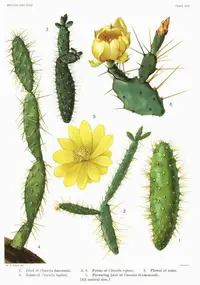
Velvet Bur Cactus
Opuntia pubescens

Matucana madisoniorum
Matucana madisoniorum
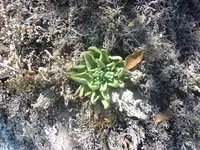
Echeveria bifida
Echeveria bifida
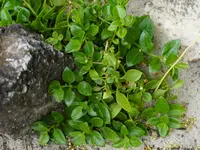
heart-leaf ice plant
Mesembryanthemum cordifolium

Cephalocereus tetetzo
Cephalocereus tetetzo
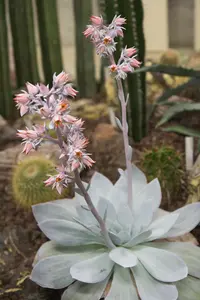
white cloud plant
Echeveria cante
square-stemmed pelargonium
Pelargonium tetragonum
Echeveria bicolor
Echeveria bicolor