Host Tree Selection
Select weakened or already-declining black locust or other suitable hardwoods as hosts, since this fungus is a wood-decay organism and should not be introduced to healthy, high-value trees in managed landscapes.

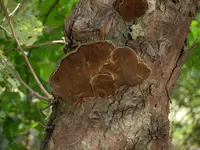
Cracked cap polypore, Phellinus robiniae, is a perennial wood-decay fungus rather than a leafy plant. It forms hard, hoof-shaped brackets with rough, cracked brown caps and yellowish to brown pore surfaces underneath. These fruiting bodies grow attached to trunks and branches of locust and some other hardwood trees.
This species is native to North America but now occurs in other temperate regions wherever suitable host trees grow. It is not suitable as a typical houseplant or ornamental fungus, and attempts to care for Cracked Cap Polypore focus mainly on managing infected trees rather than cultivating the fungus itself.
In nature it prefers mature host trees, shaded to semi-shaded sites, and conditions where wood remains consistently moist but not waterlogged.

Care Difficulty
Moderate Care

Light Preference
Partial Shade

Water Requirements
Moderate Water

Temperature Preference
Cold Hardy

Hardiness Zone
3–9

Soil Texture
Loamy, Clay, Organic-rich

Soil pH
Slightly acidic (6.5–7.0), Neutral (7.0)

Soil Drainage
Moist but well-drained

Fertilization
Minimal (feed rarely)
Scan your plant to receive care tips personalized for your specific plant
Available on iOS and Android
This wood-decaying fungus prefers stable, shaded light conditions similar to a forest understory.
This fungus uses moisture from its host tree and surrounding environment rather than direct watering.
This fungus tolerates a wide outdoor temperature range but fruits best in moderate conditions.
Humidity is not a meaningful care factor for Phellinus robiniae, a wood-decaying bracket fungus naturally exposed to fluctuating ambient air moisture.
This species does not grow in conventional potting soil but in the structural wood of its host, so conditions focus on wood characteristics rather than mineral substrate.
This bracket fungus is not suitable for container growing, as it requires living or dead host wood rather than a pot-based substrate.
This wood-decay fungus growing on black locust trunks does not benefit from fertilization in typical landscape or woodland settings.
Phellinus robiniae is not managed by conventional pruning, since it is a wood-decay bracket fungus on host trees rather than an ornamental plant.
Transplanting is rarely applicable, as this bracket fungus naturally establishes on living or dead black locust wood rather than in containers.
Intentional propagation of this wood-decay fungus is uncommon and generally not recommended outside specialized research or diagnostic work, so routine home methods are not described.
This perennial wood-decay fungus is naturally cold hardy in regions where black locust grows and needs no specific winter care in outdoor settings.

Plant Health Check
Not sure what's wrong with your plant? Check your plant's health inside the app.
This bracket fungus occurs almost exclusively on black locust (Robinia pseudoacacia), showing a strong host preference that is unusual among many wood-decay polypores.
It produces enzymes that break down both lignin and cellulose in the heartwood of black locust, leading to a type of wood decay called white rot that leaves the wood pale and fibrous.
Mature fruiting bodies develop a hard, dark, and deeply cracked upper surface, which gives the species its common name, cracked cap polypore, and helps distinguish it from similar Phellinus species.

In many parts of its range, this fungus is considered a significant decay pathogen of ornamental and roadside black locust trees, and its presence on the trunk often signals advanced internal heartwood rot even when the outer bark still appears largely intact.
This bracket fungus is generally regarded as inedible due to its extremely hard, woody texture. It is not used as culinary food and has no meaningful nutritional value, even when boiled or long-cooked.
Keep your plants happy and healthy with plant identification, disease detection, and easy care guidance.