Old-man-of-the-woods Care (Strobilomyces strobilaceus)

Also known as: Old Man of the Woods
Old-man-of-the-woods

About Old-man-of-the-woods

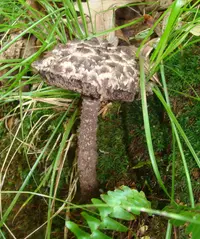
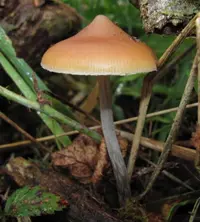
Old-man-of-the-woods, Strobilomyces strobilaceus, is a wild mushroom rather than a leafy plant. It forms chunky, cone-like caps covered with dark, shaggy scales that resemble an old pine cone. The undersides have pores instead of gills.

It typically grows on the forest floor in mixed or coniferous woods, often among leaf litter, in North America, Europe, and parts of Asia. It appears singly or in small groups.

This species can be challenging to cultivate at home because it forms complex relationships with tree roots, which are hard to reproduce in containers. Anyone wanting to learn how to care for Old-man-of-the-woods should understand that it is best appreciated as a forest-dwelling fungus rather than a conventional garden plant.

Main Plant Requirements

Care Difficulty

Moderate Care

Light Preference

Partial Shade

Water Requirements

Keep Soil Moist

Temperature Preference

Cool Climate

Hardiness Zone

Unknown

Soil Texture

Loamy, Silty, Organic-rich

Soil pH

Acidic (5.5–6.5)

Soil Drainage

Moist but well-drained

Fertilization

Minimal (feed rarely)

Get Personalized Care Plan

Scan your plant to receive care tips personalized for your specific plant

Available on iOS and Android

How to Care for the Old-man-of-the-woods

This woodland fungus prefers shaded, cool forest conditions with only brief, gentle sun exposure.

  • Provide 1–2 hours of soft morning sun or dappled light under trees; avoid direct midday or afternoon sun that can dry the substrate too quickly.
  • Aim for bright, filtered light through foliage or full shade with scattered sky exposure, similar to a mixed deciduous or conifer forest floor where Old-man-of-the-woods naturally appears.
  • In summer, protect sites from strong sun and drying winds; in spring and fall, slightly more open canopy is acceptable as long as the ground does not bake or crack.

This species relies on consistently moist, cool forest soil rather than frequent surface watering.

  • Maintain evenly moist, well-drained, humus-rich soil; the top 2–3 cm should feel slightly damp but not soggy when checked by hand.
  • Increase moisture during warm, dry periods by gently soaking the forest floor or mulch layer, allowing excess water to drain away to avoid stagnant, waterlogged conditions.
  • Reduce supplemental watering in cool, wet seasons; signs of excess moisture include foul smell and slimy organic matter, while deep cracking or powder-dry soil indicate insufficient moisture for Strobilomyces strobilaceus.

This fungus favors cool to mild woodland temperatures and does best without sudden extremes.

  • Optimal fruiting typically occurs around 55–70°F (13–21°C), matching cool, shaded forest conditions with high organic matter in the soil.
  • It tolerates cool nights down to about 40°F (4°C), but hard frost below 32°F (0°C) can damage visible fruiting bodies, though underground mycelium often survives.
  • Sustained heat above 80°F (27°C), especially with dry air, reduces fruiting; maintain shade, leaf litter, and soil moisture to buffer short warm spells.

Humidity is not a significant controllable factor for Old-man-of-the-woods, which is managed mainly by habitat rather than indoor adjustments.

Strobilomyces strobilaceus fruits best in loose, moist, organic-rich forest soil with steady drainage.

  • Aim for a deep, humus-rich loam with abundant leaf litter or composted wood to mimic mature woodland conditions.
  • Ensure drainage is free but not rapid by combining native soil with well-rotted leaf mold and a small amount of coarse sand.
  • Keep soil slightly acidic, around pH 5.0–6.0, avoiding limed or strongly alkaline ground that suppresses suitable fungi communities.
  • Avoid compacted, waterlogged, or heavily fertilized ground, which disrupts mycelium development and reduces fruiting potential.

This species is not realistically suitable for container growing, as it depends on complex woodland soil and tree-root associations that cannot be maintained in pots.

This ectomycorrhizal fungus relies on its tree partners for nutrients and usually needs no direct fertilization.

  • Avoid applying synthetic balanced NPK fertilizers directly to Strobilomyces strobilaceus colonies, as excess nutrients can disturb the soil community.
  • If growing Old-man-of-the-woods near host trees, use a light topdressing of leaf mold or well-rotted compost once in spring.
  • Keep compost and organic matter slightly away from the fruiting bodies to prevent rot and maintain good air exchange.

Strobilomyces strobilaceus is a wild mushroom and does not require true pruning, only minimal hygiene handling.

  • Harvest only mature caps by cutting them at the base with a clean knife, leaving surrounding mycelium and soil undisturbed.
  • Remove decaying or insect-riddled fruiting bodies with clean tools to limit spore buildup and pests near paths or play areas.
  • Avoid kicking, raking, or disturbing the colony area, as this damages the underground mycelium that supports future fruiting.

This species is ectomycorrhizal and is not suited to typical container culture or frequent transplanting.

  • If grown in a pot with a host tree seedling, only upsize the container when tree roots circle the pot or growth slows noticeably.
  • Transplant during cool, moist weather, keeping as much original soil and fine roots intact as possible to preserve fungal mycelium.
  • Move the host tree and soil mass gently into a larger hole or pot, avoiding shaking or washing soil from the roots.
  • Water thoroughly after transplanting and keep soil evenly moist, not waterlogged, to reduce stress on both tree and fungus.

Propagation of this fungus at home is difficult and usually not attempted by casual growers.

  • Primary spread occurs through spores that colonize suitable tree roots in undisturbed, slightly acidic, organic-rich soil.
  • Specialized cultivation involves mixing spore slurry with soil around compatible tree seedlings, a technique mostly used by researchers.
  • Maintaining stable moisture, shade, and minimal soil disturbance gives the best chance for spores to establish and form mycorrhizal associations.

This is a cold-hardy woodland fungus that generally needs no special winter care in the ground.

  • Mycelium usually survives normal freezing conditions under leaf litter and soil in temperate climates.
  • In very exposed sites, a 2–5 cm layer of additional leaf litter can help buffer rapid freeze–thaw cycles.
  • Container-grown host trees with associated fungi should be overwintered in a sheltered, frost-prone but not deeply freezing location.

Care Tips

Spore-friendly spacing

When establishing a patch, space inoculated logs or substrate blocks 60–90 cm apart to allow good air movement and reduce competition from faster-growing fungi, which supports more reliable fruiting over several seasons.

Leaf-litter management

Maintain a 3–5 cm layer of hardwood leaf litter over the inoculated area, topping it up each autumn to hold moisture, buffer temperature swings, and mimic the natural forest floor where Old-man-of-the-woods occurs.

Use compatible host trees

Install inoculated plugs or spawn near compatible ectomycorrhizal trees such as oak, beech, or pine, as this species often forms symbiotic relationships with roots and fruits more consistently in their vicinity.

Gentle harvest technique

Cut mushrooms at the base with a clean knife instead of pulling them out, then lightly backfill the cut area with leaf litter to reduce disturbance to the underground mycelium and help future flushes.

Site marking and records

Flag or discreetly mark inoculated spots and keep simple notes on location, tree association, and fruiting times to better understand patterns in growing Old-man-of-the-woods and refine placement in future projects.

Common Pests and Diseases

Mycophagous springtails

These insects feed on fungal tissue, grazing on pore surfaces and gill edges of the fruiting body and causing pitting or rough, scarred areas. Symptoms include small cavities, surface etching, and sometimes premature collapse of caps in very dense populations.

Solution

Limit excessive moisture and standing organic debris around fruiting sites to keep populations lower, and avoid overwatering any substrate used for growing Old-man-of-the-woods. If numbers are high in a controlled cultivation setup, reduce humidity slightly, improve air movement, and use sticky traps or mechanical exclusion rather than chemical treatments, which can also damage the mushroom tissue.

Fungus gnat larvae

This pest lives in moist substrates and may burrow into the base of the stipe or the surrounding mycelium, leading to soft spots, tunneling, or deformation of young fruiting bodies. Symptoms include weakened, partially hollow stems and caps that fail to expand normally.

Solution

Allow the upper layer of any cultivation substrate to dry slightly between misting events, and remove heavily infested or collapsing mushrooms to reduce breeding sites. Use fine mesh over ventilation openings, yellow sticky traps to capture adults, and, in more technical setups, biological controls such as Bacillus thuringiensis israelensis (Bti) in the substrate according to label directions.

Parasitic Hypomyces infection

This disease is caused by parasitic fungi that colonize the surface of the fruiting body, sometimes forming pale or discolored patches that distort or arrest normal development. Symptoms include irregular, crusty or felted growth over the scales and pore surface and loss of normal spore production.

Solution

Promptly remove and discard infected mushrooms, including a small amount of surrounding substrate, to reduce local spore load. Improve spacing and airflow in cultivation areas so caps dry more quickly after rain or misting, and avoid reusing contaminated substrate in future Strobilomyces strobilaceus care instructions.

Slugs and snails

These pests rasp away tissue from caps and stems, creating large, irregular holes and slime trails on the surface. Symptoms include missing chunks of flesh, chewed margins, and sometimes complete loss of young fruiting bodies overnight.

Solution

Hand-pick slugs and snails during damp evenings, and use physical barriers such as copper tape, diatomaceous earth rings, or coarse gravel around the fruiting area. Minimize dense groundcover and decaying vegetation right next to the mushrooms to make the habitat less favorable, and if needed use iron phosphate bait products placed away from the actual fruiting bodies.

Interesting Facts

Dark scaly cap

The cap is covered with thick, dark, cone-like scales that give it a pine-cone appearance, which is why it is commonly called old man of the woods.

Black spore print

It produces an unusually dark, almost black spore print, which is a key feature used by mycologists to distinguish it from many other gilled mushrooms.

Staining reaction

When the flesh is cut or bruised, it often slowly turns gray to black, a chemical oxidation reaction that helps with field identification.

Botan icon

Did you know?

This species forms ectomycorrhizal partnerships with trees such as oaks and beeches, exchanging mineral nutrients and water for sugars from the tree roots and contributing to forest soil health and nutrient cycling.

FAQs about Old-man-of-the-woods

This mushroom is generally considered edible but is not highly valued. Identification must be absolutely certain because dark, scaly boletes can be confused with inedible or upsetting species. Beginners should consult a local expert before any consumption.

Grow Healthy Plants with Botan Care

Keep your plants happy and healthy with plant identification, disease detection, and easy care guidance.

Botan plant care app — identify plants on mobile

Explore More Plants