Wind training
Expose young plants to moderate, steady wind or use a fan in sheltered sites so stems thicken and develop strong wood that better resists breakage as the shrub matures.

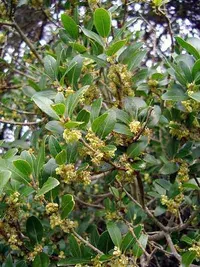
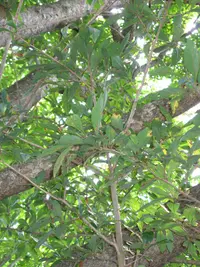
The green olive tree, Phillyrea latifolia, is an evergreen shrub or small tree from the Mediterranean region. It is related to the olive but does not produce edible olives. Dense, glossy, dark green leaves and a naturally bushy, compact habit make it useful for hedges, screens, and shaped specimens. Small, creamy flowers appear in spring, followed by inconspicuous dark fruits. This species is adapted to dry, rocky hillsides and coastal conditions, so it tolerates heat, sun, wind, and poor soils once established. It responds well to pruning, which helps maintain size and form. For those who want to learn how to care for Green Olive Tree, it generally prefers full sun, well-drained soil, and moderate to low moisture.

Care Difficulty
Easy Care

Light Preference
Full Sun

Water Requirements
Low Water

Temperature Preference
Warm Climate

Hardiness Zone
8–10

Soil Texture
Sandy, Loamy, Rocky

Soil pH
Slightly acidic (6.5–7.0), Slightly alkaline (7.0–7.5)

Soil Drainage
Well-drained

Fertilization
Minimal (feed rarely)
Scan your plant to receive care tips personalized for your specific plant
Available on iOS and Android
This Mediterranean shrub prefers bright outdoor conditions with strong, direct sun.
This drought-tolerant evergreen prefers deep, infrequent watering once established.
This species is adapted to warm, dry climates with mild winters.
Humidity is rarely critical for this Mediterranean shrub, which tolerates typical indoor and outdoor ranges well.
Phillyrea latifolia prefers lean, well-drained mineral soils and tolerates poor, rocky substrates.
This species can be grown successfully in containers if the pot and substrate are chosen for stability and rapid drainage.
Phillyrea latifolia is modest in its nutrient needs, but light feeding improves growth, especially for container plants.
Phillyrea latifolia responds well to thoughtful pruning that maintains a dense, tidy structure.
This species is usually grown in the ground, with transplanting more relevant than container repotting.
Phillyrea latifolia is most commonly propagated from semi-ripe cuttings, with seeds used less often.
This evergreen shrub is fairly cold hardy in mild to moderate winters and often needs little special attention.

Plant Health Check
Not sure what's wrong with your plant? Check your plant's health inside the app.
This species is a close evergreen relative of the cultivated olive tree and belongs to the same family, Oleaceae, but it produces small, bitter, bird-dispersed fruits rather than commercial olives.
In Mediterranean shrublands it often resprouts from the base after wildfires thanks to its robust lignotuber, helping stabilize vegetation and soil after fire events.
Its thick, leathery, glossy leaves and dense branching give it notable tolerance to coastal winds and salt spray, so it frequently forms part of natural seaside scrub and cliff vegetation.

Archaeobotanical studies have found phillyrea charcoal in ancient Mediterranean sites, indicating that this species was historically used as a durable firewood and sometimes as a local substitute where true olive wood was scarce.
This species grows at a moderate rate. In suitable outdoor conditions, it usually adds about 15–30 cm of new growth per year, forming a dense framework rather than making very rapid, lanky extension shoots.
Keep your plants happy and healthy with plant identification, disease detection, and easy care guidance.