

Philodendron gloriosum Light Needs

Philodendron gloriosum grows best in bright, indirect light with brief, gentle morning sun if acclimated.

Light Preference

Bright Indirect Light

Philodendron gloriosum Light Requirements

Philodendron gloriosum is native to humid tropical forest habitats in Colombia, where it grows along the shaded forest floor rather than in open sun. Overhead vegetation breaks strong sunlight into filtered light, with brighter gaps and softer seasonal changes.

In cultivation, this background explains why the large, velvety leaves perform best with steady brightness but scorch under harsh rays. Preferred light is bright indirect or filtered light.

  • Ideal exposure:

    Philodendron gloriosum needs about 6–8 hours of bright, indirect or filtered light daily, including up to 1–2 hours of gentle direct morning sun.

  • Gentle sun:

    Early morning sun is usually tolerated when the plant is introduced gradually and leaves stay out of hot glass-amplified rays.

  • Afternoon risk:

    Direct midday or afternoon sun can bleach or scorch the thin, velvety leaves, especially near west or south glass.

  • Lower light:

    Shade is tolerated, but dim rooms often lead to smaller leaves, slower growth, and longer gaps between new leaves.

Indoors, choose a position with bright ambient light and protection from harsh direct rays.

NConditional
North-facing window:

A bright, unobstructed north window can work if the plant sits close to the glass and the room is not dim.

EBest
East-facing window:

Place it within 1–3 ft of an east-facing window where morning sun is soft and indirect light stays bright.

SConditional
South-facing window:

Use a sheer curtain or set it 3–6 ft back so strong midday rays do not hit the leaves directly.

WConditional
West-facing window:

Keep it several feet from the glass or filter the afternoon sun, which is often too intense.

Adjust placement if the plant leans strongly, fades, or develops dry sun patches on the upper leaf surface.

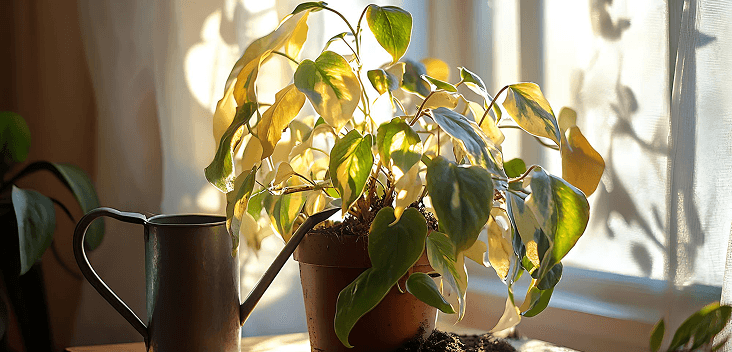
Excess light usually shows first on exposed leaves.

Pale patches:

Leaves may develop washed-out areas where direct sun strikes the surface, especially after a sudden move.

Crisp scorch:

Tan or brown dry spots can form on the upper leaf surface rather than just at older leaf tips.

Faded texture:

The deep green, velvety look may appear dull when light is stronger than the plant can use.

Leaf curling:

Newer leaves may angle away from the window or curl slightly during the brightest part of the day.

Move Philodendron gloriosum out of direct afternoon sun and add a sheer curtain if rays reach the foliage. Damaged tissue will not turn green again, but new growth should emerge normally in better light.

Low light is usually gradual, not sudden. Watch the newest growth and overall shape.

  • Small new leaves:

    Fresh leaves may open noticeably smaller than older ones during the active growing season.

  • Long spacing:

    The creeping stem may stretch with wider gaps between leaves as it searches for brighter conditions.

  • Leaning growth:

    Petioles and leaf blades may lean strongly toward the nearest window instead of holding a balanced shape.

  • Slow production:

    New leaves may take much longer to appear in spring and summer when light is too weak.

Move the plant to a brighter indirect-light position, but avoid shifting it straight into harsh sun. Increase exposure over several days so the leaves adjust.

When ideal brightness is limited, choose the brightest spot that does not receive harsh afternoon sun. Keep leaves close enough to the light source to read clearly without casting a sharp sunbeam on them.

Rotate the pot a quarter turn every 1–2 weeks so the creeping growth stays even and new leaves face light from more than one angle.

A dim corner across the room is unsuitable because it usually cannot meet Philodendron gloriosum light needs.

Get Personalized Care Plan

Scan your plant to receive care tips personalized for your specific plant

FAQ

The best light for Philodendron gloriosum is bright, indirect or filtered light for about 6–8 hours daily. A small amount of gentle morning sun is fine if the leaves are acclimated.

More Plant Light Guides

Get the Botan App

Discover how to care for your plants with Botan.

Botan app identifying a plant with a phone camera
What Plants Don't Like Epsom Salt?

11 min read · 29 Jul 2026

What Plants Don't Like Epsom Salt?

Learn which plants can be seriously damaged by Epsom salt and which will thrive on it. We’ll explain when and how to use it properly, provide tips for indoor & outdoor plants — read on and enjoy a healthy garden.

Plant Care
What Plants Don't Like Epsom Salt?
What Do Plants Need to Grow – 5 Things Every Greenery Can't Live Without

8 min read · 31 Jul 2026

What Do Plants Need to Grow – 5 Things Every Greenery Can't Live Without

To keep plants healthy and thriving, provide the right balance of light, humidity, nutrients, airflow, and quality soil. This guide covers the essentials of year-round plant care.

Beginner Guides
What Do Plants Need to Grow – 5 Things Every Greenery Can't Live Without
Plants That Repel Mosquitoes – 10 Effective Choices

8 min read · 6 Jul 2026

Plants That Repel Mosquitoes – 10 Effective Choices

Plants that repel mosquitoes can help mask human scent naturally and make outdoor spaces more comfortable. Explore the most effective options, their benefits and drawbacks, and choose the right plant for your space.

Plant Recommendations
Plants That Repel Mosquitoes – 10 Effective Choices