Use breathable containers
When growing Pholiota lenta on logs or in tubs, choose drilled plastic boxes or mesh bags so fresh air can reach the substrate while still maintaining high humidity around the developing clusters.

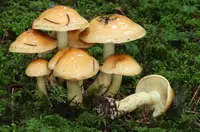
Pholiota lenta is a saprophytic mushroom, meaning it feeds on dead wood rather than forming a typical leafy houseplant. It produces clustered, yellow‑brown caps with a somewhat sticky surface when fresh. Stems are slender and often grow from buried wood or decaying stumps in forests. This species is found mainly in temperate regions, especially in coniferous and mixed woodlands. It appears in cooler, moist seasons when decaying wood stays damp. For those studying how to care for Pholiota lenta in cultivation, it generally prefers shaded conditions, consistent moisture, and a wood‑based substrate rather than regular potting soil.

Care Difficulty
Moderate Care

Light Preference
Partial Shade

Water Requirements
Keep Soil Moist

Temperature Preference
Cool Climate

Hardiness Zone
Unknown

Soil Texture
Loamy, Organic-rich

Soil pH
Acidic (5.5–6.5)

Soil Drainage
Moist but well-drained

Fertilization
Minimal (feed rarely)
Scan your plant to receive care tips personalized for your specific plant
Available on iOS and Android
This wood-rotting mushroom prefers cool, shaded forest conditions with only brief weak sun exposure.
Moist, cool, and consistently damp substrate is essential for reliable fruiting.
This species favors cool, temperate conditions and declines in sustained heat or hard frost.
This wood-rotting fungus prefers consistently moist, humid conditions rather than dry air.
This species grows on decaying wood, so it needs a loose, highly organic substrate rather than mineral garden soil.
This fungus can be grown in containers or bags filled with prepared woody substrate.
In cultivation, Pholiota lenta gains modest benefit from light, carefully controlled feeding on nutrient-poor wood or substrate.
Pruning is not a standard practice for Pholiota lenta, since it is a wood-decaying mushroom rather than a leafy plant.
Transplanting Pholiota lenta focuses on moving colonized substrate or logs rather than handling roots.
Propagation of Pholiota lenta is typically handled by advanced growers using controlled fungal culture methods.
Outdoor Pholiota lenta on hardy logs usually needs little targeted winter care in temperate climates.

Plant Health Check
Not sure what's wrong with your plant? Check your plant's health inside the app.
Fresh fruiting bodies have a distinctly slimy to viscid cap surface when moist, caused by a gelatinous layer in the cap cuticle that helps reduce water loss and protects developing tissues from desiccation.
This species grows mainly on decaying hardwood logs and branches, where its enzymes break down complex wood components and play a direct role in nutrient recycling in temperate forests.
Its spores are smooth, ellipsoid, and pale brown in mass, and microscopic characters such as spore size and shape, along with cystidia form, are key traits used by mycologists to separate it from similar Pholiota species.
This wood-rotting mushroom is generally not recommended for consumption. It is often listed as inedible or of unknown edibility, and may be confused with toxic look-alikes. For safety, avoid eating it and focus on identification only.
Keep your plants happy and healthy with plant identification, disease detection, and easy care guidance.