Host tree selection
Prioritize planting near compatible ectomycorrhizal hosts such as pine or other native conifers in well-drained sandy soil, since the fungus depends on these roots for nutrition and fruiting.

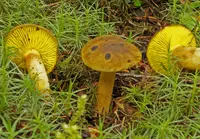
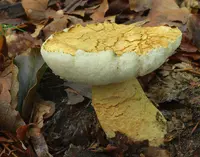
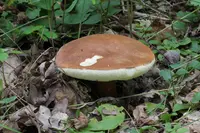
The western gilled bolete, Phylloporus arenicola, is a mycorrhizal fungus that partners with tree roots rather than a typical leafy plant. It forms sturdy, yellow to brown caps with distinctive gills that resemble those of common mushrooms, but its pore-based structure places it among the boletes.
This species is usually found in sandy, coastal or coniferous forests of western North America, emerging from soil near host trees. It is not commonly cultivated, so most information on how to care for Western Gilled Bolete comes from observing it in the wild. It generally favors well-drained, sandy soils with consistent moisture and partial shade, where suitable trees are present for symbiosis.

Care Difficulty
Hard Care

Light Preference
Partial Shade

Water Requirements
Regular Water

Temperature Preference
Cool Climate

Hardiness Zone
Unknown

Soil Texture
Sandy, Organic-rich

Soil pH
Acidic (5.5–6.5)

Soil Drainage
Moist but well-drained

Fertilization
Minimal (feed rarely)
Scan your plant to receive care tips personalized for your specific plant
Available on iOS and Android
This mycorrhizal fungus prefers bright woodland conditions with filtered light rather than direct, open sun.
This ectomycorrhizal fungus depends on consistently moist, well-drained sandy soil rather than direct surface watering.
This species fruits in mild to warm conditions and is sensitive to both hard frost and intense heat.
Humidity is not a key factor for Phylloporus arenicola, which naturally tolerates variable outdoor moisture levels.
Phylloporus arenicola is a mycorrhizal fungus that relies on suitably prepared ground rather than standard potting soil.
This species is generally unsuitable for container growing, as it depends on extensive mycorrhizal relationships with host tree roots in natural soil profiles.
Phylloporus arenicola forms nutrient-sharing mycorrhizal partnerships with host trees, so direct fertilization is usually unnecessary.
Phylloporus arenicola is a wild mycorrhizal fungus, so no intentional pruning is needed.
This mycorrhizal fungus is best left undisturbed, as its health depends on stable soil and host tree roots.
Propagation of Phylloporus arenicola is specialized and usually left to natural spore dispersal in suitable forest habitat.
This species is naturally cold hardy in its native range and normally needs no special winter care when associated with appropriate host trees such as Western Gilled Bolete habitats.

Plant Health Check
Not sure what's wrong with your plant? Check your plant's health inside the app.
Unlike many bolete relatives with pores, this species has distinct yellow gills that often bruise or stain darker when handled, which helps mycologists recognize it in the field.
It is closely associated with sandy or coastal conifer forests, often fruiting among pine and other conifers in loose, nutrient-poor, well-drained soils.
This fungus forms ectomycorrhizae with conifers, wrapping around their fine roots and helping trees absorb water and minerals in exchange for sugars produced by photosynthesis.
This species is generally considered edible when correctly identified, but quality and flavor are modest. Confusion with toxic look-alikes is possible, so only experienced foragers should consume it. When uncertain, avoid eating any wild mushroom completely.
Keep your plants happy and healthy with plant identification, disease detection, and easy care guidance.