Grey Frost Lichen Care (Physconia grisea)

Grey Frost Lichen

About Grey Frost Lichen

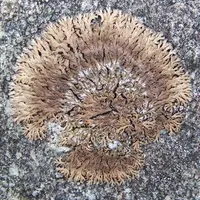
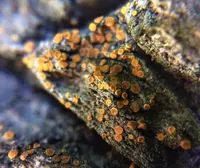
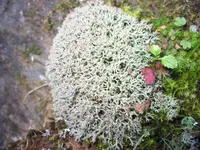
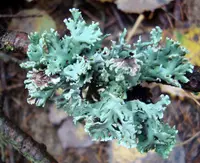
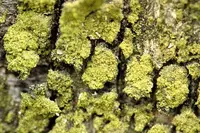
Grey frost lichen (Physconia grisea) is a foliose lichen, a partnership between a fungus and an alga, forming leaf-like rosettes on bark or rock. The surface often looks gray to brown with a frosted, powdery edge.

This species occurs widely in temperate regions, especially in areas with clean to moderately clean air. It usually grows on tree trunks, branches, and occasionally on stones or old walls.

Physconia grisea is not a typical houseplant and is slow-growing, but it can be maintained in specialized terrariums or outdoor displays. Understanding how to care for Grey Frost Lichen mainly involves providing stable moisture, good airflow, and protection from strong pollution.

Main Plant Requirements

Care Difficulty

Moderate Care

Light Preference

Partial Shade

Water Requirements

Low Water

Temperature Preference

Cold Hardy

Hardiness Zone

3–8

Soil Texture

Rocky, Sandy, Loamy

Soil pH

Acidic (5.5–6.5)

Soil Drainage

Well-drained

Fertilization

Minimal (feed rarely)

Get Personalized Care Plan

Scan your plant to receive care tips personalized for your specific plant

Available on iOS and Android

How to Care for the Grey Frost Lichen

This lichen prefers cool, bright conditions with limited direct sun exposure.

  • Provide 2–4 hours of gentle morning sun with bright, open shade or dappled light the rest of the day, similar to a north or east-facing woodland edge.
  • Avoid strong midday and afternoon sun, which can scorch Grey Frost Lichen and cause bleaching or brittle, over-dried lobes on exposed bark or rock.
  • In summer, favor filtered light under shrubs or trees; in winter, increased low-angle sun is usually safe if humidity remains moderate.

This lichen absorbs water from rain, fog, and dew rather than from soil roots.

  • Allow the substrate to dry completely between wettings; in cultivation, mist lightly when the surface looks fully dry and the thallus feels crisp, avoiding runoff or pooling.
  • Reduce misting during cool, humid seasons and increase brief, fine misting during hot, dry spells to prevent prolonged desiccation without making surfaces soggy.
  • Watch for overwatering signs such as algae growth, slimy patches, or dark, collapsing tissue in Physconia grisea, and for underwatering signs like long-term brittleness with no recovery after moisture.

This species tolerates a broad temperature range but performs best in cool to mild conditions.

  • Aim for an active growth range around 40–70°F (4–21°C), where hydration and drying cycles remain gentle and not extreme.
  • It survives lows below 20°F (−7°C) when naturally acclimated and attached to bark or rock, but rapid freeze–thaw around 32°F (0°C) can stress tissues.
  • Heat above 80°F (27°C) is tolerated if humidity is moderate and direct sun is limited; prolonged 90°F+ (32°C+) with full sun greatly increases desiccation risk, so provide shade and airflow.

This lichen prefers moderately moist, consistently cool air rather than very dry or very humid conditions.

  • Aim for 50–70% humidity, avoiding extended periods below 40% in heated indoor environments.
  • Grey Frost Lichen shows humidity stress as brittle, pale, non-flexible lobes that crumble when touched.
  • Increase humidity by placing it outdoors in shaded, sheltered spots, or near naturally humid microclimates such as mossy rocks or shaded walls.

This species naturally anchors to bark, rock, or other firm surfaces rather than growing in typical potting soil.

  • When mimicking its habitat, use a coarse, mineral-based mix such as 60–80% sand or fine gravel with 20–40% crushed bark or leaf litter.
  • Ensure extremely sharp drainage so water runs through immediately; any mix that stays wet or sticky for hours is unsuitable.
  • Maintain slightly acidic to neutral conditions around pH 5.0–7.0 by avoiding lime-heavy substrates unless the local form of Physconia grisea is known from calcareous rock.
  • Improve aeration by keeping the lichen on rough, uneven surfaces that allow air to circulate freely, and never bury thalli under substrate.

This species is only moderately suitable for container culture and is best treated as a mounted or display specimen rather than a traditional potted plant.

  • Use shallow, wide trays or dishes filled with inert gravel or rock pieces to support the lichen without surrounding it with retained moisture.
  • Choose unglazed clay or other breathable materials so any incidental water evaporates quickly and does not stay trapped around the thallus.
  • Keep the container in a stable, low-traffic location so the delicate lichen surface is not disturbed by frequent handling or vibration.

This lichen usually gains nutrients from rainwater and dust, so Grey Frost Lichen rarely benefits from added fertilizer in normal outdoor conditions.

Pruning needs for Physconia grisea are minimal and focus on maintaining host surfaces and appearance rather than shaping the lichen itself.

Transplanting Physconia grisea is uncommon and mainly done for research, habitat restoration, or display on new substrates.

  • Move small lichen-covered bark or rock pieces rather than peeling thalli directly from the surface.
  • Transplant in cool, moist weather to limit desiccation and heat stress.
  • Handle gently and keep fragments oriented as originally grown to maintain light exposure patterns.
  • Secure pieces onto new bark or rock with soft ties or breathable mesh until natural attachment occurs.

Propagation of this lichen is slow and technically demanding, so it is rarely attempted outside specialist or conservation settings.

This species is highly cold hardy and usually needs no special winter care when grown outdoors on suitable trees, rocks, or logs.

Care Tips

Ideal mounting surfaces

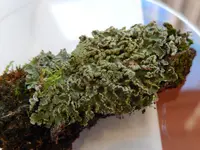
Attach grey frost lichen only to stable, non-treated bark, rock, or unglazed clay surfaces; avoid painted, oiled, or pressure-treated wood, which can leach chemicals that inhibit lichen growth.

Airflow over misting

Promote consistent, gentle airflow instead of frequent misting, since good air movement helps the thallus dry between wet periods and reduces damage from prolonged surface wetness.

Pollution-aware placement

Site colonies away from busy roads, chimneys, or vents, as this lichen is sensitive to air pollutants and will establish more reliably where air quality is higher.

Competing moss control

Gently remove encroaching mosses or algae with a soft brush around but not over the lichen so nearby competitors do not shade or overgrow the thalli.

Low-disturbance handling

Mark or fence off areas where the lichen is growing so foot traffic, pets, or frequent handling do not break the slow-growing lobes, which is essential when caring for Grey Frost Lichen in gardens or educational displays.

Common Pests and Diseases

Air pollution damage

Symptoms include bleaching, browning, or disappearance of thalli in areas with heavy traffic or industrial emissions. This damage results from sensitivity to sulfur dioxide, nitrogen oxides, and other airborne pollutants that disrupt normal lichen physiology.

Solution

Reduce exposure by sourcing material from clean sites and avoiding placement near busy roads, chimneys, or heavy smoke. For decorative or educational use, choose locations with good air circulation and lower pollution, and replace heavily damaged patches rather than attempting chemical treatment, since Physconia grisea care depends mainly on maintaining clean air rather than direct intervention.

Nutrient enrichment

Symptoms include unusually fast, coarse growth, increased presence of green algae on the surface, and gradual overgrowth or displacement by nitrophilous lichens and mosses. This typically occurs where there is chronic ammonia or nitrogen deposition from agriculture, pets, or bird roosts.

Solution

Manage nearby nutrient sources by limiting fertilizer drift, reducing animal waste accumulation, and avoiding placement directly under bird feeding stations or nest sites. If heavy enrichment occurs, gently relocate small fragments to cleaner bark or stone surfaces and maintain a low-nutrient environment to support stable long-term growth.

Snail and slug grazing

This pest creates irregular bite marks, missing lobes, and shredded lichen edges, often leaving slime trails on bark or stone. Damage is usually localized but can gradually thin or remove patches in damp, shaded sites.

Solution

Hand-remove slugs and snails during damp evenings and reduce hiding places such as dense ground litter or stacked debris near host trees or stones. Physical barriers like copper tape or rough mineral mulches can reduce access, while chemical baits should be avoided directly on lichen surfaces to prevent additional stress.

Mite feeding

These insects cause fine pitting, roughened texture, or finely speckled discoloration on lichen lobes, sometimes accompanied by tiny dark fecal spots. Activity is more noticeable on dry, sheltered substrates where small invertebrates can concentrate.

Solution

Rinse affected areas gently with clean, non-chlorinated water to dislodge mites and improve hydration, then maintain moderate, natural humidity and airflow to support healthy regrowth. Avoid broad-spectrum insecticides on lichen, as these can damage the symbiosis; instead, rely on gentle washing and, if outdoors, the presence of natural predators.

Fungal overgrowth

This disease appears as dark, sooty patches, fuzzy overgrowth, or localized crusts forming on top of or between lichen lobes, gradually shading and weakening the thallus. Secondary fungi exploit stressed or shaded colonies and can eventually cause partial dieback.

Solution

Improve light exposure and airflow by lightly pruning nearby vegetation and reducing persistent wetness on the substrate. Where overgrowth is dense, gently remove the worst affected fragments with a soft brush and allow healthy sections to recolonize, rather than applying fungicides, which typically harm lichens along with the unwanted fungi.

Interesting Facts

Urban air quality indicator

This lichen often thrives on nutrient-enriched bark and rock in towns and cities, so its presence can indicate areas with higher levels of nitrogen-rich air pollution rather than pristine air.

Distinctive frosty margins

The lobes of this foliose lichen have pale, frosted-looking edges due to a dense covering of tiny hairs and whitish structures, which give it the grey, rimmed appearance used in its common name Grey Frost Lichen.

Nitrogen enrichment specialist

This species is particularly frequent on tree bark exposed to traffic or agricultural emissions, showing a strong ecological preference for habitats affected by elevated nitrogen compounds such as nitrates and ammonia.

Botan icon

Did you know?

In some European and North American lichen monitoring programs, this species is used as part of standardized indicator sets to track long-term changes in atmospheric nitrogen deposition around urban and agricultural landscapes.

FAQs about Grey Frost Lichen

Growth is slow. In suitable conditions, thalli usually extend only a few millimeters per year. Expansion depends on stable moisture, clean air, and an undisturbed surface. Expect very gradual coverage rather than noticeable yearly size jumps.

Grow Healthy Plants with Botan Care

Keep your plants happy and healthy with plant identification, disease detection, and easy care guidance.

Botan plant care app — identify plants on mobile

Explore More Plants