

Engelmann Spruce Identification (Picea engelmannii)

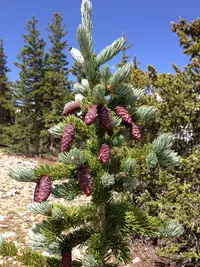
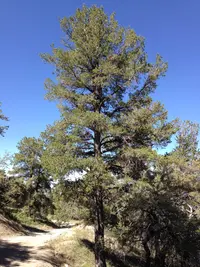
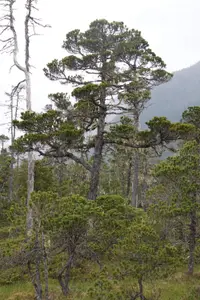
To recognize Engelmann Spruce, look for short, sharp needles borne singly all around the twig, a narrow spire-like crown, and hanging cylindrical cones with thin, flexible scales.

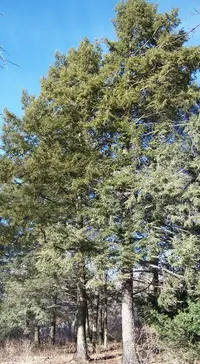
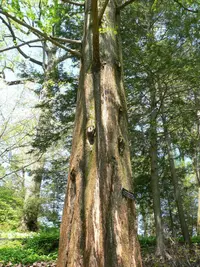
Mature trees are typically 60 to 100 feet (18 to 30 m) tall, with a straight trunk and layered branches that often droop slightly at the tips.

Picea engelmannii Identification

Check Your Plant ID

Upload a plant photo and check the identification in seconds.

Clear images work best. Avoid photos taken too close or too far away

Check the overall form, needles, twigs, and cones of Picea engelmannii.

  • Usually forms a tall, narrow, spire-like crown with a straight central trunk and layered branches.
  • Needles are single, stiff, and pointed, set all around the twig rather than in flat sprays.
  • Each needle is about 3/4-1 inch (2-2.5 cm) long and often blue-green to gray-green.
  • Twigs often look rough after needles drop because short woody pegs remain attached.
  • Cones hang down from branch tips and are slender, about 1-2 1/2 inches (3-6 cm) long, with thin flexible scales.

Rough twigs plus short hanging cones are especially useful visible clues.

Picea engelmannii shows useful visual changes from seedling form to cone-bearing mature trees.

  • Seedling: Seedlings carry a single upright stem with soft, slender juvenile needles. Early branching is sparse, so the plant looks narrow and lightly tufted.
  • Young plant: Young plants form a clear spire with regular whorled branches. Needles become stiffer and more radially arranged, giving shoots a denser, bristly outline.
  • Mature plant: Mature trees develop a tall, narrow crown, often 40-100 feet (12-30 m) tall, with a straight trunk and drooping upper branchlets.
  • Fruiting stage: Cone-bearing plants show hanging, cylindrical seed cones near branch ends, about 1-2 inches (3-6 cm) long, adding a distinct pendant feature absent earlier.

Engelmann Spruce stays blue-green to green through the year, so seasonal color change is limited. The clearest clue is in late summer through fall, when slender, light brown cones hang down from the upper crown and often remain visible into winter. In winter, the persistent needles keep the crown narrow and dense while short orange-brown twigs and pointed brown buds are easier to notice at branch tips.

Several high-elevation spruces can be mistaken for Engelmann spruce.

blue spruce(Picea pungens)

Both have bluish needles and narrow crowns. Blue spruce usually has stiffer, sharper needles and larger cones, often 2-4 inches (5-10 cm), with firmer, wavy-edged scales.

white spruce(Picea glauca)

Both show four-sided needles and hanging cones. White spruce is usually greener, with slightly shorter cones and smoother, less ragged cone scales than Picea engelmannii.

Sitka spruce(Picea sitchensis)

All are conical evergreens with pendent cones. Sitka spruce needles are noticeably flattened, with two strong white bands beneath, unlike the more evenly four-sided needles here.

Native to western North America, Picea engelmannii occurs from British Columbia and Alberta south through the Rocky Mountains to New Mexico and Arizona. It is mainly a high-mountain conifer of subalpine forests, often around 3,000-11,000 feet (900-3,350 m). Finding a spruce in cool upper-elevation forests strongly points toward this species rather than lower-elevation spruce.

Does Your Plant Match?

Use Botan to compare a photo and help identify or confirm the plant before you label it or look up details.

FAQ

Yes. This plant is usually identified by its narrow conical shape, short sharp four-sided blue-green needles, and hanging light brown cones with thin, flexible scales. Flowers are small and brief, so they are rarely the main feature used.

More Plant Identification Guides

Find the Plant. Get the Details.

Identify a plant from a photo with Botan, then review species-specific plant details, care information, and common problems.

Botan app identifying a plant from a photo
Can Plants Grow With Artificial Light?

6 min read · 15 Sept 2026

Can Plants Grow With Artificial Light?

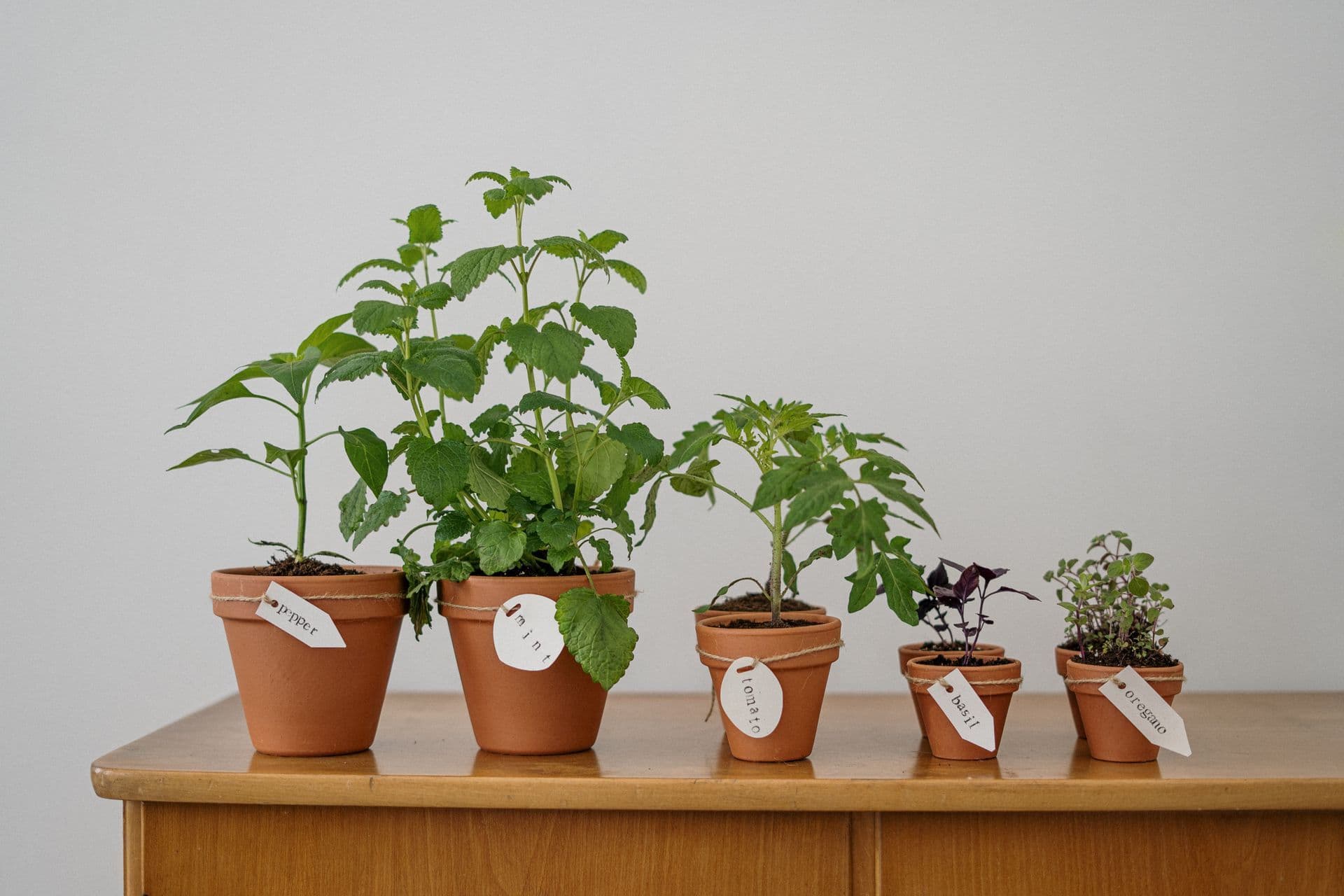
Plants can grow under artificial light when the setup provides a suitable spectrum, enough intensity, and sufficient daily exposure. This guide explains how artificial lighting compares with sunlight, which options work indoors, and how to match a setup to houseplants.

Plant Care
Can Plants Grow With Artificial Light?
Plant Pot Sizes: How to Choose the Right Plant Container

7 min read · 20 Aug 2026

Plant Pot Sizes: How to Choose the Right Plant Container

Plant pot sizes can be confusing because the number on the label only tells you part of the required information. A container may look spacious but actually be too shallow. So, how to choose pot size for plant species?

Beginner Guides
Plant Pot Sizes: How to Choose the Right Plant Container
12 Most Wanted Rare Houseplants to Grow at Home

6 min read · 21 Sept 2026

12 Most Wanted Rare Houseplants to Grow at Home

Rare houseplants can turn an ordinary corner in your apartment into a living botanical collection. This guide covers 12 most admired picks, what makes them special, and how to grow them successfully at home.

Plant Recommendations
12 Most Wanted Rare Houseplants to Grow at Home