


Stabilize Tall Stems
Once stems exceed 30–40 cm, set a heavy, wide pot and top-dress with coarse gravel to lower the center of gravity and prevent the column from tipping as it elongates.

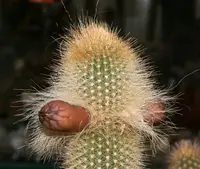
Pilosocereus chrysostele is a columnar cactus from dry regions of Brazil, where it grows in rocky, sun-exposed habitats. It usually forms tall, upright stems with blue‑green skin, golden spines, and a lightly woolly texture along the ribs.
In suitable conditions it grows steadily and can become a striking architectural plant in containers or warm gardens. Its desert origin means it prefers bright light, low humidity, and sharply drained, mineral-rich soil.
This species is generally considered low maintenance once its basic needs are met, but it dislikes cold and prolonged moisture around the roots. Understanding how to care for Pilosocereus chrysostele mainly involves protecting it from overwatering and frost.

Care Difficulty
Easy Care

Light Preference
Full Sun

Water Requirements
Low Water

Temperature Preference
Tropical / Frost Sensitive

Hardiness Zone
10–12

Soil Texture
Sandy, Loamy, Rocky

Soil pH
Slightly acidic (6.5–7.0), Neutral (7.0)

Soil Drainage
Well-drained

Fertilization
Minimal (feed rarely)
Scan your plant to receive care tips personalized for your specific plant
Available on iOS and Android
This species thrives in strong, direct light that mimics full sun desert conditions.
This cactus prefers thorough but infrequent watering with fast drying between soakings.
This columnar cactus prefers warm, dry conditions but has limited cold tolerance.
This cactus handles indoor humidity well and rarely needs special adjustments.
Pilosocereus chrysostele requires a very fast-draining, mineral-rich soil mix that prevents waterlogging.
This species adapts very well to container growing when given a stable, free-draining setup.
This cactus benefits from light, targeted feeding during its active season but does not require heavy fertilization.
Pruning is minimal for this columnar cactus and is mainly done for safety, health, or size control.
Container-grown plants benefit from occasional repotting to refresh soil and manage size.
This species is most often propagated by stem cuttings, though seed is also possible for patient growers.
This cactus is highly frost-sensitive and requires careful winter management in most climates.

Plant Health Check
Not sure what's wrong with your plant? Check your plant's health inside the app.
This species develops dense, golden-yellow spines that can almost completely obscure the blue-green stem in strong sun, an adaptation that helps shade the surface tissues and reduce overheating in its native dry habitats of eastern Brazil.
In habitat, its tubular, whitish flowers open mainly at night and are visited by nectar-feeding bats and large moths, which act as primary pollinators in the caatinga and dry forest ecosystems where it grows.
The stems often show a noticeable bluish or glaucous bloom, a thin waxy layer that reduces water loss by limiting transpiration and reflecting part of the intense solar radiation in semi-arid environments, an important detail for anyone studying Pilosocereus chrysostele care instructions.
Growth is moderate for a columnar cactus. In warm, bright conditions it may add 10–25 cm per year, slowing in cooler climates. Container size, nutrition, and root health strongly influence how fast it gains height.
Keep your plants happy and healthy with plant identification, disease detection, and easy care guidance.

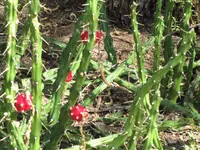
Harrisia adscendens
Harrisia adscendens
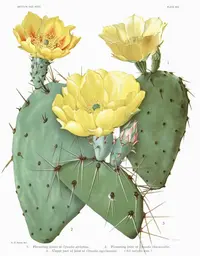
border pricklypear
Opuntia atrispina
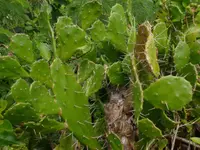
Common pricklypear
Opuntia monacantha
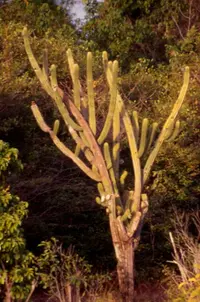
Pilosocereus catingicola
Pilosocereus catingicola
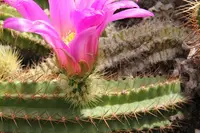
Echinocereus viereckii
Echinocereus viereckii
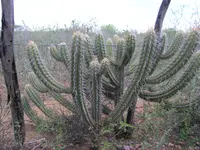
Pilosocereus collinsii
Pilosocereus collinsii
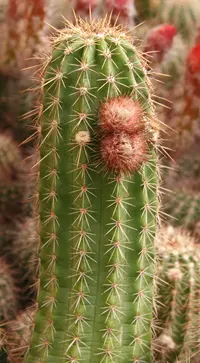
Echinocereus ortegae
Echinocereus ortegae
scarlet hedgehog cactus
Echinocereus coccineus