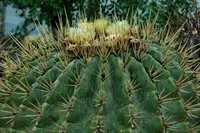
Pilosocereus collinsii Care

About Pilosocereus collinsii

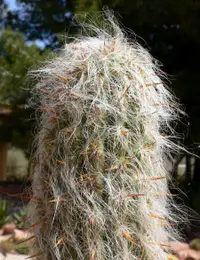
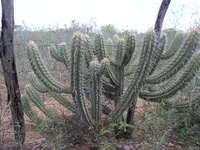
Pilosocereus collinsii is a tree-like columnar cactus known for its tall, ribbed stems covered with short bristles and a blue-green to gray-green surface. It can form multi-stemmed clumps and creates a striking architectural shape in collections and landscapes.

This species is native to arid and semi-arid regions of the Caribbean and nearby tropical areas, where it grows in rocky, well-drained habitats. Its drought tolerance and slow to moderate growth make it relatively easy for experienced cactus keepers, but beginners must avoid overwatering.

Bright light, low to moderate moisture, and very free-draining, mineral-rich soil support healthy growth and make it easier to care for Pilosocereus collinsii in cultivation.

Main Plant Requirements

Care Difficulty

Moderate Care

Light Preference

Full Sun

Water Requirements

Low Water

Temperature Preference

Tropical / Frost Sensitive

Hardiness Zone

10–12

Soil Texture

Sandy, Loamy, Rocky

Soil pH

Slightly acidic (6.5–7.0), Neutral (7.0)

Soil Drainage

Well-drained

Fertilization

Minimal (feed rarely)

Get Personalized Care Plan

Scan your plant to receive care tips personalized for your specific plant

Available on iOS and Android

How to Care for the Pilosocereus collinsii

This sun-loving columnar cactus thrives with strong light and careful protection from extremes.

  • Provide 6–8 hours of direct sun daily, ideally strong morning to early afternoon sun with light shade during the hottest mid-afternoon in very hot climates.
  • In desert or summer conditions, use filtered light or slight shade to prevent bleaching or corky sunburn patches on the south- and west-facing sides.
  • In cooler months, maximize exposure by avoiding shade from buildings or trees, since low winter light can slow growth and weaken Pilosocereus collinsii.

This cactus stores water in its stems and needs infrequent but thorough watering in fast-draining soil.

  • Water only when the top 5–8 cm of soil are completely dry, then soak the root zone so excess drains away, avoiding saucers or low spots that hold water.
  • In spring and summer, expect more frequent watering during active growth; in fall and winter, reduce sharply and allow the soil to stay dry for longer stretches.
  • Watch for shriveling ribs and loss of firmness as signs of underwatering, and for yellowing, soft spots, or a sour smell as signs of overwatering or poor drainage.

This species prefers warm, dry conditions and is sensitive to frost and prolonged cold.

  • Aim for daytime temperatures around 70–90°F (21–32°C) during active growth, with slightly cooler nights to mimic its native habitat.
  • Protect from any frost; sustained exposure below 40°F (4°C) can cause tissue damage, and brief drops near 32°F (0°C) may scar or kill young plants.
  • In heat waves above 100°F (38°C), provide airflow and slight midday shade to limit stress, especially for container plants and newly established Pilosocereus collinsii.

This cactus handles household humidity well and rarely needs special humidity management.

  • Ideal humidity is 30–50%, matching most heated or air-conditioned homes.
  • Very dry air is tolerated; issues arise mainly if roots are wet while air is humid.
  • Humidity stress shows as soft, pale, or rotting tissue; focus on stronger light and stricter watering instead of adding humidity.

This species needs a very fast-draining, mineral-heavy mix that dries quickly after watering.

  • Use a gritty cactus mix with about 60–70% inorganic material such as pumice, coarse sand, and small gravel.
  • Aim for slightly acidic to neutral pH around 6.0–7.0, avoiding strongly alkaline mixes that can lock up nutrients.
  • Improve aeration by increasing coarse particles and avoiding fine peat that compacts and holds water around the roots.
  • For reliable Pilosocereus collinsii care instructions, avoid dense, water-retentive garden soil or mixes dominated by compost.

This species is suitable for container growing, especially in cooler climates where it cannot stay outdoors year-round.

  • Choose a deep, heavy pot so the tall, columnar stems stay stable in wind or accidental bumps.
  • Select unglazed clay if extra evaporation is needed, or plastic if the plant dries too quickly in a very hot spot.
  • Leave a top layer of coarse grit or rocks to keep the base of the stem dry and reduce splashing onto the crown.

This desert cactus needs modest feeding, mainly during active warm-season growth for balanced Pilosocereus collinsii care.

  • Apply a diluted balanced liquid fertilizer (around 10-10-10) at 1/4–1/2 strength every 4–6 weeks in late spring through summer.
  • Use a cactus-specific or low-nitrogen formula to reduce soft, weak growth and support firm, columnar stems.
  • Avoid compost-rich mixes; keep soil mineral and fast-draining to limit salt and moisture buildup around roots.
  • Stop feeding in fall and winter when growth slows, resuming only once days lengthen and temperatures rise.

This columnar cactus rarely needs more than light, corrective pruning to stay healthy and safe.

  • Carry out pruning in late spring or early summer, when growth is active and healing is faster.
  • Remove only dead, diseased, storm-damaged, or dangerously leaning stems on Pilosocereus collinsii.
  • Use clean, sharp loppers or a pruning saw and disinfect blades before and after cuts.
  • Limit cuts to whole segments at branch junctions to maintain natural form and reduce infection risk.

Container-grown plants benefit from careful, infrequent repotting that maintains stability and good drainage.

  • Check for roots circling the pot, pushing through drainage holes, or very slow growth as main signs a larger container is needed.
  • Plan to repot every 3–5 years in late spring, when temperatures are consistently warm and the plant resumes growth.
  • Choose a heavy, wide pot with excellent drainage and a gritty cactus mix to support the tall column without waterlogging.
  • Minimize root stress by handling the root ball gently, keeping it intact, and withholding water for 3–5 days after repotting.

This species is most often propagated from stem cuttings, with seeds used mainly by experienced growers.

  • Take healthy stem cuttings in late spring or early summer, selecting firm, unblemished segments.
  • Allow cut surfaces to callus for 7–14 days in a dry, shaded place before planting to reduce rot risk.
  • Plant callused cuttings upright in a coarse, barely moist cactus mix and keep at 70–85°F with bright, indirect light.
  • For seed propagation, use fresh seed on sterile, fast-draining mix, keep evenly slightly moist, and provide warmth and strong light.

This warmth-loving cactus is not frost hardy and needs careful winter management in most climates.

  • Keep plants above 40–45°F; prolonged exposure near freezing can scar or kill tissue.
  • Move container plants indoors or to a bright, unheated but frost-free greenhouse before the first hard frost.
  • Reduce watering drastically in winter, keeping soil almost completely dry to prevent root rot in cool conditions.
  • In mild climates, use gravel mulch at the base and breathable frost cloth during brief cold snaps for outdoor specimens.

Care Tips

Encourage Upright Growth

Rotate the pot 90° every 2–3 weeks so light reaches all sides evenly, which helps maintain a straight, columnar stem instead of leaning toward the strongest light source.

Stabilize Tall Columns

Once stems exceed 30–40 cm, anchor a slim bamboo or fiberglass stake close to the main stem and secure it loosely with soft ties to prevent wind or handling damage to the shallow root system.

Protect From Excess Rain

If grown outdoors in a wet climate, place the container under a clear overhang or move it to a sheltered spot during prolonged rain so the potting mix can dry and the base of the stem does not stay wet for days.

Check For Mealybugs Early

Inspect the ribs and areoles (the tufted spine bases) every few weeks with a flashlight, and at the first sign of cottony clusters, dab them with isopropyl alcohol on a cotton swab to keep infestations from establishing in the dense spines.

Plan Safe Repotting

When repotting, wrap the column loosely with several layers of newspaper or a folded towel so you can grip and lift it without injuring your hands or damaging spines, which makes caring for Pilosocereus collinsii safer and less stressful for the plant.

Common Pests and Diseases

Red spider mites

This pest feeds on the cactus epidermis, causing a dull, dusty appearance and fine webbing in stem ribs and crevices. Symptoms include slow decline, bronzing, and small yellow or tan speckling on the blue-green skin.

Solution

Increase humidity around the plant temporarily and hose down the stems, focusing on rib grooves and areoles, then allow the surface to dry fully in bright air. For persistent mites, apply a sulfur-based or horticultural-oil miticide labeled for cacti, repeating at 7–10 day intervals, and avoid keeping the plant in hot, stagnant, very dry air indoors for long periods when planning Pilosocereus collinsii care instructions.

Cochineal scale

These insects appear as white, cottony or crusty patches on areoles and along ribs, sometimes exuding red dye-like sap when crushed. This pest weakens stems and can lead to patchy yellowing and poor growth.

Solution

Remove visible clusters with a firm spray of water or by wiping with cotton swabs dipped in isopropyl alcohol, taking care not to damage the skin. For heavier infestations, use a systemic insecticide or a horticultural oil labeled for cacti and isolate affected plants to prevent spread to nearby columnar species.

Mealybugs

These insects hide in rib angles and around the base, leaving white, fluffy deposits and sticky honeydew. Symptoms include stunted new growth, misshapen stem tips, and a general loss of vigor.

Solution

Inspect rib junctions and the base of the plant regularly, removing any mealybugs with alcohol-dipped cotton swabs and trimming off heavily infested offsets or roots if present. For ongoing problems, use repeated applications of insecticidal soap or systemic granules, and reduce excess nitrogen fertilization that encourages soft, susceptible tissue.

Corky scab

This disease causes rough, tan to brown, cork-like patches on the lower stems where the skin has been damaged by sun, cold, or minor injuries. Symptoms include cosmetic scarring but usually limited impact on overall plant health if conditions improve.

Solution

Improve growing conditions by providing stable warmth, strong but filtered sun during acclimation, and avoiding repeated mechanical damage to the stems. Keep the plant dry on the surface, especially in cool weather, and remove only severely damaged sections; new growth will form above the scarred areas under better conditions.

Fusarium stem rot

This disease enters through wounds or old areoles, causing localized soft, reddish-brown to dark brown lesions that can expand upward on the column. Symptoms include collapsing segments, internal discoloration, and sometimes a reddish or purple stain in the vascular tissue when cut open.

Solution

At early stages, cut away all discolored tissue with a sterile knife back into firm, healthy stem, then allow the wound to dry and callus in warm, airy, bright conditions. Discard severely affected plants, sterilize tools after each cut, and avoid overhead watering or keeping the stem surface wet and shaded for long periods, particularly in cool weather.

Interesting Facts

Night-blooming columnar cactus

This species produces large, tubular white to cream flowers that open at night, an adaptation linked to pollination by nocturnal animals such as bats and moths in its native range.

Distinctive blue-green stems

Mature plants develop tall, strongly ribbed, blue-green to glaucous stems with short, bristly hairs around the areoles, giving them a characteristic fuzzy look compared with many smoother columnar cacti.

Coastal Brazilian native

It is naturally distributed in coastal and near-coastal habitats of eastern Brazil, where it grows in rocky, seasonally dry environments influenced by Atlantic climate patterns.

FAQs about Pilosocereus collinsii

Growth is moderate for a columnar cactus. In warm, bright, frost-free conditions with occasional feeding, it may add 10–25 cm per year. Cooler temperatures, low light, or cramped roots slow growth considerably.

Grow Healthy Plants with Botan Care

Keep your plants happy and healthy with plant identification, disease detection, and easy care guidance.

Botan plant care app — identify plants on mobile

Explore More Plants