Stabilize Tall Stems
As the column elongates, sink a sturdy stake into the pot and secure the stem loosely with soft ties to keep it upright and prevent root disturbance if the container is bumped.

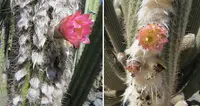
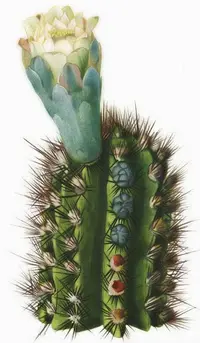
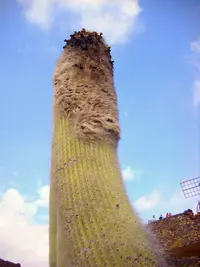
Pilosocereus purpusii is a columnar cactus known for its tall, branching stems covered with bluish-green skin and rows of short spines. It forms an upright, tree-like shape over time and can become a striking focal point in a bright space.
This species is native to arid and semi-arid regions of Mexico, where it grows in rocky, well-drained soils under strong sun. Its drought tolerance and slow to moderate growth rate make it relatively straightforward for patient growers who learn how to care for Pilosocereus purpusii.
It generally prefers high light, low to moderate moisture, and a gritty, fast-draining soil mix that prevents water from sitting around the roots.

Care Difficulty
Easy Care

Light Preference
Full Sun

Water Requirements
Low Water

Temperature Preference
Tropical / Frost Sensitive

Hardiness Zone
10–12

Soil Texture
Sandy, Loamy, Rocky

Soil pH
Slightly acidic (6.5–7.0), Neutral (7.0)

Soil Drainage
Well-drained

Fertilization
Minimal (feed rarely)
Scan your plant to receive care tips personalized for your specific plant
Available on iOS and Android
This columnar desert cactus needs strong light to stay compact and blue-green.
This species is highly drought-tolerant and prefers thorough but infrequent watering.
This cactus thrives in warm, arid conditions and is sensitive to cold and frost.
This cactus prefers dry indoor air and rarely needs humidity adjustment.
Soil must be very fast-draining and mineral-based to prevent root rot.
This species is well suited to container growing when the pot supports drainage and stability.
Feeding supports steady growth in container-grown Pilosocereus purpusii but should stay light to avoid root damage.
Pruning is rarely needed for Pilosocereus purpusii and is mainly corrective or for size control in containers.
Container-grown Pilosocereus purpusii prefers infrequent repotting with minimal root disturbance.
Propagation of Pilosocereus purpusii is usually done from stem cuttings or seeds under warm, bright conditions.
Cold conditions are a major risk for Pilosocereus purpusii, which prefers warm, dry winters.

Plant Health Check
Not sure what's wrong with your plant? Check your plant's health inside the app.
This species is known for its tall, columnar stems with a characteristic blue‑green to glaucous surface caused by a waxy coating that reduces water loss under intense sun. The color can appear more vivid in high light and dry conditions, which is typical of its native habitats in Mexico.
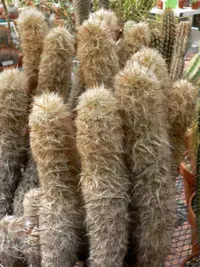
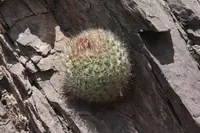
Its areoles, the small pads from which spines emerge, often develop dense, hairlike bristles that can partially obscure the stem surface. These bristles provide shade and a boundary layer of still air around the stem, helping protect the plant from overheating and extreme aridity.
The species produces tubular, often whitish to pale flowers that open mainly at night and emit scent suited to attracting nocturnal pollinators. Field observations link these flowers primarily with bat pollination, a common strategy among tall, columnar cacti in its native range.

In its natural habitat, this cactus can form conspicuous, multi‑stemmed columns several meters tall that stand out above surrounding vegetation, making it an important structural element in certain dry scrub and rocky hillside ecosystems where large woody plants are sparse.
This columnar cactus grows moderately fast for a cactus, often adding 5–15 cm per year in suitable conditions. Growth is quicker in warm weather with strong light, slightly crowded roots, and a gritty, well-aerated substrate.
Keep your plants happy and healthy with plant identification, disease detection, and easy care guidance.