Use stable substrates
Attach the moss to inert, stable materials such as lava rock, aged bark, or unglazed clay tiles so the mat can anchor securely without being disturbed during misting or flushing.

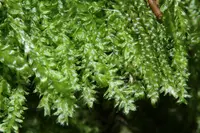
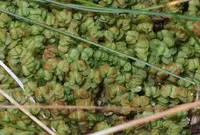
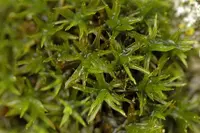
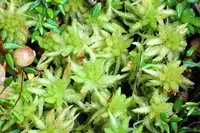
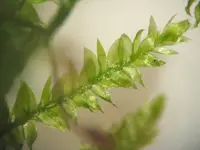
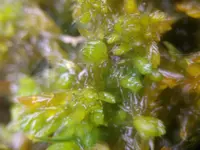
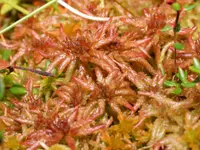
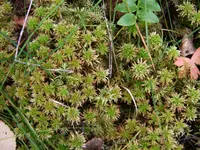
Plagiothecium laetum is a creeping moss that forms soft, green carpets with flattened, overlapping shoots. It has a delicate, feathery texture and a low, spreading habit.
This moss naturally occurs on soil, rocks, and rotting wood in cool, moist forests, often in shaded or partially shaded sites. It usually thrives where humidity stays fairly stable and surfaces do not dry out completely.
Plagiothecium laetum is considered moderately easy to grow if its moisture and shade needs are met, but it is sensitive to drying and physical disturbance. Gardeners who want to care for plagiothecium moss should aim for consistently damp conditions, gentle airflow, and a stable, mildly acidic substrate.

Care Difficulty
Moderate Care

Light Preference
Shade

Water Requirements
Keep Soil Moist

Temperature Preference
Cool Climate

Hardiness Zone
Unknown

Soil Texture
Loamy, Silty, Organic-rich

Soil pH
Strongly acidic (4.5–5.5), Acidic (5.5–6.5)

Soil Drainage
Moist but well-drained

Fertilization
Minimal (feed rarely)
Scan your plant to receive care tips personalized for your specific plant
Available on iOS and Android
This moss prefers low, gentle light similar to a shaded forest floor.
This species prefers consistent surface moisture without waterlogging.
This moss is adapted to cool, temperate conditions and dislikes extreme heat or hard frost.
This moss prefers consistently moist air and is sensitive to drying out.
This species prefers a soft, moisture-retentive but aerated substrate rather than dense mineral soil.
This moss is suitable for shallow containers and terrariums where stable moisture can be maintained.
This moss is adapted to nutrient-poor habitats and usually needs no added fertilizer in typical culture.
Plagiothecium laetum needs almost no pruning, since fronds renew themselves and tolerate light disturbance.
Transplanting is mainly needed when establishing or expanding a patch in a terrarium, dish garden, or outdoor shaded site.
Plagiothecium laetum is most reliably propagated by division of existing mats rather than by spores in home culture.
This moss is cold hardy in most temperate climates and usually needs no special winter care outdoors.

Plant Health Check
Not sure what's wrong with your plant? Check your plant's health inside the app.
This species forms loose, glossy, feather-like mats with distinctly flattened shoots, creating a soft, layered carpet over soil, rotting wood, and stones in moist forests.
Its leaves are characteristically asymmetric with a clearly curved midrib and a pleated (plicate) texture, features bryologists use to distinguish it from closely related mosses.
It often occurs in humid, shaded temperate woodlands and can act as an indicator of stable, cool, and moist microhabitats with relatively low disturbance.
Growth is slow to moderate. New mats usually expand a few millimeters to a few centimeters per year, depending on moisture, airflow, and nutrient availability. Stable, consistently damp conditions are more important than speed when growing Plagiothecium laetum.
Keep your plants happy and healthy with plant identification, disease detection, and easy care guidance.