Root flare check
When planting or inspecting established trees, ensure the root flare (where the trunk widens at the base) is visible above soil or mulch to reduce risk of rot and girdling roots.

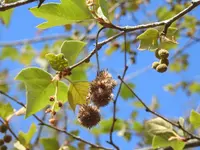
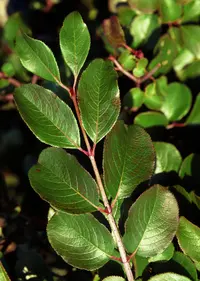
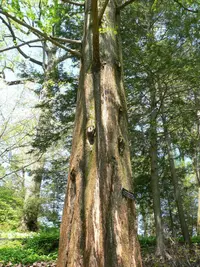
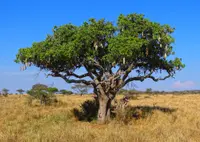
Mexican sycamore, Platanus mexicana, is a fast-growing deciduous shade tree known for its broad canopy and striking, peeling bark. It typically develops a strong central trunk with wide-spreading branches and large, maple-like leaves that show a silvery underside in the wind.
This species is native to Mexico and parts of Central America, where it grows along streams and in canyons. It adapts well to many warm, temperate landscapes, which makes it popular in urban and suburban planting.
Gardeners who care for Mexican Sycamore value its tolerance of heat, drought once established, and a range of soil types. It generally prefers full sun and evenly moist, well-drained soil, which supports healthy growth and an attractive crown.

Care Difficulty
Easy Care

Light Preference
Full Sun

Water Requirements
Moderate Water

Temperature Preference
Warm Climate

Hardiness Zone
7–9

Soil Texture
Loamy, Clay, Organic-rich

Soil pH
Slightly acidic (6.5–7.0), Neutral (7.0)

Soil Drainage
Moist but well-drained

Fertilization
Minimal (feed rarely)
Scan your plant to receive care tips personalized for your specific plant
Available on iOS and Android
This fast-growing deciduous tree prefers abundant direct sun to build a strong canopy and trunk.
This species prefers deep, infrequent watering that encourages a strong, drought-tolerant root system.
This tree thrives in warm climates with hot summers and mild to moderate winters.
This species handles a wide humidity range and usually does not need special humidity control outdoors.
This tree prefers deep, moist, well-drained ground that does not stay waterlogged.
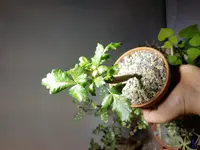
This large, fast-growing tree is generally unsuitable for long-term container culture, except as a very short-term juvenile specimen.
This fast-growing tree benefits from moderate feeding in poor soils but often needs little fertilizer in fertile ground.
Platanus mexicana responds well to thoughtful structural pruning that improves safety and form.
This large tree is usually grown in the ground, so transplanting young stock correctly is more important than repotting.
Propagation of Platanus mexicana is possible from seed or hardwood cuttings but is more common in professional nurseries than in home gardens.
Established trees are fairly cold hardy in mild-winter regions and usually need minimal winter attention.

Plant Health Check
Not sure what's wrong with your plant? Check your plant's health inside the app.
The tree develops a smooth, pale white to light gray trunk as it matures, which contrasts strongly with its dark green foliage and makes it highly visible in riparian landscapes of northern Mexico and the southern US.
Compared with many temperate plane trees, this species naturally occurs on hot, dry slopes and calcareous (lime-rich) soils in Mexico, so it often performs better than Platanus × acerifolia in high heat and alkaline urban conditions.
Its leaves are usually more deeply lobed and often have a silvery, felted underside, a trait that helps reduce water loss and reflects light in its native sunny habitats.

Genetic and field studies indicate that Platanus mexicana hybridizes naturally with nearby North American plane tree species, and it is one of the wild parents contributing stress-tolerant traits to several modern ornamental plane tree selections.
This species is generally fast-growing, often adding 60–90 cm of height per year once established. Growth speed depends on water availability, soil quality, and climate, so performance varies between cooler, drier sites and warm, irrigated landscapes.
Keep your plants happy and healthy with plant identification, disease detection, and easy care guidance.