Cool root mulching
Lay 5–8 cm of leaf mold or fine bark mulch around the crown each spring to keep roots cool, conserve moisture, and mimic the woodland litter this species naturally grows in.

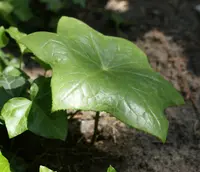
Many-flowered Chinese mayapple, Podophyllum pleianthum, is a shade-loving perennial grown mainly for its bold, glossy foliage and unusual flowers. It emerges from rhizomes to form clumps of umbrella-like leaves that create a dense, architectural ground layer. Beneath the leaves, clusters of dark red, nodding flowers appear in spring, followed by decorative but poisonous fruit. The species is native to woodland habitats in China, where it grows in cool, moist, humus-rich soils. It suits gardeners who can provide consistent moisture, summer shade, and protection from strong wind and hot sun. Understanding how to care for many-flowered Chinese mayapple helps keep the foliage healthy and prevents stress-related leaf damage.

Care Difficulty
Moderate Care

Light Preference
Partial Shade

Water Requirements
Keep Soil Moist

Temperature Preference
Cool Climate

Hardiness Zone
6–9

Soil Texture
Loamy, Silty, Organic-rich

Soil pH
Acidic (5.5–6.5), Slightly acidic (6.5–7.0)

Soil Drainage
Moist but well-drained

Fertilization
Minimal (feed rarely)
Scan your plant to receive care tips personalized for your specific plant
Available on iOS and Android
Podophyllum pleianthum prefers cool, shaded woodland light conditions rather than direct sun exposure.
This species thrives in consistently moist, humus-rich soil that never fully dries out or stays waterlogged.
This woodland perennial prefers cool to mild conditions and dislikes extreme heat or severe freezing.
This species benefits from consistently moist air and reacts quickly to dry indoor conditions.
Podophyllum pleianthum needs moisture-retentive yet aerated soil that never stays waterlogged.
This shade perennial can adapt well to container growing when moisture and stability are carefully managed.
Podophyllum pleianthum benefits from light, steady nutrition but is sensitive to overfeeding.
Podophyllum pleianthum needs minimal pruning, mainly for cleanliness and plant health.
This species is usually grown in the ground, so focus on careful transplanting rather than frequent repotting.
Podophyllum pleianthum is most reliably propagated by division rather than from seed.
This woodland perennial is generally cold hardy and needs only modest winter care in most temperate gardens.

Plant Health Check
Not sure what's wrong with your plant? Check your plant's health inside the app.
This species is naturally found in cool, moist, shaded forests in central and southern China, where it grows on humus-rich slopes and stream banks under dense tree cover.
Its large, glossy leaves often form a nearly circular, umbrella-like canopy that can overlap to create a continuous low layer above the soil surface in mature clumps.
Instead of displaying flowers above the foliage, it produces multiple dark red, waxy blossoms in tight clusters on short stalks that hang beneath the leaves, often remaining partially concealed unless the foliage is lifted.

This species is a natural source of podophyllotoxin, a highly studied plant compound used as a starting material to synthesize several clinically important anticancer drugs, although the pharmaceutical material is usually obtained from other Podophyllum species or related genera to protect wild populations.
This species spreads slowly by rhizomes, forming clumps over several years rather than running aggressively. In suitable shade and moisture, it can gradually create a patch, but it is not typically considered invasive in gardens.
Keep your plants happy and healthy with plant identification, disease detection, and easy care guidance.