Use Low Mineral Water
Use rainwater, distilled, or reverse-osmosis water to avoid mineral buildup that can burn delicate leaf tips and gradually weaken the moss clumps.

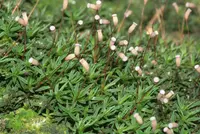
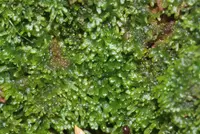
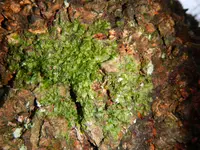
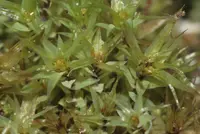
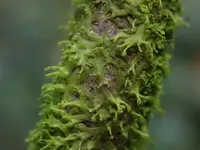
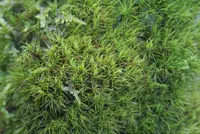
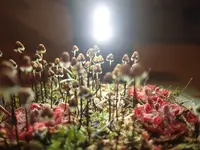
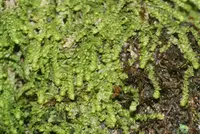
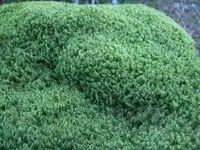
Aloe haircap (Pogonatum aloides) is a small, cushion-forming moss known for its dense, bright green tufts that resemble miniature aloe rosettes. It is a true moss, not related to succulent aloes.
This species typically grows on acidic, moist soils, rocks, and banks in temperate regions, often in shaded woodlands or along stream edges. Its compact growth and preference for constant moisture make it moderately challenging indoors compared with many houseplants.
Those who care for Aloe Haircap should provide cool conditions, stable humidity, and gentle light, avoiding dry air and strong sun for the healthiest growth.

Care Difficulty
Moderate Care

Light Preference
Partial Shade

Water Requirements
Keep Soil Moist

Temperature Preference
Cool Climate

Hardiness Zone
Unknown

Soil Texture
Loamy, Silty, Organic-rich

Soil pH
Strongly acidic (4.5–5.5), Acidic (5.5–6.5)

Soil Drainage
Moist but well-drained

Fertilization
Minimal (feed rarely)
Scan your plant to receive care tips personalized for your specific plant
Available on iOS and Android
Pogonatum aloides prefers soft, forest-like light conditions rather than strong, open sun.
Pogonatum aloides requires consistently moist conditions and does not tolerate drying out.
This moss favors cool to mild conditions and struggles in temperature extremes.
This moss needs consistently high humidity to stay dense and green.
This moss prefers a loose, moisture-retentive yet aerated substrate that mimics damp forest floors.
This species can grow in shallow containers, especially terrariums or trays, if moisture and stability are controlled.
Pogonatum aloides in cultivation benefits from very light feeding, as Aloe Haircap naturally grows on nutrient-poor substrates.
Pruning needs for Pogonatum aloides are minimal and mainly cosmetic.
Pogonatum aloides is usually grown on shallow trays or rocks, so focus on careful transplanting rather than frequent repotting.
Pogonatum aloides is most often propagated by division, while spore propagation is possible but slow and technical.
In suitable outdoor climates, Pogonatum aloides is quite cold hardy and usually needs little winter care.

Plant Health Check
Not sure what's wrong with your plant? Check your plant's health inside the app.
This moss forms dense rosettes of narrow, glossy green leaves whose tips often turn reddish or brown, creating a noticeable bicolor effect when colonies age or experience strong light.
Leaf cells of this species often contain silica bodies, which can make the leaves feel slightly rough under magnification and may provide structural support against abrasion in exposed habitats.
In parts of Europe, Pogonatum aloides commonly colonizes acidic, nutrient-poor sandy or gravelly soils, helping stabilize the surface and gradually creating microhabitats for other small plants and soil organisms.
Leggy, uneven tufts usually result from low light, constant disturbance, or very dry air. Provide brighter, indirect light, stable moisture, and avoid frequent handling so new shoots form densely and the cushion stays compact.
Keep your plants happy and healthy with plant identification, disease detection, and easy care guidance.