Staggered Division
Divide and replant clumps every 3–4 years in early spring on a rotating schedule so each section of the bed has time to recover, which keeps plants vigorous and prevents the center of older clumps from dying out.

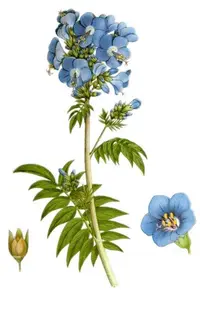
Jacob's ladder, Polemonium caeruleum, is a hardy perennial grown mainly for its neat foliage and soft, blue to violet bell-shaped flowers. It forms compact clumps of fern-like, ladder-arranged leaflets that give the plant its common name.
In nature it occurs in cool meadows, woodland edges, and damp slopes across parts of Europe and Asia. It prefers cool summers and does best in climates without extreme heat.
Gardeners consider it moderately easy to grow if its need for consistent moisture and partial shade is respected. Understanding how to care for Jacob's Ladder helps prevent leaf scorch and decline in hot, dry or exposed sites.

Care Difficulty
Moderate Care

Light Preference
Partial Shade

Water Requirements
Regular Water

Temperature Preference
Cold Hardy

Hardiness Zone
3–7

Soil Texture
Loamy, Silty, Organic-rich

Soil pH
Acidic (5.5–6.5), Slightly acidic (6.5–7.0)

Soil Drainage
Moist but well-drained

Fertilization
Light (every 4–6 weeks)
Scan your plant to receive care tips personalized for your specific plant
Available on iOS and Android
Polemonium caeruleum prefers cool conditions with soft light rather than intense heat.
This plant prefers consistently moist, cool soil without becoming waterlogged.
This cold-hardy perennial thrives in cool to mild climates and dislikes strong heat.
This species grows well in typical outdoor humidity and rarely needs special humidity management.
This species prefers moist, cool, well-structured ground that does not stay waterlogged.
This species can be grown in containers if the pot stays evenly moist and cool.
Polemonium caeruleum benefits from light, consistent nutrition during its active growing season.
Pruning helps maintain compact growth and sustained flowering in Polemonium caeruleum.
This species is usually grown in garden beds, so focus on thoughtful transplanting rather than frequent repotting.
Polemonium caeruleum is commonly propagated by seed and by division of mature clumps.
This perennial is cold hardy in much of the US and usually needs minimal winter care in the ground.

Plant Health Check
Not sure what's wrong with your plant? Check your plant's health inside the app.
The common name Jacob's ladder comes from its pinnate leaves, where many small leaflets are arranged in opposite pairs along the stem, resembling the rungs of a ladder.
This species is native to cool, moist habitats across Europe and parts of temperate Asia, thriving in damp meadows, woodland edges, and stream banks rather than hot, dry sites.
Its nodding, bell-shaped blue to violet flowers produce nectar and pollen that are especially attractive to bumblebees and other cool-climate pollinators.

Historical herbals from Europe describe Jacob's ladder as a traditional cottage garden plant grown both for its soft, fern-like foliage and its use as a symbolic plant linked to the biblical image of a ladder reaching from earth to heaven.
Brown leaf tips or patches usually come from low humidity, heat stress, or soil that dries out too far between waterings. Excess fertilizer and salty tap water can also scorch edges. Trim damage and correct the underlying cause.
Keep your plants happy and healthy with plant identification, disease detection, and easy care guidance.