Solomon's seal Care (Polygonatum multiflorum)

Also known as: Eurasian Solomon's seal, Common Solomon’s-seal, David’s-harp, Ladder-to-heaven
Solomon's seal

About Solomon's seal

Solomon's seal (Polygonatum multiflorum) is a hardy, shade-loving perennial grown mainly for its elegant, arching stems and neat clumps of foliage. It dies back in winter and sprouts again each spring from underground rhizomes.

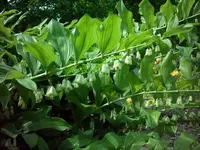
The plant carries pairs of small, white, tubular flowers that hang beneath the stems, followed by dark berries. Its clean, architectural shape suits woodland borders, shaded beds, and naturalistic plantings.

Polygonatum multiflorum prefers cool, moist, humus-rich soil and sheltered positions with partial to full shade. Once established, it is long-lived and fairly low maintenance, so those who learn how to care for Solomon's seal often find it a reliable background plant.

Main Plant Requirements

Care Difficulty

Moderate Care

Light Preference

Partial Shade

Water Requirements

Regular Water

Temperature Preference

Cold Hardy

Hardiness Zone

4–9

Soil Texture

Loamy, Silty, Organic-rich

Soil pH

Acidic (5.5–6.5), Slightly acidic (6.5–7.0)

Soil Drainage

Moist but well-drained

Fertilization

Minimal (feed rarely)

Get Personalized Care Plan

Scan your plant to receive care tips personalized for your specific plant

Available on iOS and Android

How to Care for the Solomon's seal

Polygonatum multiflorum prefers cool, woodland-style light that mimics a shaded forest edge.

  • Provide 2–4 hours of soft morning sun with bright dappled or open shade the rest of the day; avoid harsh afternoon sun, especially in summer.
  • Site Solomon's seal under deciduous trees or on the north or east side of buildings so leaves receive filtered light through spring and early summer.
  • Watch foliage: pale, floppy growth suggests too little light, while scorched, crispy leaf edges indicate excessive direct sun exposure.

This woodland perennial needs steadily moist but not saturated soil around its rhizomes.

  • In the ground, water when the top 3–5 cm of soil feels dry, aiming for consistently damp soil during active growth in spring and early summer.
  • Use rich, well-drained soil; pooling water or a sour smell signals poor drainage and raises the risk of rhizome rot in Polygonatum multiflorum.
  • Drooping, thin leaves and dry, crumbly soil indicate underwatering, while yellowing lower leaves and mushy stems point to overwatering, especially in heavier soils.

This species is a cool-temperate woodland plant with good cold tolerance and moderate heat tolerance.

  • Optimal growth occurs in spring and early summer at 55–75°F (13–24°C), when shoots elongate and flowering stems develop.
  • Established clumps tolerate winter lows near 0°F (−18°C) in the ground, provided soil drains well and rhizomes are not exposed by heaving.
  • During hot spells above 85°F (29°C), provide extra shade and moisture; prolonged extreme heat can stress foliage and shorten the active growing season.

This woodland perennial prefers moderate, slightly moist air rather than very dry conditions.

  • Aim for 40–60% humidity to keep leaves of Solomon's seal plump and less prone to browning.
  • It tolerates short spells of drier air, but persistent levels under 30% can cause crisp leaf tips and marginal browning.
  • Increase humidity outdoors by mulching the root zone, or in sheltered spots by grouping plants and avoiding hot, drying winds.

This species grows best in loose, humus-rich soil that stays evenly moist but never stagnant.

  • Use a deep, loamy mix with high organic matter, such as 50–70% composted leaf mold or garden compost blended with garden loam.
  • Ensure drainage by incorporating coarse sand or fine grit plus a small amount of bark to keep the structure airy.
  • Target a slightly acidic to neutral pH of about 6.0–7.0, which supports nutrient availability for Polygonatum multiflorum.
  • Avoid heavy, compacted clay, waterlogged low spots, or very thin, sandy soil that dries out rapidly and restricts rhizome growth.

This species can grow successfully in containers when given a deep, cool, stable root environment.

  • Choose a tall, heavy pot to give rhizomes vertical space and prevent the arching stems from toppling the container in wind.
  • Fill the pot with a moisture-retentive but free-draining mix, for example 2 parts compost, 1 part loam, 1 part fine bark or grit.
  • Position the container in dappled shade so the pot wall does not overheat and dry out the root zone during warm weather.

Polygonatum multiflorum is a woodland perennial that needs only modest nutrition in normal garden soil.

  • Apply a light layer of garden compost or leaf mold around clumps in early spring to mimic humus-rich woodland soil.
  • Use a balanced slow-release fertilizer (around 10-10-10) at half strength once in early spring for poor or sandy soils.
  • Avoid additional feeding once growth slows in late summer; Solomon's seal is dormant in winter and does not need fertilizer then.
  • Do not apply high-nitrogen products; excessive nutrients lead to weak, lush growth prone to flopping and pest issues.

Polygonatum multiflorum needs minimal pruning, focused on hygiene rather than shaping.

  • Cut back yellowed or collapsed stems at soil level in late autumn after frost has blackened the foliage.
  • Remove dead, damaged, or diseased stems during the growing season using clean, sharp hand pruners to limit infection spread.
  • Thin out congested clumps every few years by removing the oldest stems to maintain airflow and tidy form.
  • Avoid cutting fresh green shoots in spring, since this reduces flowering and weakens next year’s rhizome reserves.

This species is most often grown in the ground, with transplanting of clumps more relevant than container repotting.

  • Look for signs such as crowded shoots, reduced vigor, or rhizomes pressing at the soil surface as indicators that clumps need lifting.
  • Transplant Polygonatum multiflorum in early spring or early autumn, when temperatures are mild and soil moisture is consistent.
  • Divide and replant every 4–6 years, spacing rhizomes 20–30 cm apart in humus-rich, well-drained, shaded soil.
  • Lift clumps carefully with a fork, keep roots shaded and moist, and replant promptly at the same depth to limit transplant shock.

This plant is commonly increased by division rather than from cuttings.

  • Divide established clumps in early spring as new shoots just emerge or in early autumn after foliage dies back.
  • Lift the rhizomes, then separate them into sections with at least 1–2 healthy buds and some roots attached.
  • Replant divisions into moist, humus-rich, partial-shade soil, keeping buds just below the surface and watering thoroughly.
  • Seed propagation is slow; sow fresh seed in pots outdoors for natural cold stratification and expect uneven, delayed germination.

Polygonatum multiflorum is cold hardy in much of the US and usually needs only light winter care in the ground.

  • After frost kills the foliage, cut back stems at soil level and remove debris to reduce overwintering pests and diseases.
  • Apply a 5–8 cm layer of organic mulch over the root zone in late autumn, especially in colder or exposed sites.
  • Move container-grown plants into a sheltered, unheated area where soil does not freeze solid, and water sparingly through winter.

Care Tips

Mark Dormant Clumps

After the foliage dies back in fall, discreetly label or map the planting area so you do not disturb the rhizomes when digging, dividing, or replanting nearby in winter or early spring.

Use Leaf-Mold Mulch

Apply a 3–5 cm layer of shredded leaves or leaf mold each autumn to mimic woodland leaf litter, helping to conserve moisture, suppress weeds, and gradually improve the humus content of the soil.

Staggered Divisions

Divide only a portion of an established clump every 3–4 years, leaving at least one-third undisturbed so flowering performance and patch continuity are maintained while you propagate new plants.

Support Arching Stems

In windy or exposed sites, set low, discreet hoop supports or pea sticks around emerging shoots in early spring so the arching stems can lean on them instead of flopping or breaking later in the season.

Slugs And Sawfly Checks

From early spring, inspect the undersides of leaves and new shoots every 7–10 days, removing slugs and sawfly larvae by hand or using barriers such as copper tape to protect young growth when growing Solomon's seal.

Common Pests and Diseases

Solomon’s seal sawfly

This pest is a small, wasp-like insect whose larvae feed heavily on leaves, often skeletonizing the foliage in late spring to early summer. Symptoms include rapid loss of leaf tissue while veins remain, giving leaves a lace-like appearance.

Solution

Hand-pick and destroy larvae as soon as chewing damage appears, and remove severely affected leaves to reduce the population. Encourage predators like birds by avoiding broad-spectrum insecticides, and if needed use a targeted treatment with a contact insecticidal soap or horticultural oil, making sure to coat the undersides of leaves.

Solomon’s seal aphid

These insects cluster on young stems and leaf undersides, sucking sap and causing curling, distortion, and sticky honeydew deposits that can lead to sooty mold. This pest is often most noticeable on soft new growth in spring and early summer.

Solution

Wash colonies off with a strong but controlled stream of water and prune out badly infested shoots. For persistent problems, apply insecticidal soap or a light horticultural oil in the evening, repeating as needed while monitoring beneficial insects like lady beetles.

Slugs and snails

This pest group feeds on tender shoots and leaves, leaving irregular holes, shredded edges, and silvery slime trails, especially in cool, moist shade. Damage is often most severe on emerging shoots in spring.

Solution

Hand-pick slugs and snails in the evening, use beer traps or iron phosphate bait, and remove hiding places such as dense ground debris near crowns. Keeping the bed slightly drier at the soil surface with coarse mulch like gravel or crushed shells lowers slug activity while still supporting growing Solomon's seal.

Leaf spot

This disease causes brown, tan, or dark purple spots on leaves that may merge into larger blotches, sometimes surrounded by yellow halos. Symptoms include premature yellowing and early leaf drop in humid or crowded plantings.

Solution

Remove and dispose of affected leaves as soon as spotting appears and clean up fallen debris in autumn to reduce overwintering spores. Improve air circulation by thinning crowded clumps and water at soil level rather than over the foliage; if outbreaks repeat yearly, consider a preventive copper- or sulfur-based fungicide applied according to label directions.

Rust

This disease produces orange, rust-brown, or yellow pustules primarily on the undersides of leaves, with pale or yellow spots visible from above. Symptoms include gradual weakening of the plant if many leaves are affected over several seasons.

Solution

Promptly remove and destroy infected leaves, including those that fall to the soil, to break the disease cycle. Avoid overhead watering, space plants to improve airflow, and if rust recurs, use a labeled fungicide applied early in the season when the first spots appear, rotating products to prevent resistance.

Interesting Facts

Arching woodland habit

This species naturally forms graceful, arching stems up to 60–90 cm tall in shaded deciduous woodlands across Europe and western Asia, often creating loose colonies along forest edges and paths.

Paired hanging flowers

Unlike some related species with solitary blooms, it typically bears its creamy-white, tubular flowers in pairs or small clusters from the leaf axils along the underside of the stem.

Berry color change

The plant produces spherical berries that start green and ripen to a dark bluish-black, providing a seasonal visual change after flowering, although the fruits are considered poisonous if eaten.

Botan icon

Did you know?

Polygonatum multiflorum is a classic indicator of long-established, undisturbed woodland in many parts of Europe, so its presence in a hedgerow or forest remnant often signals that the site has been continuously wooded for centuries.

FAQs about Solomon's seal

This species spreads slowly by rhizomes, forming loose colonies over several years. It is not usually aggressive in typical garden conditions, but rich soil and consistent moisture can encourage quicker clump expansion and gradual patch formation.

Grow Healthy Plants with Botan Care

Keep your plants happy and healthy with plant identification, disease detection, and easy care guidance.

Botan plant care app — identify plants on mobile

Explore More Plants