Host wood selection
Use fresh, undecayed conifer or hardwood logs with intact bark as the substrate, since this fungus colonizes recently dead wood rather than fully decomposed material.

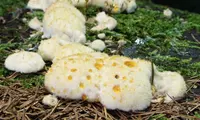
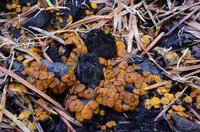
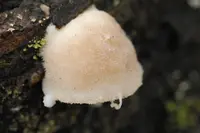
Powderpuff bracket, Postia ptychogaster, is a saprophytic fungus that grows on dead or decaying wood rather than in pots or garden beds. It forms dense, rounded cushions that look like clusters of white to cream cotton or powder, eventually breaking into a crumbly, dusty mass. This distinctive growth makes it easy to spot on fallen logs, stumps, or buried wood in temperate forests, especially in Europe and parts of North America.
The species helps break down wood and recycle nutrients, so it is more a woodland decomposer than a traditional ornamental plant. Some enthusiasts still like to observe and care for Powderpuff Bracket on natural wood pieces, favoring cool, shaded, consistently moist conditions.

Care Difficulty
Moderate Care

Light Preference
Partial Shade

Water Requirements
Keep Soil Moist

Temperature Preference
Cool Climate

Hardiness Zone
Unknown

Soil Texture
Organic-rich, Loamy

Soil pH
Acidic (5.5–6.5)

Soil Drainage
Moist but well-drained

Fertilization
Minimal (feed rarely)
Scan your plant to receive care tips personalized for your specific plant
Available on iOS and Android
This wood-decaying fungus prefers low to moderate light similar to a shaded forest floor.
Moist but not waterlogged conditions are essential for this wood-inhabiting fungus.
This fungus grows best in cool to mild outdoor conditions.
This wood-decay fungus prefers consistently moist air but usually adapts to typical outdoor humidity.
Postia ptychogaster grows on wood rather than true soil, but substrate preparation still influences its success.
This species is only loosely suited to container culture and performs best when wood pieces are managed carefully inside the vessel.
Postia ptychogaster is a wood-decaying fungus that gains nutrients from its host and does not benefit from standard houseplant fertilization.
Pruning is not a standard practice for Postia ptychogaster, as it is a saprophytic fungus rather than a managed ornamental plant.
This fungus is not maintained as a potted plant, so standard repotting is not relevant; management focuses on its woody substrate.
Intentional propagation of Postia ptychogaster is uncommon outside research or specialist fungal cultivation.
This wood-decay fungus is naturally cold hardy in temperate climates and does not require dedicated winter care from gardeners.

Plant Health Check
Not sure what's wrong with your plant? Check your plant's health inside the app.
This fungus produces a sterile, cottony white mass that looks like a puffball rather than a typical bracket or shelf fungus, which can cause misidentification in the field.
It is a saprotrophic fungus that colonizes dead conifer wood, contributing to the breakdown of lignin and cellulose and playing a defined role in conifer forest nutrient cycling.
As it matures, the initially woolly white fruiting mass often turns into a crumbly, powdery structure made of spores that can be easily dislodged and dispersed by air currents.

The species is considered uncommon to locally rare in many parts of its range, so mycologists often record individual finds to better understand its distribution and conservation status.
This wood-decay fungus is best grown outdoors on dead hardwood, where it can colonize logs or stumps. It is not suited to typical houseplant conditions, so Powderpuff Bracket indoor care is mostly limited to short-term display of collected specimens.
Keep your plants happy and healthy with plant identification, disease detection, and easy care guidance.