Substrate selection
Use freshly cut, untreated hardwood logs or blocks with intact bark as the growth substrate, since greyling bracket establishes more reliably on clean oak, beech, or birch than on decayed or resinous wood.

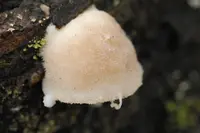
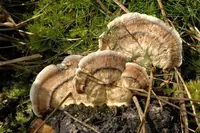
Postia tephroleuca, commonly called greyling bracket, is a wood-decay fungus rather than a leafy houseplant. It forms flat, bracket-like shelves on dead or stressed hardwood, often with pale gray to whitish surfaces and soft, porous flesh. In nature, it appears in temperate forests, parks, and urban landscapes across parts of Europe and North America, helping break down fallen trunks and branches. This species is not typically cultivated indoors, and attempts to care for greyling bracket must account for its need for decaying wood and consistently cool, moist conditions. Its growth depends more on suitable dead wood and humidity than on standard potting soil or light setups used for ornamental plants.

Care Difficulty
Moderate Care

Light Preference
Shade

Water Requirements
Keep Soil Moist

Temperature Preference
Cool Climate

Hardiness Zone
Unknown

Soil Texture
Organic-rich, Loamy

Soil pH
Acidic (5.5–6.5)

Soil Drainage
Moist but well-drained

Fertilization
Minimal (feed rarely)
Scan your plant to receive care tips personalized for your specific plant
Available on iOS and Android
Postia tephroleuca, often called greyling bracket, develops best on shaded, dead or decaying wood rather than in direct sun.
This wood-decaying fungus depends on consistently moist, but not waterlogged, substrate rather than direct watering of the fruiting bodies.
This species fruits best in cool to mild conditions typical of temperate forests.
Humidity plays almost no role in cultivation because this wood-decaying fungus relies mainly on consistently moist substrate rather than air moisture.
Postia tephroleuca develops on decaying wood rather than conventional soil, so providing a wood-based substrate is critical.
This species is not well suited to typical container growing, as it naturally fruits from infected wood rather than establishing in pots.
This wood-decay fungus lives mostly on dead or weakened trees and usually does not benefit from fertilization in garden or indoor settings.
Pruning is not a care technique for Postia tephroleuca but a hygiene and tree-management action.
This fungus naturally colonizes dead or stressed wood, so management focuses on host material rather than repotting.
Intentional propagation of Postia tephroleuca is rarely recommended outside research or specialist collections.
Greyling bracket is naturally cold hardy in temperate climates and normally needs no deliberate winter care.

Plant Health Check
Not sure what's wrong with your plant? Check your plant's health inside the app.
This species forms soft, whitish to pale grey bracket-like fruiting bodies with a velvety to slightly woolly surface that often darkens toward the base as it ages.
It is a brown-rot fungus that breaks down cellulose and hemicellulose in dead conifer wood, leaving behind crumbly, brown, cube-like pieces of lignin-rich wood.
The species is most often found on dead or fallen conifer wood such as spruce and pine in temperate forests, where it helps recycle nutrients back into the ecosystem.
This wood-decay fungus typically grows on dead or dying broadleaf trees, especially beech and other hardwoods. It prefers cool to mild temperate climates, shaded forest conditions, and trunks or logs with consistently moist, but not waterlogged, wood.
Keep your plants happy and healthy with plant identification, disease detection, and easy care guidance.