Clean substrate rotation
Rotate or completely replace the wood chip or straw substrate between flushes to reduce pathogen buildup and maintain ideal nutrition levels for growing Questionable Stropharia.

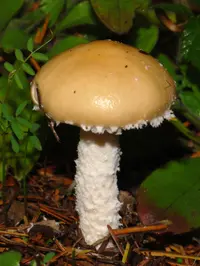
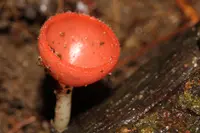
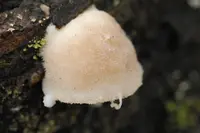
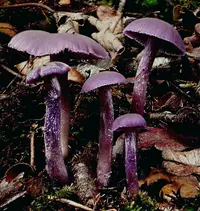
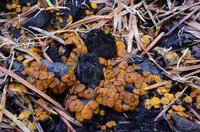
Questionable stropharia (Stropharia ambigua) is a gilled mushroom, not a leafy houseplant. It typically appears in clusters with slim yellow to pale caps and a slender stalk. The cap surface often looks slightly sticky when fresh.
This species is native to the Pacific Northwest of North America, where it grows on forest floors rich in woody debris and leaf litter. It usually emerges in cool, moist seasons.
Gardeners sometimes encounter it in mulched beds, compost-rich borders, or woodland-style plantings. Anyone wanting to learn how to care for Questionable Stropharia should first understand that it depends on consistently moist, organic-rich substrates and shaded to semi-shaded conditions, which are hard to reproduce indoors.

Care Difficulty
Moderate Care

Light Preference
Partial Shade

Water Requirements
Keep Soil Moist

Temperature Preference
Cool Climate

Hardiness Zone
7–9

Soil Texture
Loamy, Silty, Organic-rich

Soil pH
Acidic (5.5–6.5), Slightly acidic (6.5–7.0)

Soil Drainage
Moist but well-drained

Fertilization
Minimal (feed rarely)
Scan your plant to receive care tips personalized for your specific plant
Available on iOS and Android
This woodland fungus prefers cool, shaded forest conditions rather than direct, open sun.
This mushroom species depends on consistently moist, never waterlogged, substrate to fruit well.
This fungus thrives in cool to mild conditions typical of shaded, moist forests.
This wood-decay mushroom prefers consistently moist air and substrate rather than specific indoor humidity control.
This species needs a loose, organic-rich, consistently moist substrate rather than typical garden soil.
This mushroom is generally unsuitable for long-term container growing, except in large outdoor totes or beds that mimic ground conditions.
This wood-decay fungus depends mainly on nutrient-rich organic matter and usually needs no additional fertilizer in garden or forest settings.
Pruning is not applicable to Stropharia ambigua, as it is a mushroom-producing fungus rather than a woody or leafy garden plant.
This species is best managed by adjusting its substrate rather than repotting, since it naturally colonizes woody debris and rich organic soil.
Propagation of Stropharia ambigua focuses on spreading its mycelium rather than using traditional plant methods like cuttings or division.
This fungus is naturally cold hardy in temperate climates and typically needs no special winter care in outdoor beds.

Plant Health Check
Not sure what's wrong with your plant? Check your plant's health inside the app.
Young mushrooms often show a vivid yellow partial veil that leaves fragments on the cap margin and a fragile ring on the stem as it breaks, which helps distinguish this species from similar woodland fungi.
The spore print is a deep purple-brown, a characteristic that mycologists use to separate this species from look-alike yellow mushrooms that have white or rusty-brown spores.
This fungus is strongly associated with coniferous forests of the Pacific Northwest in North America, where it commonly fruits on rich, disturbed soil and forest debris in spring and early summer.
This mushroom is not considered a good edible and is generally treated as inedible or suspect. Identification is difficult, and it can be confused with toxic species. Foraging or consumption is strongly discouraged without expert mycological confirmation.
Keep your plants happy and healthy with plant identification, disease detection, and easy care guidance.