Secure Planting Baskets
Use fine-mesh aquatic baskets lined with burlap or newspaper to keep the substrate from escaping and to anchor the rhizomes so currents and fish activity do not uproot the plants.

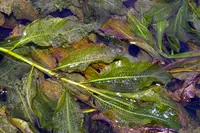
Shining pondweed (Potamogeton lucens) is a submerged aquatic plant found in calm or slow-moving freshwater such as ponds, lakes, and canals. It forms dense underwater stands that provide shelter for fish and invertebrates.
Its broad, translucent, glossy green leaves have a slightly wavy surface and grow on flexible stems that can reach up toward the water surface. The plant produces small, inconspicuous flower spikes that rise above the water in summer.
Potamogeton lucens adapts best to clear, nutrient-rich water with good light penetration and a soft, silty or muddy bottom. In suitable conditions it spreads steadily, so learning how to care for Shining Pondweed helps keep growth balanced and healthy.

Care Difficulty
Moderate Care

Light Preference
Full Sun

Water Requirements
Aquatic

Temperature Preference
Cool Climate

Hardiness Zone
4–9

Soil Texture
Silty, Loamy, Organic-rich

Soil pH
Slightly acidic (6.5–7.0), Neutral (7.0)

Soil Drainage
Waterlogged tolerant

Fertilization
Minimal (feed rarely)
Scan your plant to receive care tips personalized for your specific plant
Available on iOS and Android
This submerged aquatic plant depends on consistent light penetration through the water column for healthy growth.
Potamogeton lucens grows rooted in saturated substrates under standing or very slow-moving water, so moisture management focuses on water depth and quality rather than soil drying cycles.
This aquatic species tolerates cool to moderately warm water but reacts poorly to extreme cold or rapid temperature swings.
This submerged aquatic species depends on water conditions rather than ambient air humidity for healthy growth.
This aquatic plant anchors in submerged sediments rather than conventional potting soil.
This species suits containers placed within ponds or large water features for controlled growth.
This submerged aquatic species usually grows well in nutrient-balanced ponds and needs only light supplemental feeding in containers.
Pruning Potamogeton lucens focuses on maintaining water flow, light penetration, and healthy shoots.
This species is usually established directly in ponds or lakes, so management focuses on careful transplanting rather than frequent repotting.
Propagation of this pond plant is usually done vegetatively to maintain consistent growth and coverage.
In much of its range this aquatic species is cold hardy and usually needs little specific winter care in established ponds.

Plant Health Check
Not sure what's wrong with your plant? Check your plant's health inside the app.
This submerged aquatic plant develops large, translucent, glossy leaves that efficiently capture limited light in turbid or slightly shaded waters, helping it thrive at greater depths than many other pondweeds.
Populations of this species tend to decline in highly polluted or heavily eutrophic lakes and canals, so its presence is often used by freshwater ecologists as a sign of moderately good water quality.
Its dense underwater stands offer shelter, spawning sites, and feeding surfaces for fish, aquatic invertebrates, and grazing waterfowl, making it an important structural component of lowland lake and slow-river ecosystems.

This species is native to Europe, western Asia, and parts of North Africa and has been introduced to regions such as North America, where it can form persistent, locally dominant stands but is generally not as aggressively invasive as some other submerged macrophytes.
This species spreads through creeping rhizomes and stem fragments and can form dense stands in still or slow water. In small ponds, control growth by regular thinning and removing loose fragments after maintenance work.
Keep your plants happy and healthy with plant identification, disease detection, and easy care guidance.