Tolerant of urban dryness
Once established in temperate climates, cherry laurel hedges in cities often cope with relatively low summer rainfall and dry air, partly due to their thick, glossy leaves that reduce water loss through transpiration.

This page explains when, how often, and how much to water Prunus laurocerasus in typical home landscapes.

Water Requirements
Moderate Water
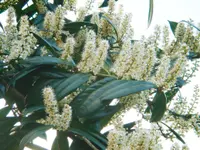
In mild, seasonally moist climates, cherry laurel typically experiences steady rainfall with only short dry spells. Prunus laurocerasus prefers soil that stays evenly damp, not waterlogged and not frequently parched.
For watering cherry laurel, aim for consistent moisture outdoors and slightly drier, more controlled conditions in containers. This section introduces how to water cherry laurel at a glance before outlining specific outdoor and container guidelines in detail.
Let the top 1–2 inches (3–5 cm) of soil dry before watering again, whether the plant is in the ground or in a container. This typically means watering every 5–10 days in warm, dry weather, and less often in cool or rainy periods, especially for established cherry laurel shrubs.
Water cherry laurel when the top 1-2 inches (3-5 cm) of soil feel dry, aiming for deep, even root moisture.
Incorrect moisture levels disrupt healthy growth in Prunus laurocerasus and trigger avoidable stress symptoms.
Older leaves turn uniformly yellow from persistently wet soil and developing root suffocation problems.
Limp foliage despite damp ground indicates oxygen-starved roots and potential early root rot.
Crisp, browning margins often follow prolonged dryness, especially in exposed, fast-draining sites.
Uneven watering stresses foliage, increasing vulnerability to shot-hole disease that perforates leaf surfaces.
Water pooling around the stem base points to poor drainage and raised risk of decay.
Keep soil consistently moist, never waterlogged, using drainage and mulching to buffer rainfall extremes.
Unsuitable watering habits disturb soil oxygen and moisture balance, weakening Prunus laurocerasus and making cherry laurel more stress‑prone outdoors or in containers.
Safer watering keeps the root zone evenly moist but never saturated, guided by soil feel, plant size, and site conditions.

Plant Water Guide
Learn how much water your plant needs and keep its routine on track
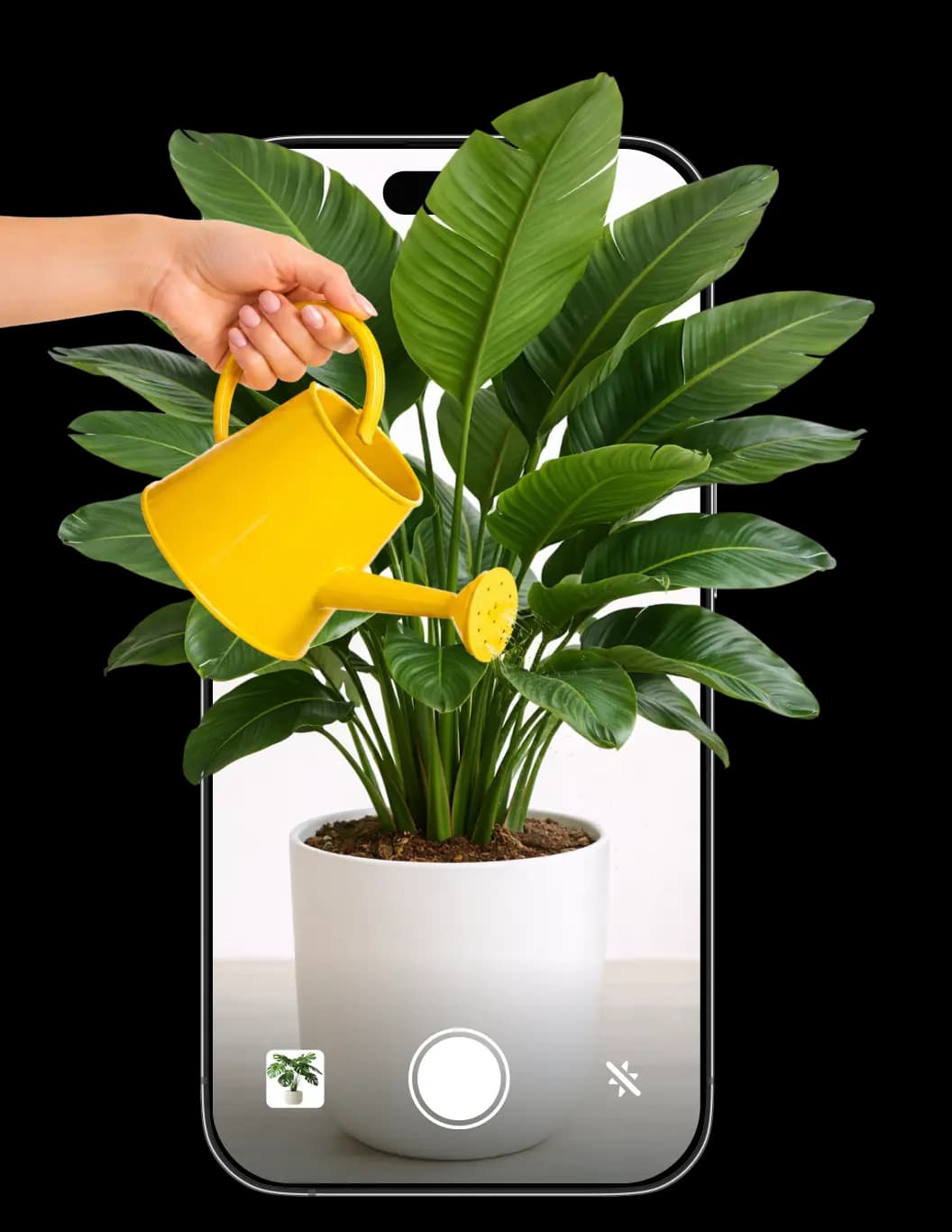
Use Botan for a clear watering guide and practical care steps for cherry laurel. The app can also review plant photos to help spot early stress or possible issues.
Once established in temperate climates, cherry laurel hedges in cities often cope with relatively low summer rainfall and dry air, partly due to their thick, glossy leaves that reduce water loss through transpiration.
In its native range from southeastern Europe to the Caucasus, cherry laurel typically grows in moist, shaded woodland and ravine habitats, which explains its preference for evenly moist but not waterlogged soil in cultivation.
Despite liking consistent moisture, cherry laurel is prone to root problems in heavy, poorly drained soils, where standing water increases the risk of root rot and decline, especially in winter when evaporation is low.
In the ground, water deeply when the top 2–3 inches (5–7 cm) of soil are dry. In most climates this means weekly in summer, less in spring and fall, and rarely in winter.
Use Botan to review your watering habits and adjust them with more confidence.
.jpg&w=2880&q=75)
8 min read · 10 Sept 2026
Discover 10 garden flowers that require minimal care. Learn which characteristics make plants easy to grow and follow tips on how to create a beautiful corner from beginner-friendly blooms on your property.
5 min read · 4 Sept 2026
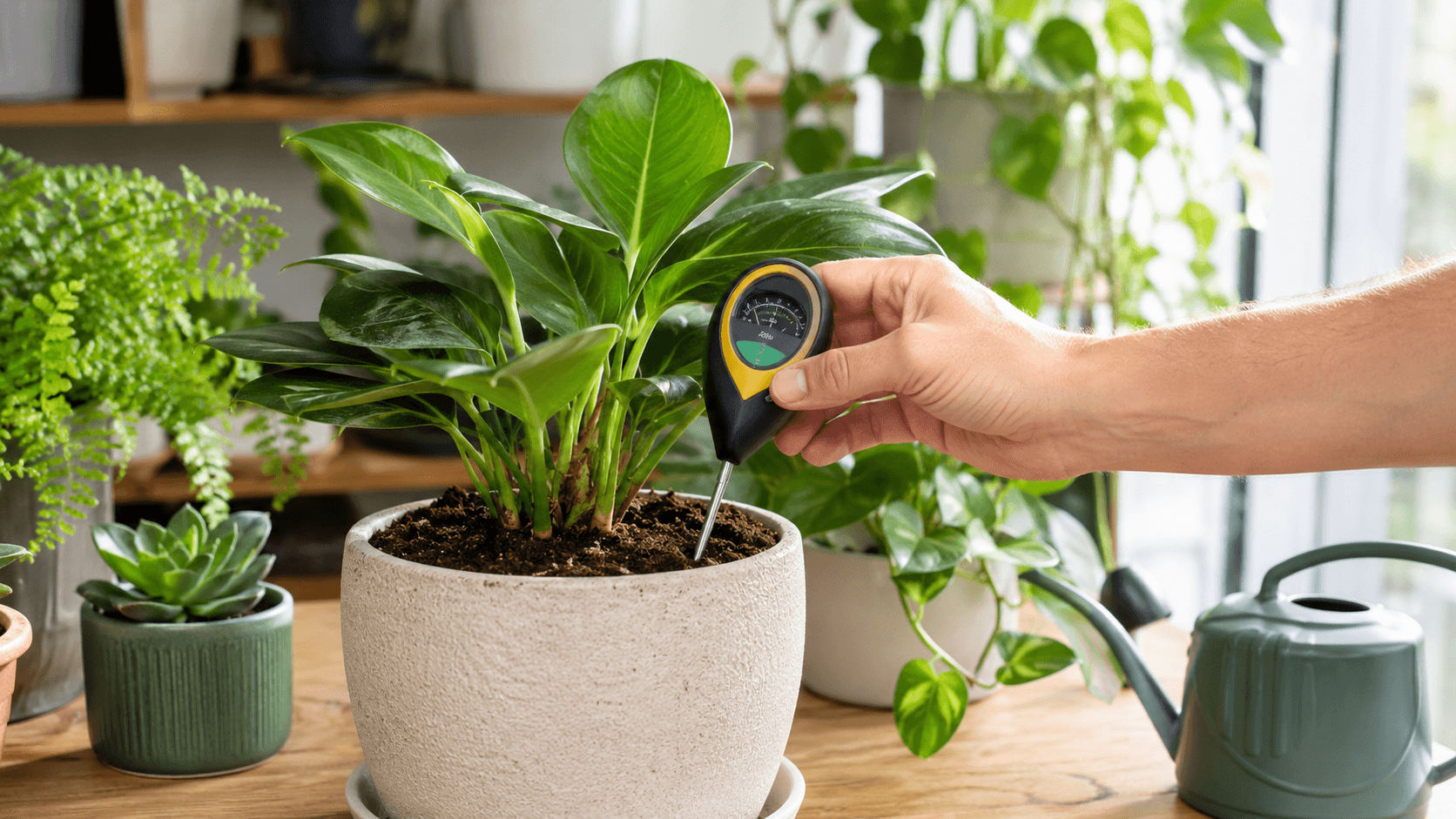
Watering by feel kills plenty of houseplants. A moisture meter checks the soil for you, and takes the guesswork out of it. This guide will show you how to use it correctly, from the first touch to the final reading.
7 min read · 28 May 2026
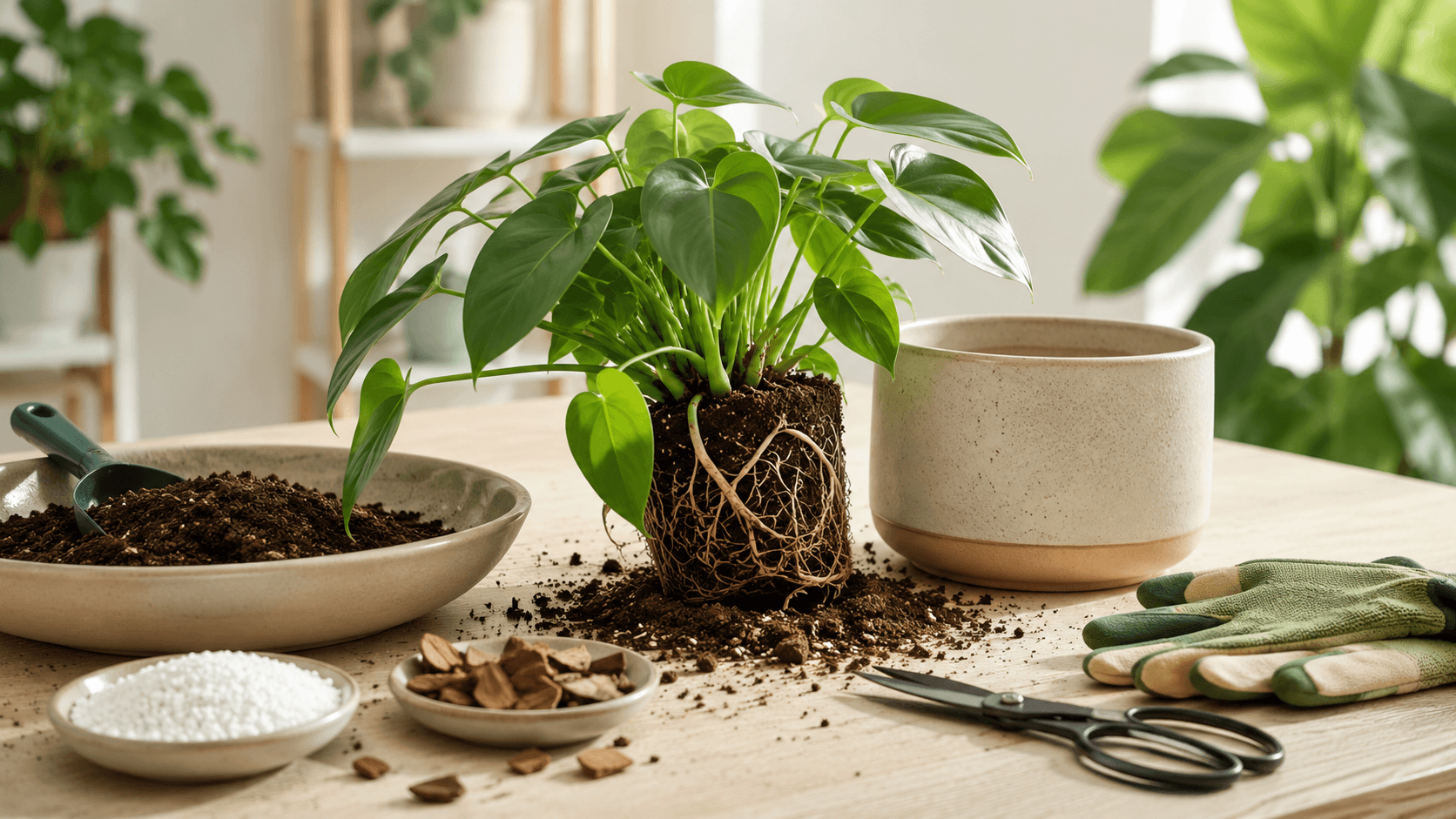
In spring, many plants need repotting—an essential part of care. To avoid stress, consider the plant’s type and size. This article offers a step-by-step guide for repotting indoors or outdoors and shows how to check plant health and get care tips using the Botan app.