Plan for Spread
Allow at least 8–10 m of clear space from buildings, drains, and other trees, since this species develops a wide crown and vigorous surface roots that can lift paving and invade pipes if planted too close.

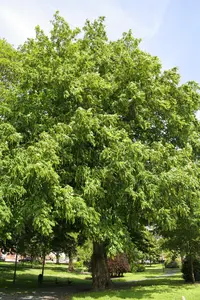
Caucasian wingnut, Pterocarya fraxinifolia, is a fast-growing deciduous tree valued mainly for large landscapes, riverbanks, and parks. It develops a wide, spreading crown with graceful, pinnate leaves that create dense summer shade.
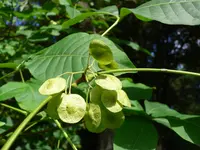
This species naturally occurs in the Caucasus region and parts of western Asia, typically along moist river valleys and floodplains. It often forms impressive trunks with low branching and decorative, winged nut clusters that hang in long chains.
The tree is vigorous and relatively easy to establish if it has enough space, moisture, and sun, which guides how to care for Caucasian Wingnut. It prefers consistently moist, deep soil and is best suited to larger gardens or open properties rather than small urban yards.

Care Difficulty
Moderate Care

Light Preference
Full Sun

Water Requirements
Keep Soil Moist

Temperature Preference
Cold Hardy

Hardiness Zone
5–8

Soil Texture
Loamy, Clay, Silty

Soil pH
Acidic (5.5–6.5), Slightly acidic (6.5–7.0)

Soil Drainage
Waterlogged tolerant

Fertilization
Minimal (feed rarely)
Scan your plant to receive care tips personalized for your specific plant
Available on iOS and Android
This fast-growing deciduous tree performs best in consistently bright outdoor conditions with ample direct light.
This moisture-loving riparian tree requires steadily damp but not stagnant soil to grow safely and vigorously.
This hardy temperate-climate tree thrives in regions with cool winters and mild to warm summers outdoors.
This species tolerates a wide humidity range but grows best in moderately moist air.
This tree prefers deep, moist, fertile substrates that stay evenly damp but not stagnant.
This large, fast-growing tree is generally unsuitable for long-term container cultivation.
This large, fast-growing tree benefits from light feeding on poor soils but often manages without fertilizer on deep, fertile ground.
Pruning Pterocarya fraxinifolia is mainly structural and corrective, helping manage its size and branching in landscapes.
This species is usually field-grown or planted directly in the landscape, so transplanting young trees is more relevant than container repotting.
Pterocarya fraxinifolia is most often propagated from seed, with some use of hardwood cuttings in professional settings.
This tree is cold hardy in much of the temperate US and usually needs minimal winter care once established in the ground.

Plant Health Check
Not sure what's wrong with your plant? Check your plant's health inside the app.
This species produces long, pendulous catkins where each tiny winged nut is attached along a central axis, creating a distinctive chain-like fruiting structure that can reach several tens of centimeters in length.
In its native range around the Caucasus and northern Iran, it naturally grows along rivers and floodplains, tolerating periodic flooding and waterlogged soils better than many other broadleaf trees.
Despite originating from relatively mild regions, it is notably cold-hardy and can establish quickly, forming a large shade tree in suitable climates within a few decades.

This species has been widely used in European arboreta and parks as a rootstock and breeding resource for developing other ornamental wingnut cultivars, due to its vigorous growth and strong tolerance of wet soils.
This species is best grown outdoors. It needs full sun, abundant space, and consistently moist soil. Indoors, light and root restriction limit vigor, so Caucasian Wingnut indoor care is generally impractical except for very short-term display.
Keep your plants happy and healthy with plant identification, disease detection, and easy care guidance.