Chinese wingnut Care (Pterocarya stenoptera)

Chinese wingnut

About Chinese wingnut

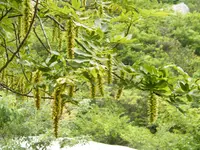
Chinese wingnut, Pterocarya stenoptera, is a fast-growing deciduous tree in the walnut family, valued for shade and landscape structure. It develops a broad, spreading crown with long, feather-like leaves and distinctive hanging chains of winged nuts that give the tree its common name.

This species is native to river valleys and moist lowlands in China and nearby regions, where it thrives in deep, fertile soils. In cultivation it is considered vigorous and relatively tough but needs space, consistent moisture, and full sun to partial shade, which shapes how to care for Chinese wingnut in gardens or large yards.

Main Plant Requirements

Care Difficulty

Moderate Care

Light Preference

Full Sun

Water Requirements

Keep Soil Moist

Temperature Preference

Cold Hardy

Hardiness Zone

6–8

Soil Texture

Loamy, Clay, Silty

Soil pH

Acidic (5.5–6.5), Slightly acidic (6.5–7.0)

Soil Drainage

Moist but well-drained

Fertilization

Minimal (feed rarely)

Get Personalized Care Plan

Scan your plant to receive care tips personalized for your specific plant

Available on iOS and Android

How to Care for the Chinese wingnut

This fast-growing deciduous tree prefers full sun but accepts some light shade, especially in hot climates.

  • Provide 6–8 hours of direct sun daily; morning and early afternoon sun promote dense canopy and strong trunk development.
  • Chinese wingnut tolerates partial shade, but less than 4–5 hours of sun leads to thinner growth, reduced seed production, and more susceptibility to fungal issues.
  • In very hot regions, protect from intense late-afternoon sun with neighboring trees or buildings to reduce leaf scorch and midsummer stress.

This moisture-loving tree performs best in consistently damp but not waterlogged soil.

  • Aim for evenly moist soil, allowing the top 3–5 cm to dry slightly before the next deep soak, especially during establishment years.
  • Increase watering in hot, dry periods and reduce in cool, wet seasons; drooping, dull leaves suggest drought stress, while yellowing leaves and soft new growth can indicate overwatering.
  • Plant Pterocarya stenoptera in deep, well-drained loam near a reliable water source or naturally moist site to prevent root rot and chronic drought stress.

This hardy tree thrives in temperate climates with cold winters and warm summers.

  • Active growth is strongest around 60–80°F (16–27°C), supporting rapid shoot extension and leaf development in spring and early summer.
  • Mature trees tolerate winter lows near -10°F (-23°C); young specimens benefit from protection from drying winds and sudden hard freezes their first 1–2 winters.
  • In hot regions, it handles short periods up to about 95°F (35°C) if soil moisture is high; prolonged extreme heat with dry soil can cause leaf scorch and early leaf drop.

Humidity is not a significant factor for this hardy, outdoor deciduous tree.

This fast-growing riparian tree needs deep, moisture-retentive soil with reliable structure to support extensive roots.

  • Use a loamy or clay-loam soil enriched with organic matter such as compost or well-rotted manure to hold moisture.
  • Ensure slow but steady drainage; the tree tolerates periodic flooding but should not stand in stagnant water for long periods.
  • Aim for slightly acidic to neutral pH around 6.0–7.5, avoiding highly alkaline or compacted urban fill soils.
  • To improve aeration and prevent waterlogging, incorporate coarse sand or fine gravel into heavier soils before planting Pterocarya stenoptera.

This large, vigorous tree is generally unsuitable for long-term container growing, even in large tubs.

This fast-growing tree benefits from modest feeding on poor soils but often needs no fertilizer on fertile ground when caring for Chinese wingnut.

  • Use a balanced slow-release fertilizer (around 10-10-10) or a light layer of compost in early spring.
  • Apply once per year for in-ground trees; young container plants may need feeding every 6–8 weeks in the growing season.
  • Reduce or withhold fertilizer in fall and winter when growth slows or stops.
  • Always apply at label-recommended rates, erring on the lower side to avoid excessive, weak growth.

Pruning Pterocarya stenoptera is mainly done to maintain structure, clearance, and tree health.

  • Carry out main pruning in late winter to very early spring before bud break.
  • Remove dead, diseased, or storm-damaged branches first, cutting back to sound wood with clean, sharp tools.
  • Thin crowded interior branches to improve light penetration and airflow, encouraging a stable, open crown.
  • Shorten or remove poorly placed limbs to direct growth away from buildings and paths, shaping while the tree is young.

This species is usually field-grown, so care focuses on transplanting young trees from containers or nursery rows.

  • Plan transplanting for late fall or early spring while the tree is dormant and soil is workable.
  • Look for circling roots, roots emerging from drainage holes, or stunted growth as signs a container plant needs a larger size.
  • Move up only 1–2 pot sizes or into a prepared ground site with deep, loose, well-drained soil.
  • Water thoroughly before and after planting, keep the root ball intact, and apply mulch to limit moisture loss and reduce transplant shock.

Pterocarya stenoptera is most commonly propagated from seed, with cuttings used less often in home settings.

  • Collect seeds from mature catkins in late summer to early fall and clean them promptly.
  • Provide a cold stratification period of 60–90 days at about 35–40°F to improve germination.
  • Sow in a free-draining, slightly moist medium, keeping trays cool and bright but out of direct, intense sun.
  • For softwood cuttings, take pieces in late spring to early summer, use rooting hormone, and maintain high humidity until rooted.

Established trees are generally cold hardy and need minimal winter care in most temperate climates.

  • Young or newly planted trees benefit from 5–8 cm of organic mulch over the root zone, kept away from the trunk.
  • In very cold or exposed sites, windbreaks or burlap wraps can reduce drying and mechanical damage to young stems.
  • Container-grown specimens in cold regions should be moved to a sheltered, unheated but frost-moderated area and watered sparingly.

Care Tips

Early root management

In the first 2–3 years, lightly root prune circling roots at planting and use a wide, shallow planting hole to reduce future surface root problems along paths, walls, or pipes.

Wind and branch training

Install a sturdy stake or low support line on exposed sites and selectively shorten overly vigorous lateral shoots in young trees to build a strong, wind-resistant framework.

Surface root containment

Where roots may lift paving, install a 45°-angled root barrier rated for trees around the planting zone and maintain a 1.5–2 m setback from hardscaping to keep large structural roots in check.

Seasonal flood tolerance use

Use this tree in periodically wet or flood-prone areas and allow brief seasonal inundation rather than over-draining the site, which takes advantage of its natural floodplain tolerance when growing Chinese wingnut.

Trunk and soil protection

Maintain a 5–10 cm deep organic mulch ring out to the dripline, keep string trimmers away from the bark, and avoid vehicle traffic over the root zone to prevent compaction and trunk injury that can shorten its lifespan.

Common Pests and Diseases

Leaf spot

This disease causes irregular brown to dark-purple spots on leaves that may coalesce, leading to early leaf drop on Chinese wingnut trees in humid conditions.

Solution

Remove and dispose of heavily spotted fallen leaves to reduce inoculum, avoid overhead irrigation, and improve air circulation around the canopy; in high-value plantings, a registered broad-spectrum fungicide can be applied at bud break and repeated as needed during prolonged wet periods, following local label directions.

Canker

This disease produces sunken, discolored patches on stems or branches, sometimes with cracking bark and dieback of the affected section, especially after mechanical damage or stress.

Solution

Prune out infected branches several inches below visible symptoms during dry weather, disinfect pruning tools between cuts, and reduce stress by watering during extended drought and avoiding trunk injuries; in landscape settings, maintaining tree vigor is the main long-term management strategy.

Chinese wingnut aphids

These insects cluster on young shoots and leaf undersides, feeding on sap, causing leaf curling, distortion, and sticky honeydew that can lead to sooty mold on Pterocarya stenoptera.

Solution

Blast colonies off with a strong stream of water, encourage natural predators such as lady beetles by limiting broad-spectrum insecticides, and, if needed, use a horticultural soap or light horticultural oil thoroughly on leaf undersides according to label directions.

Scale insects

This pest appears as small, immobile bumps on twigs and branches, extracting sap and weakening the tree, which can lead to yellowing foliage and branch dieback when populations are high.

Solution

Prune out and dispose of heavily infested twigs, gently scrub accessible scales off small branches, and apply a dormant-season horticultural oil to smother overwintering stages while the tree is leafless, repeating in subsequent years if pressure remains high.

Powdery mildew

This disease shows as a white, powdery coating on upper leaf surfaces, which can reduce photosynthesis and cause premature leaf drop in shaded or crowded Chinese wingnut plantings.

Solution

Thin interior branches to open the canopy, avoid overhead watering late in the day, and, in ornamental or nursery settings where appearance is important, apply a labeled sulfur or other powdery mildew fungicide at first sign of symptoms and repeat according to label guidance.

Interesting Facts

Distinct winged nuts

This tree produces long chains of small winged nuts, each with two narrow lateral wings that help wind dispersal and give the species its common name, Chinese wingnut.

Fast riverbank colonizer

In its native range in China, it often grows along rivers and streams, where its rapid growth and tolerance of seasonally wet soils help stabilize banks and trap sediment.

Hybrid parentage role

It is one of the parents of the ornamental hybrid Pterocarya × rehderiana, widely planted in Europe for its vigorous growth and decorative fruit catkins.

Botan icon

Did you know?

Mature specimens of this species can develop extremely wide-spreading crowns with heavy horizontal limbs, and in favorable conditions the lateral spread can rival or exceed the tree’s height, making it a striking choice for large parks and riverfront plantings.

FAQs about Chinese wingnut

This tree is notably fast-growing, often adding 60–90 cm of height per year in suitable conditions. Growth is most vigorous in youth, then gradually slows as the canopy broadens and the root system expands.

Grow Healthy Plants with Botan Care

Keep your plants happy and healthy with plant identification, disease detection, and easy care guidance.

Botan plant care app — identify plants on mobile

Explore More Plants