

Ensure Water Movement
Keep the algae in gently circulating water using a small pump or air stone to prevent stagnation, reduce biofilm buildup, and maintain an even supply of nutrients and oxygen.

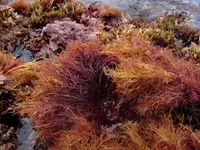
Pterocladiella capillacea is a red marine alga, not a traditional land houseplant. It forms delicate, finely branched fronds that create dense, feathery mats on rocky shores. The fronds are usually deep red to reddish brown and attach firmly to hard substrates in shallow coastal waters.
This species occurs widely in warm-temperate and tropical seas, often in intertidal and shallow subtidal zones exposed to waves and tides. Its growth is strongly influenced by water movement, salinity, and light penetration, which makes it challenging to culture outside controlled marine systems. Anyone looking into how to care for Pterocladiella capillacea should focus on stable seawater quality and appropriate light rather than soil-based conditions.

Care Difficulty
Hard Care

Light Preference
Full Sun

Water Requirements
Aquatic

Temperature Preference
Tropical / Frost Sensitive

Hardiness Zone
Unknown

Soil Texture
Sandy, Rocky, Organic-rich

Soil pH
Slightly acidic (6.5–7.0)

Soil Drainage
Waterlogged tolerant

Fertilization
Minimal (feed rarely)
Scan your plant to receive care tips personalized for your specific plant
Available on iOS and Android
This marine red alga thrives in bright, unobstructed natural light in shallow coastal waters.
This seaweed requires constant access to clean, oxygenated seawater rather than intermittent watering.
This species prefers mild to warm seawater and is sensitive to freezing conditions.
This marine red alga prefers constantly high ambient humidity close to saturated air and does not tolerate drying conditions.
This species is not a terrestrial plant and does not grow in soil, so use a seawater-based culture medium instead of any potting mix.
This alga is suitable for container culture in marine aquaria or specialized culture vessels rather than traditional plant pots.
This marine red alga is adapted to low-nutrient conditions and usually needs no fertilization in natural or well-balanced marine systems.
Pruning needs for Pterocladiella capillacea are minimal and mainly hygiene-related in culture systems.
This species is typically fixed to hard substrates in marine setups, so care focuses on gentle transplanting rather than classic repotting.
In managed systems, Pterocladiella capillacea is usually propagated vegetatively rather than from spores.
As a marine alga kept in temperature-controlled systems, this species generally does not require distinct winter care.

Plant Health Check
Not sure what's wrong with your plant? Check your plant's health inside the app.
This red seaweed is one of the classic natural sources of agar, a gel-forming polysaccharide used in microbiology culture media and in food products for its firm, heat-stable texture.
It occurs in warm-temperate to tropical coastal waters across the Atlantic, Indian, and Pacific Oceans, especially on rocky shores in the lower intertidal and shallow subtidal zones.
The thallus forms flat, narrow, repeatedly forked blades with fine, hairlike branchlets, which gives it a delicate, feathery appearance on rocks and in tide pools.

This species has been an important model in studies of red algal reproduction, because its life cycle shows a clear alternation of generations with separate microscopic male structures, female structures, and tetrasporophyte stages that occupy different niches on the shore.
This red alga is a known agar source and is technically edible, but consumption should only occur when correctly identified and harvested from clean, unpolluted waters. Local regulations, food safety standards, and expert guidance are essential before use.
Keep your plants happy and healthy with plant identification, disease detection, and easy care guidance.

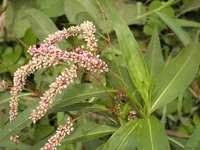
Dense-flowered smartweed
Persicaria glabra
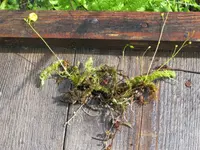
flatleaf bladderwort
Utricularia intermedia
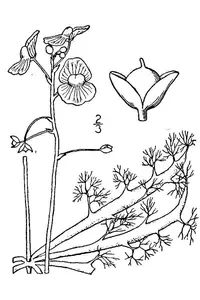
swollen bladderwort
Utricularia inflata

turkey tangle fogfruit
Phyla nodiflora
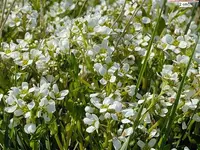
English Scurvygrass
Cochlearia anglica
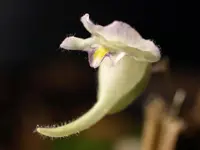
Utricularia jamesoniana
Utricularia jamesoniana
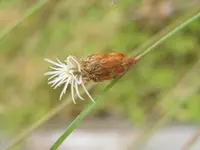
Canada spikesedge
Eleocharis geniculata
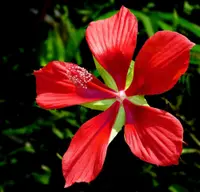
Texas Star hibiscus
Hibiscus coccineus