

Use suitable substrate
Mount the moss on rough, inert materials like bark, lava rock, or old hardwood rather than compact soil, so the fine rhizoids can anchor securely and excess water drains away quickly.

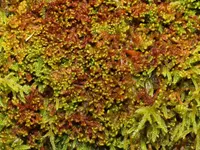
Tree fringewort (Ptilidium pulcherrimum) is a small, creeping liverwort, a non-vascular plant related to mosses. It forms soft, fringed mats that cling tightly to bark, rocks, and decaying wood. The foliage looks like tiny, overlapping bronze‑green scales, often turning reddish in bright light or dry conditions. In nature it is common in cool, humid forests across northern regions, especially on conifer trunks and logs. This species is generally hardy but can be sensitive to drying out and stale air, which makes it more challenging indoors. To care for Tree Fringewort, aim to mimic a cool, moist, shaded forest surface with gentle airflow and consistently damp, not waterlogged, substrate.

Care Difficulty
Moderate Care

Light Preference
Partial Shade

Water Requirements
Keep Soil Moist

Temperature Preference
Cold Hardy

Hardiness Zone
3–8

Soil Texture
Rocky, Peaty, Organic-rich

Soil pH
Strongly acidic (4.5–5.5), Acidic (5.5–6.5)

Soil Drainage
Moist but well-drained

Fertilization
Minimal (feed rarely)
Scan your plant to receive care tips personalized for your specific plant
Available on iOS and Android
This moss prefers cool, moist, low-light habitats and is sensitive to strong direct sun.
This species favors consistently moist conditions and declines quickly if the substrate dries out completely.
This moss is adapted to cool, temperate conditions and does not handle extreme heat or severe drying well.
This moss prefers consistently moist, cool air and reacts quickly to drying conditions.
This species grows as an epiphyte or on rock and bark, so it needs a loose, moisture-retentive but fast-draining base rather than typical potting soil.
This species can be grown in shallow containers or terraria where constant surface moisture and air circulation are easy to control.
Tree Fringewort, Ptilidium pulcherrimum, is adapted to nutrient-poor habitats and usually needs no intentional fertilization in cultivation.
Ptilidium pulcherrimum needs only minimal grooming, mainly to keep moss trays or terrariums tidy.
This tiny liverwort is rarely repotted and is usually transplanted only when renewing a moss dish, terrarium, or culture tray.
Ptilidium pulcherrimum is typically propagated vegetatively, since its microscopic spores are not practical for home growers.
This species is naturally cold hardy in temperate climates and usually needs no special winter care outdoors.

Plant Health Check
Not sure what's wrong with your plant? Check your plant's health inside the app.
This leafy liverwort often forms dense, reddish-brown mats on the bark of live conifers and birches, especially in cool, moist forests. It is one of the most characteristic epiphytic bryophytes on rough tree bark in boreal and temperate regions of the Northern Hemisphere.
Its tiny overlapping leaves have deeply fringed and irregularly toothed margins, giving a fuzzy, ragged appearance under magnification. These fringes increase the surface area that can trap water films, spores, and microscopic organic particles.
The species is sensitive to chronic air pollution and heavy forest disturbance, so it tends to be most abundant in relatively undisturbed, clean-air woodlands. Its presence on old tree trunks can indicate long habitat continuity and low levels of industrial pollutants.

This species tolerates freezing and desiccation by entering a dormant state, then rapidly revives metabolic activity when moisture and mild temperatures return, a survival strategy typical of bryophytes but especially well expressed in its exposed, bark-dwelling mats.
This liverwort forms low, creeping mats across bark, rocks, or soil, but it is not aggressive in gardens. It spreads slowly by short shoots and fragments, staying close to consistently cool, moist, shaded microhabitats.
Keep your plants happy and healthy with plant identification, disease detection, and easy care guidance.

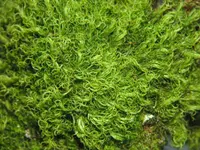
montane dicranum moss
Orthodicranum montanum
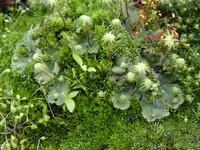
Common Liverwort
Marchantia polymorpha
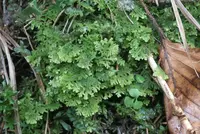
Handsome Woollywort
Trichocolea tomentella
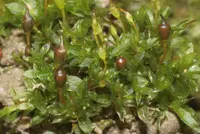
common pottia
Tortula truncata
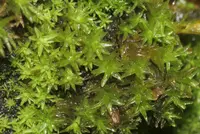
obtuseleaf aspen moss
Orthotrichum obtusifolium
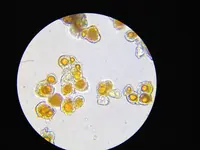
Trentepohlia umbrina
Trentepohlia umbrina
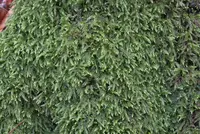
isothecium moss
Isothecium alopecuroides

isothecium moss
Isothecium myosuroides