

Use shallow trays
Grow moss on shallow, unglazed clay or plastic trays with low rims to keep the colony well aerated and allow even surface misting without waterlogging the growing medium.

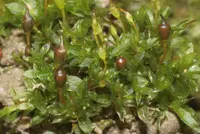
Common pottia (Tortula truncata) is a small, cushion-forming moss that often grows in thin patches on soil, rocks, and old walls. It has short, upright shoots with narrow leaves that dry to a crisp, curled look and rehydrate quickly after moisture returns.
This species occurs widely in temperate regions, especially in disturbed, open ground and urban areas. It is generally considered hardy and forgiving, which makes it suitable for terrariums, educational projects, and experiments that care for common pottia.
Tortula truncata prefers bright, indirect light, stable moisture without waterlogging, and a loose, well-drained, mineral-rich substrate rather than dense, organic potting soil.

Care Difficulty
Easy Care

Light Preference
Partial Sun

Water Requirements
Moderate Water

Temperature Preference
Cool Climate

Hardiness Zone
Unknown

Soil Texture
Loamy, Rocky, Organic-rich

Soil pH
Acidic (5.5–6.5), Slightly acidic (6.5–7.0)

Soil Drainage
Well-drained

Fertilization
Minimal (feed rarely)
Scan your plant to receive care tips personalized for your specific plant
Available on iOS and Android
This low moss forms tight cushions and prefers soft, indirect light rather than harsh sun.
This moss prefers consistently moist conditions but is adapted to short dry spells.
This species is quite cold tolerant but grows best in cool to mild conditions.
This moss prefers slightly moist air but usually adapts to typical indoor humidity.
This moss thrives on thin, well-aerated, mineral-based substrates rather than deep, rich potting mixes.
This moss is suitable for shallow container culture when moisture and drainage are carefully controlled.
This moss has very low nutrient demand, so fertilizing common pottia should stay light and infrequent.
Tortula truncata needs minimal pruning, mainly to keep the moss cushion tidy and healthy.
This moss is usually grown on stones, soil crusts, or shallow trays, so focus on gentle transplanting rather than frequent repotting.
Tortula truncata is commonly propagated by division and spore sowing when expanding moss trays or outdoor patches.
Tortula truncata is quite cold hardy and usually needs no special winter care in temperate climates.

Plant Health Check
Not sure what's wrong with your plant? Check your plant's health inside the app.
This moss forms very small, tight leaf rosettes that are often less than a few millimeters wide, giving patches a granular or cushion-like appearance on soil and open ground.
Its leaves are characteristically narrow with margins that often roll or twist when dry, a structural trait that helps reduce water loss in exposed, periodically dry habitats.
The spore capsules are short, truncate, and almost top-cut in appearance, a distinctive feature that helps separate this species from many other small soil-dwelling mosses.
Growth is slow. In suitable conditions, new cushions expand only a few millimeters per year. It spreads mainly by spores and small fragments, so visible coverage of a rock or soil surface can take several seasons.
Keep your plants happy and healthy with plant identification, disease detection, and easy care guidance.

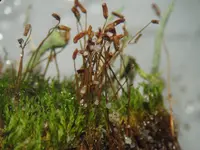
ceratodon moss
Ceratodon purpureus
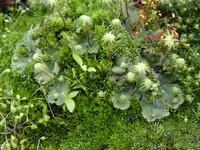
Common Liverwort
Marchantia polymorpha
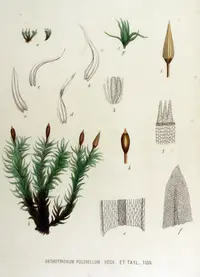
orthotrichum moss
Orthotrichum pulchellum
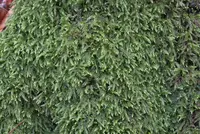
isothecium moss
Isothecium alopecuroides
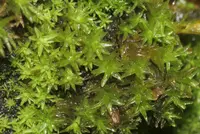
obtuseleaf aspen moss
Orthotrichum obtusifolium
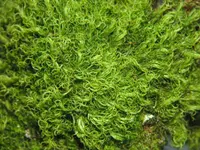
montane dicranum moss
Orthodicranum montanum
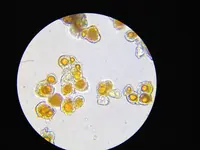
Trentepohlia umbrina
Trentepohlia umbrina

isothecium moss
Isothecium myosuroides