Substrate anchoring
Press small pieces of damp, cleaned bark or stone firmly onto the moss to help new cushions anchor securely and resist being dislodged by airflow or light rinsing.

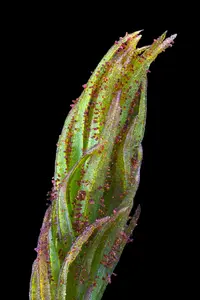
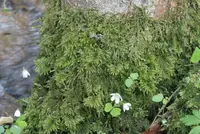
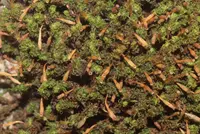
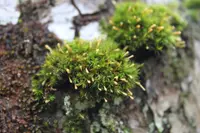
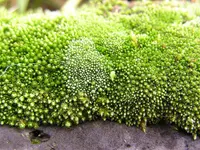
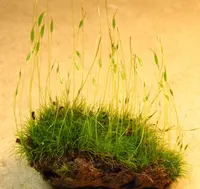
Lyell's orthotrichum moss, Pulvigera lyellii, is a small, cushion-forming bryophyte that grows closely attached to bark or rock surfaces. It forms dense green tufts that can appear almost velvety when hydrated.
This species is most often found in temperate regions on tree trunks, branches, and sometimes shaded rock, especially in humid, clean-air environments. Its compact growth, slow spread, and ability to tolerate periodic drying make it moderately easy to keep in cultivation.
Those traits also help explain how to care for Lyell's orthotrichum moss in simple setups such as terrariums or shaded outdoor displays. It generally prefers cool, moist air, soft light, and stable, undisturbed substrates.

Care Difficulty
Moderate Care

Light Preference
Partial Shade

Water Requirements
Keep Soil Moist

Temperature Preference
Cool Climate

Hardiness Zone
Unknown

Soil Texture
Loamy, Rocky, Organic-rich

Soil pH
Acidic (5.5–6.5)

Soil Drainage
Moist but well-drained

Fertilization
Minimal (feed rarely)
Scan your plant to receive care tips personalized for your specific plant
Available on iOS and Android
This moss prefers cool, sheltered light similar to shaded rock faces and tree bark in nature.
Pulvigera lyellii prefers constant surface moisture but not stagnant water around its base.
This moss thrives in cool to mild conditions and declines under prolonged heat or severe frost.
This moss prefers consistently moist air and benefits from elevated humidity.
Pulvigera lyellii anchors best on moist, airy, organic-rich substrates rather than compact mineral soils.
This species can adapt to shallow container culture when moisture and stability are carefully managed.
This moss is adapted to low-nutrient habitats and generally does not require supplemental feeding for healthy growth.
Pulvigera lyellii needs almost no pruning, since it forms low, self-maintaining cushions.
Transplanting is rarely needed, as this moss is usually established on bark, rock, or other stable outdoor substrates.
Pulvigera lyellii is usually spread by natural spore dispersal rather than deliberate garden propagation.
This moss is naturally cold hardy in its native range and needs no special winter protection under typical outdoor conditions.

Plant Health Check
Not sure what's wrong with your plant? Check your plant's health inside the app.
This moss was among the first bryophytes used in central Europe to track industrial air pollution, because its presence and health strongly reflect local sulfur and nitrogen levels.
It typically colonizes rough tree bark and fissures on trunks and branches, forming small tufts that exploit tiny moisture-retaining pockets other plants cannot use effectively.
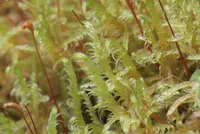
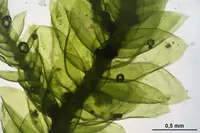
The leaves end in a clear, glassy hair point, which helps shed excess water while still allowing rapid rehydration after drying, a useful adaptation to exposed bark surfaces.
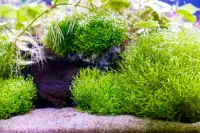
This species performs more reliably outdoors on shaded, humid surfaces such as tree bark, rocks, or masonry. Indoors it is difficult to keep humidity and airflow stable, so long‑term success is lower except in specialized terrarium setups.
Keep your plants happy and healthy with plant identification, disease detection, and easy care guidance.