Sheep-eating Plant Care (Puya chilensis)

Sheep-eating Plant

About Sheep-eating Plant

Puya chilensis, commonly called sheep-eating plant, is a large terrestrial bromeliad native to dry, rocky hillsides of central Chile. It forms a dense rosette of stiff, narrow leaves with very sharp, hooked spines along the margins.

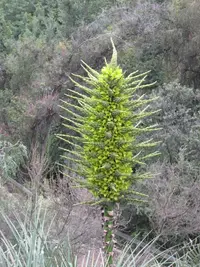
Over time, the plant can develop a substantial clump and produce tall flowering spikes with yellow-green blooms that attract pollinators. Its slow growth, strong spines, and need for excellent drainage make it better suited to experienced growers and specialized collections.

It prefers full sun, lean gritty soil, and low to moderate moisture, similar to other xeric plants. Due to its size and armoured foliage, how to care for Sheep-eating Plant often focuses on safe placement and minimal handling.

Main Plant Requirements

Care Difficulty

Hard Care

Light Preference

Full Sun

Water Requirements

Low Water

Temperature Preference

Warm Climate

Hardiness Zone

9–11

Soil Texture

Sandy, Rocky, Loamy

Soil pH

Slightly acidic (6.5–7.0), Neutral (7.0)

Soil Drainage

Well-drained

Fertilization

Minimal (feed rarely)

Get Personalized Care Plan

Scan your plant to receive care tips personalized for your specific plant

Available on iOS and Android

How to Care for the Sheep-eating Plant

This terrestrial bromeliad thrives in strong, dry light similar to a sunny, open hillside.

  • Provide full sun for 6–8 hours daily; in very hot inland climates, offer light afternoon shade to prevent leaf scorching.
  • In coastal or windy sites, the Sheep-eating Plant tolerates all-day sun if soil drains quickly and air stays moving.
  • In cooler or cloudier regions, choose the sunniest south- or west-facing spot and avoid dense shade, which causes weak, floppy rosettes.

This drought-tolerant species prefers infrequent, deep watering that mimics arid hillside conditions.

  • Outdoors in well-drained soil, water only when the top 5–8 cm are completely dry; allow the leaf bases to dry between soakings.
  • Reduce watering sharply in cool or wet seasons, since Puya chilensis is prone to rot in cold, saturated soil.
  • Signs of overwatering include limp, yellowing lower leaves and a soft crown; underwatering shows as crisp leaf tips but firm, upright rosettes.

This hardy bromeliad prefers mild, dry conditions and tolerates some cold if kept on the dry side.

  • Aim for 55–75°F (13–24°C) for steady growth, with slightly cooler nights to mirror its native climate.
  • Mature plants tolerate short drops to about 20–25°F (-6 to -4°C) if soil is sharply drained and foliage is kept dry.
  • In hot regions, plants handle 90–95°F (32–35°C) when air is moving and soil does not stay wet, but extended frost damages leaves and young rosettes.

This species prefers dry air and rarely needs extra humidity in typical indoor or outdoor conditions.

  • Aim for 20–40% humidity, similar to arid or semi-arid climates where the plant naturally grows.
  • The Sheep-eating Plant tolerates very dry air, but prolonged humidity above 60% can encourage rot around the crown.
  • Watch for soft, dark leaf bases as a sign of excessive humidity and improve air movement rather than misting.

Puya chilensis needs very fast-draining, mineral, low-organic soil to prevent root and crown rot.

  • Use a gritty mix such as 50–60% coarse sand or small gravel with 40–50% cactus mix or lean loam.
  • Ensure water runs through in seconds and the mix dries quickly, mimicking rocky slopes rather than holding moisture.
  • Keep pH slightly acidic to neutral, around 6.0–7.0, avoiding strongly alkaline or saline conditions that impair nutrient uptake.
  • Avoid dense peat-heavy or clay-based substrates; add pumice or perlite to improve aeration and prevent compaction.

This species can be grown in containers if the pot and setup prioritize rapid drainage and stability.

  • Choose a wide, heavy container to counterbalance the tall, spiny rosette and prevent tipping in strong wind.
  • Use a pot with large, unobstructed drainage holes and elevate it slightly so runoff water cannot pool under the base.
  • Select unglazed clay if possible, as its porous walls let moisture evaporate faster and reduce the risk of crown rot.

This xeric bromeliad needs minimal feeding, so focus on light, infrequent nutrition rather than rich soil amendments when caring for Sheep-eating Plant.

  • Use a low-dose, balanced NPK fertilizer or slow-release granules formulated for cacti/succulents in very lean, sandy soil.
  • Feed lightly every 8–10 weeks only during active growth in spring–summer, skipping feeding if growth already looks strong.
  • Apply at 25–50% of the label rate to avoid salt buildup and lush, weak foliage.
  • Do not fertilize in fall–winter, when Puya chilensis slows growth and excess nutrients can stress roots.

Puya chilensis needs only light, maintenance pruning to stay tidy and healthy.

  • Best time for pruning is late winter to early spring, before strong new growth begins.
  • Remove dead, dried, or damaged leaves at the base using clean, sharp pruning shears and thick gloves.
  • Cut out spent flower stalks at the base to redirect energy to foliage and offset formation.
  • Avoid heavy cutting into healthy rosettes, which can distort the plant and delay flowering.

This terrestrial bromeliad is usually grown in the ground and dislikes frequent disturbance, so transplant only when necessary.

  • Transplant when clumps outgrow their space, flowering declines, or roots circle a container and growth slows.
  • Choose late spring for moving Puya chilensis so roots can re-establish in warm, dry weather.
  • If container-grown, plan on shifting to a slightly larger pot only every 3–5 years using very gritty, fast-draining mix.
  • Water lightly after transplanting, shade from harsh sun for 3–5 days, and avoid fertilizer until new growth appears to limit root stress.

Puya chilensis is commonly propagated by offsets and seeds, though both methods are slow.

  • Separate offsets in late spring–early summer when they have several leaves and their own root nubs.
  • Use a sterile, gritty mix, and let any cut or broken surfaces dry for 1–2 days before planting to reduce rot risk.
  • Keep newly potted offsets in bright, indirect light with very light watering until new roots form.
  • Sow fresh seed on the surface of a well-draining mix, keep lightly moist, and provide warmth (68–75°F) for gradual germination.

This species is moderately cold hardy but benefits from simple winter care in colder regions.

  • Mature plants tolerate brief drops to about 15–20°F if soil drains sharply and stays relatively dry.
  • In marginal climates, apply a 5–8 cm layer of gravel or coarse mulch around, not against, the crown to insulate roots.
  • For container plants in harsher zones, move pots to an unheated, bright, frost-free spot with minimal watering.
  • Avoid wet, heavy soil in winter, which greatly increases the risk of rot in cold conditions.

Care Tips

Safe placement planning

Site the plant well away from walkways, play areas, and pet zones, as the stiff barbed leaves can hook clothing and skin, and use warning markers or edging stones so people do not brush past it accidentally.

Rock-mulch strategy

Apply a 3–5 cm layer of coarse gravel or rock mulch around the base instead of organic mulch to keep the crown dry, suppress weeds, and mimic the plant’s natural rocky habitat.

Controlled clump management

Every few years, remove outer, older rosettes with a pruning saw or sharp knife to prevent the clump from becoming too dense and to maintain access for safe maintenance around the plant.

Long-term staking support

In windy sites, install a discreet stake or guyline for tall flower spikes before they fully elongate so the heavy inflorescences do not snap at the base.

Armored maintenance routine

Use thick leather gloves, long sleeves, and safety glasses whenever cutting or cleaning around the plant, and keep a dedicated set of tools for caring for Sheep-eating Plant to avoid accidental injury during routine work.

Common Pests and Diseases

Scale insects

This pest feeds on plant sap, often hiding in the tight leaf bases and along the stiff rosette, causing yellowing and general decline. Symptoms include sticky honeydew and sooty mold on older leaves in drier, sheltered sites.

Solution

Remove visible insects by hand or with a cotton swab dipped in isopropyl alcohol, then hose the rosette thoroughly to dislodge hidden scale. For persistent infestations, use a horticultural oil or insecticidal soap directed carefully into leaf bases, and reduce overcrowding to improve air movement around the plant.

Mealybugs

These insects appear as white, cottony clusters in protected areas of the rosette and near the base of flower stalks, weakening the plant by sucking sap. Symptoms include stunted growth and distorted new leaves, especially in container-grown specimens or sheltered gardens.

Solution

Prune out heavily infested parts and wash the plant forcefully with water to remove remaining mealybugs. Spot-treat remaining colonies with isopropyl alcohol on a cotton swab or apply insecticidal soap, repeating as needed and avoiding excessive overhead watering afterward to reduce humidity in the rosette.

Leaf spot

This disease causes small brown or tan lesions on the stiff leaves, often starting where water sits in the leaf axils. Symptoms include coalescing spots that may lead to localized tissue collapse in plants kept in humid or poorly ventilated sites.

Solution

Remove and dispose of affected leaves and avoid wetting the foliage late in the day, especially when using overhead irrigation. Improve airflow, space plants so rosettes do not overlap, and if the problem persists, apply a copper- or sulfur-based fungicide labeled for ornamental bromeliads, following directions carefully.

Crown rot

This disease starts where water and organic debris accumulate in the central rosette, leading to soft, foul-smelling tissue and collapse of the plant core. Symptoms include sudden wilting of the central leaves even when the soil is not wet.

Solution

Immediately remove and discard severely affected plants, as recovery is rare once the crown is mushy. For early cases, cut out rotted tissue with sterile tools, improve drainage and slope so water sheds away from the rosette, avoid frequent overhead irrigation, and keep surrounding debris and mulch away from the plant base to support Puya chilensis care in arid or Mediterranean-style plantings.

Interesting Facts

Spiny leaf tanks

This bromeliad forms tight rosettes of rigid, hooked leaves that trap wind-blown debris and small animals, whose slow decomposition adds nutrients to the extremely poor soils it inhabits in central Chile.

Fire-adapted rosettes

Mature rosettes are killed by wildfire, but the plant often resprouts from its woody base and benefits from reduced competition and increased light in post-fire shrublands.

Specialist pollinator birds

Its tall, branched flower spikes with yellow-green tubular flowers supply abundant nectar that attracts specialized Chilean birds such as the Chilean mockingbird and various hummingbirds, which act as primary pollinators.

Botan icon

Did you know?

The hooked marginal spines on its leaves are so strongly recurved that grazing animals, especially sheep, can become entangled in the rosettes, leading to the plant’s common name sheep-eating plant, although it does not actively hunt or digest animals like a true carnivorous plant.

FAQs about Sheep-eating Plant

Yes. Seeds need light, well-drained gritty mix and warmth to germinate, usually taking several weeks. Sow on the surface, keep slightly moist, and provide strong light. Seed-grown plants may take many years to flower.

Grow Healthy Plants with Botan Care

Keep your plants happy and healthy with plant identification, disease detection, and easy care guidance.

Botan plant care app — identify plants on mobile

Explore More Plants