Substrate anchoring
Press the moss gently but firmly onto rough bark, stone, or mesh using soft jute twine or biodegradable netting for the first 4–6 weeks so rhizoids can attach securely and resist drying or being washed away.

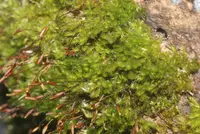
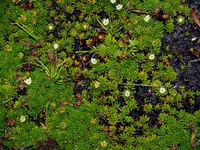
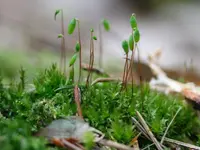
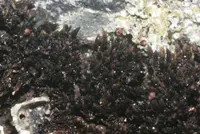
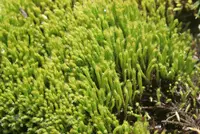
Many-flowered leskea (Pylaisia polyantha) is a small, mat-forming moss that often coats tree bark, rocks, and old walls with fine, green cushions. Its stems are slender and branched, covered in many tiny overlapping leaves that create a soft, textured surface.
This species occurs widely across temperate regions, especially in moist forests and shaded, humid urban sites. It is generally resilient and can tolerate some dryness once established, which makes it relatively easy to care for Many-flowered Leskea in suitable, cool, and moderately moist conditions.
It prefers consistent humidity, gentle air movement, and low to medium light, avoiding strong, direct sun. Clean, stable substrates and minimal disturbance support its slow, steady growth.

Care Difficulty
Moderate Care

Light Preference
Partial Shade

Water Requirements
Keep Soil Moist

Temperature Preference
Cold Hardy

Hardiness Zone
3–8

Soil Texture
Loamy, Rocky, Organic-rich

Soil pH
Acidic (5.5–6.5), Slightly acidic (6.5–7.0)

Soil Drainage
Moist but well-drained

Fertilization
Minimal (feed rarely)
Scan your plant to receive care tips personalized for your specific plant
Available on iOS and Android
This moss thrives in cool, shaded to semi-shaded habitats with gentle, indirect light.
This moss prefers consistently moist conditions and does not tolerate long dry spells.
This species prefers cool to mild conditions and is sensitive to extreme heat or hard frost.
This moss prefers consistently moist, cool air and benefits from higher humidity.
This moss thrives on moist, aerated, organic-rich surfaces rather than dense, compacted soil.
This moss can be grown in shallow containers when its need for constant surface moisture and air flow is respected.
This moss typically needs no fertilizer in natural or established settings.
Pylaisia polyantha needs minimal pruning, focused on keeping mats healthy and tidy.
This moss is usually transplanted rather than repotted, since it grows as a mat on bark, rocks, or soil.
Propagation of this moss is straightforward and mostly relies on division of existing mats.
This moss is generally cold hardy and needs little specific winter care in the ground.

Plant Health Check
Not sure what's wrong with your plant? Check your plant's health inside the app.
This moss is especially common in boreal and hemiboreal forests, where it often coats the bark of conifers and hardwoods and contributes to the characteristic green film on trunks and branches.
It shows considerable variation in shoot form and leaf shape across its wide range, which once led to multiple described varieties that are now mostly treated as a single, variable species.
The species occurs across large parts of Europe and Asia, from lowland deciduous woods to cool montane regions, and is used as a reliable indicator of relatively humid, moderately shaded forest habitats.
This moss grows slowly to moderately, expanding mainly by creeping stems rather than height. Growth speeds up in cool, consistently moist conditions on bark, rock, or logs, and slows during prolonged dryness or high heat. Pylaisia polyantha care focuses on stable moisture.
Keep your plants happy and healthy with plant identification, disease detection, and easy care guidance.