


Turkey Oak Identification (Quercus cerris)

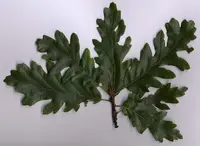
Recognize Turkey Oak by its long, deeply lobed leaves with narrow, pointed lobes arranged alternately on the twigs, plus acorns set in cups covered with long, bristle-like scales.

At a glance, it is a broad oak tree with a sturdy trunk and an open, rounded crown.

Quercus cerris Identification

Is This Turkey Oak?

Use a clear photo to confirm what plant you have.

Clear images work best. Avoid photos taken too close or too far away

  • 1 free identification
  • No sign-up
  • 30,000+ plants in database

Check the tree’s leaves, buds, bark, and acorns for a quick ID.

  • Leaves are alternate, 3 to 5 inches (8 to 12 cm) long, deeply lobed, with narrow pointed lobes.
  • Buds are long, pointed, and surrounded by shaggy, threadlike scales that give twig tips a frayed look.
  • Acorns sit in cups covered with long, bristly scales; the cup often looks mossy from a distance.
  • Bark is gray-brown and ridged, breaking into broad, rough plates on the trunk.

The shaggy bud scales and bristly acorn cups are especially useful on Quercus cerris.

Turkey Oak shows useful visual differences from early growth through flowering and fruiting.

  • Seedling: Seedlings carry alternate, sharply lobed first leaves on a slender green stem, often with finer, more irregular lobing than later juvenile foliage.
  • Young plant: Young plants form an upright sapling with a narrow crown; leaves become larger, deeply cut, and bristle-tipped, often around 3-6 inches (8-15 cm) long.
  • Flowering stage: Flowering branches show hanging yellowish male catkins, while small female flowers sit near shoot tips, adding visible reproductive structures not present earlier.
  • Fruiting stage: Acorns become a strong identification feature, with cups covered in long, mossy scales that partly enclose the nut and stand out clearly on twigs.

In spring, Quercus cerris leafs out with soft, fresh green, deeply lobed leaves while long yellow male catkins hang visibly among the new growth. These flowers can make the tree easier to recognize before the canopy fully fills. By late summer into fall, acorns become noticeable, each with a shaggy, mossy-looking cup. After leaf drop, the broad, irregular crown and stout twigs with pointed buds stand out through winter.

A few oaks can be mistaken for Turkey oak at a glance.

sawtooth oak(Quercus acutissima)

Both have long, sharply toothed leaves. Sawtooth oak usually has more regular, chestnut-like teeth and acorns with a smoother, less shaggy cup.

English oak(Quercus robur)

Both can form broad, mature trees with lobed leaves. English oak leaves have rounded lobes, not bristle-tipped ones, and the acorns sit on longer stalks.

pin oak(Quercus palustris)

Both have bristle-tipped lobes. Pin oak leaves are cut much deeper, with narrow sinuses almost reaching the midrib, giving a more finely divided look.

Quercus cerris is native to southeastern Europe and western Asia, from Italy and the Balkans east into Turkey and nearby regions. It typically occurs in deciduous and mixed woodland, often on hills and lower mountain slopes. In the field, this range helps separate it from similar oaks that are native farther west or north, especially when a tree appears naturalized outside cultivation.

  • Acorns and leaves: Quercus cerris contains tannins, especially in acorns and young leaves. Ingestion can harm both humans and pets, with oak poisoning most noted in livestock and dogs when larger amounts are eaten.
  • Contact handling: The acorn cup has coarse, bristly scales. These are a minor physical hazard during handling, causing skin pricks rather than sap-related irritation, for both people and pets that mouth fallen acorns.

Not Sure About the ID?

Use Botan to identify or confirm a plant from a photo, which helps reduce mix-ups before you label or buy it.

FAQ

The clearest field mark is the acorn cup. It has long, narrow, mossy-looking scales that curl outward. In identifying Turkey Oak, also note the lobed leaves with pointed, bristle-tipped ends.

More Plant Identification Guides

Know Your Plant Better

Identify a plant from a photo with Botan, then get species-specific care information, plant details, and common problems.

Botan app identifying a plant from a photo
Plants That Repel Mosquitoes – 10 Effective Choices

8 min read · 6 Jul 2026

Plants That Repel Mosquitoes – 10 Effective Choices

Plants that repel mosquitoes can help mask human scent naturally and make outdoor spaces more comfortable. Explore the most effective options, their benefits and drawbacks, and choose the right plant for your space.

Plant Recommendations

Plants That Repel Mosquitoes – 10 Effective Choices
How to Winterize Your Garden in 6 Steps

5 min read · 28 Sept 2026

How to Winterize Your Garden in 6 Steps

Learn how to prepare your garden for winter with a practical six-step checklist covering cleanup, tender plant care, watering, mulching, winter protection, and winterizing equipment and containers.

Plant Care
How to Winterize Your Garden in 6 Steps
How to Bottom Water Plants: Complete Guide

6 min read · 13 Jul 2026

How to Bottom Water Plants: Complete Guide

Bottom watering helps soil absorb moisture evenly and keeps foliage dry, reducing the risk of missed dry spots or root problems. Place the pot in a tray of water for a short time, then let it drain well.

Plant Care
How to Bottom Water Plants: Complete Guide