
American basswood Identification (Tilia americana)

Recognize American basswood by its alternate, heart-shaped leaves with uneven bases and finely toothed edges, usually 4 to 6 inches (10 to 15 cm) long.

It also forms a tall, straight-trunked tree with broad, spreading branches and small hanging flower clusters attached to a long, pale, strap-like bract.

Tilia americana Identification

Check Your Plant with Botan

Upload a clear image to check whether your plant ID is correct.

Clear images work best. Avoid photos taken too close or too far away

Check the leaves, flowers, and fruit on Tilia americana.

  • Leaves are simple and alternate, broadly heart-shaped, with a pointed tip and uneven leaf base.
  • Leaf blades are usually 4-6 inches (10-15 cm) long, with coarse serrated edges and long stalks.
  • Flowers hang in small clusters from a long, pale, leaf-like bract attached above the cluster.
  • Fruits are small, round, and dry, hanging beneath the same strap-like bract.

The long bract attached to flowers or fruit is one of the quickest visual checks.

Tilia americana shows clear visual shifts from sapling form to flowering and fruiting maturity.

  • Young plant: Young plants are narrow and upright, with smooth gray stems and large heart-shaped leaves on long stalks; lower branches often persist close to the ground.
  • Mature plant: Mature trees develop a broad, rounded crown and a straight trunk with furrowed gray bark; leaves commonly reach 4-8 inches (10-20 cm) long.
  • Flowering stage: At flowering, pale yellowish clusters hang beneath a long, leaflike bract, making the canopy look pendant in ways not seen on nonflowering plants.
  • Fruiting stage: After flowering, the same drooping clusters carry small round nutlets beneath the persistent bract, adding distinct beadlike structures among the leaves.

A few selections of American basswood are identifiable at a glance by crown shape or leaf color.

  • Tilia americana 'Redmond': Typically forms a strong pyramidal crown, narrower and more upright than the broad, rounded outline of the species.
  • Tilia americana 'Nova': Shows a dense, symmetrical oval to pyramidal canopy with a more uniformly upright habit than the typical spreading crown.
  • Tilia americana 'Legend': Usually has a straighter trunk and a more narrowly oval crown, giving a tidier outline than the species.
  • Tilia americana 'DuFast': Recognized by its distinctly narrow, columnar habit, with a much tighter spread than typical trees.
  • Tilia americana 'Aurea': Separated by yellow to golden new foliage, rather than the usual medium green leaves.

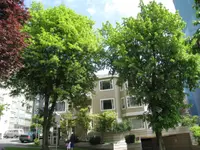
In spring, American basswood leafs out with large, soft green, heart-shaped leaves. In early summer, dangling clusters of small pale yellow flowers appear beneath a long, narrow, leaf-like bract, a strong field mark when the tree is in bloom. By fall, the foliage turns yellow before dropping. After leaf fall, the broad crown, gray furrowed bark on older trees, and reddish winter buds are easier to see.

Several linden relatives can be mistaken for Tilia americana at a glance.

littleleaf linden(Tilia cordata)

Similar heart-shaped leaves and dangling flower clusters. Littleleaf linden has much smaller leaves, usually 2-4 inches (5-10 cm), and denser, tidier branching.

silver linden(Tilia tomentosa)

Also a linden with similar form and leaf shape. The leaf undersides are strikingly silvery-white and fuzzy, unlike the greener undersides of American basswood.

European linden(Tilia × europaea)

Often planted as a street tree and easily confused by leaf shape and flowers. It usually has a more formal crown and smaller leaves than American basswood.

Tilia americana is native to eastern and central North America, from southern Canada south into the northeastern and midwestern United States. It is most often found in rich deciduous woods, stream valleys, and moist slopes. Seeing a large linden in mesic forest, rather than dry upland or coastal habitat, helps narrow identification toward this species.

Not Sure About the ID?

Use Botan to identify or confirm the plant from a photo, which can help avoid mix-ups with similar species.

FAQ

The clearest clue is the large, heart-shaped leaves with an uneven leaf base, sharp teeth, and a pointed tip. In summer, a long pale bract attached to the flower or fruit cluster is especially distinctive for identifying American basswood.

Everything About American basswood

More Plant Identification Guides

Know Your Plant Better

Identify it from a photo with Botan, then get plant details, care information, and common problems for that species.

Botan app identifying a plant from a photo
How Often to Water Fruit Trees

7 min read · 11 Aug 2026

How Often to Water Fruit Trees

Irrigation needs change as roots establish and weather shifts. This guide gives practical starting intervals, explains how soil and tree type change them, and shows how to recognize both excess moisture and drought stress.

Plant Care
How Often to Water Fruit Trees
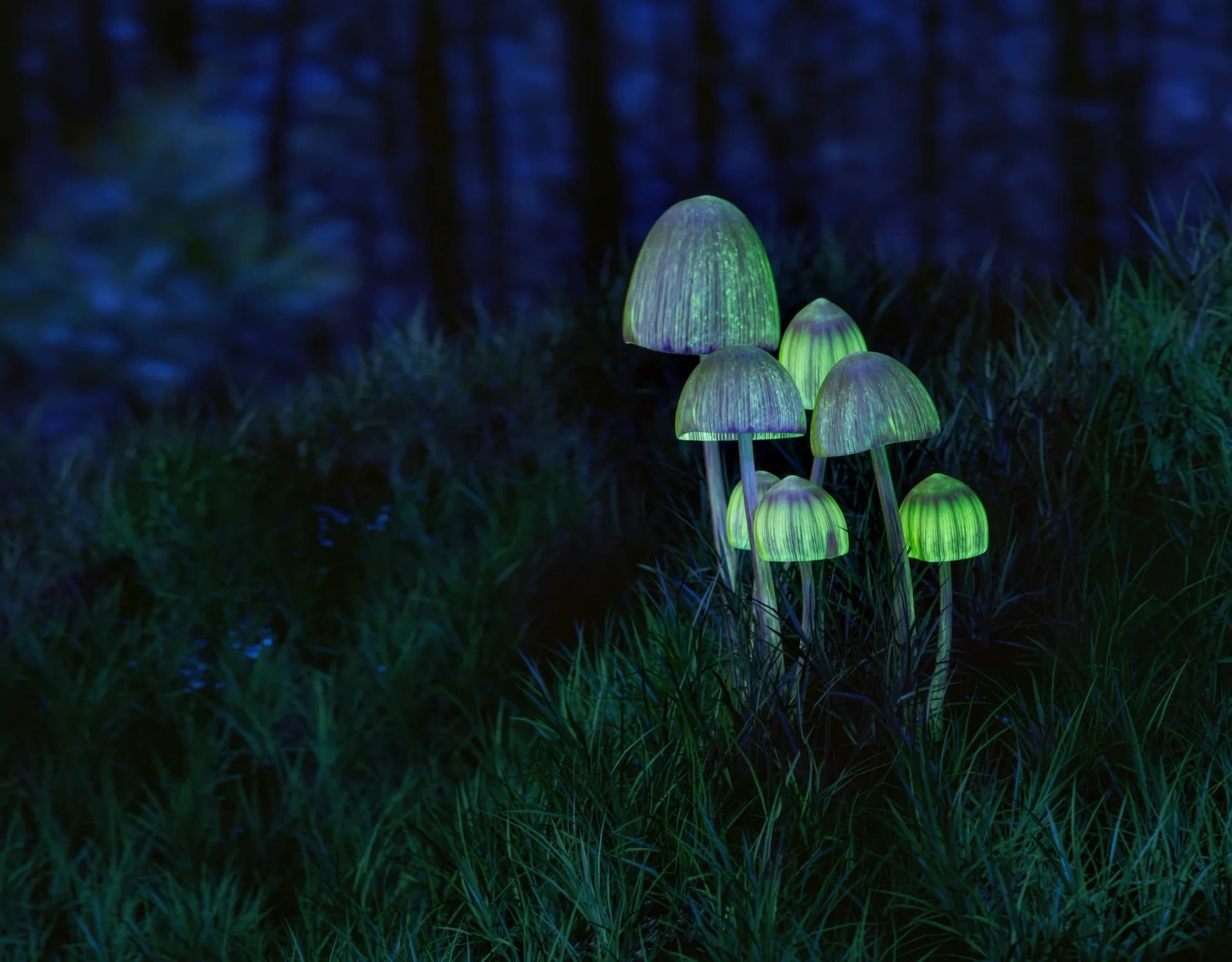
8 Glow-in-the-Dark Plants and Fungi That Really Exist

8 min read · 6 Nov 2026

8 Glow-in-the-Dark Plants and Fungi That Really Exist

Plants that glow in the dusk really exist. Some of them produce their own light, while others need UV exposure or special treatments. Explore eight fascinating examples, including glowing petunias, bioluminescent mushrooms, fluorescent flowers, and experimental succulents.

Plant Recommendations
8 Glow-in-the-Dark Plants and Fungi That Really Exist
Best Fertilizer for Grass in Summer: How to Choose the Right One

6 min read · 18 Aug 2026

Best Fertilizer for Grass in Summer: How to Choose the Right One

The right fertilizer in summer can make a lawn thrive. The wrong one can damage it. Here, you’ll learn the best NPK ratios by grass type, when and how to apply your formula, and how to recognize the signs of over- or under-fertilizing.

Plant Care
Best Fertilizer for Grass in Summer: How to Choose the Right One