Early leader training
In the first 3–5 years, select one strong central leader and remove or shorten competing uprights during dormancy so the tree develops a stable, single trunk that resists storm damage later.

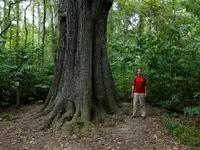
Cherrybark oak, Quercus pagoda, is a large, long-lived deciduous tree native to the southeastern United States. It is commonly found in bottomlands, river terraces, and moist upland sites. The tree develops a tall, straight trunk with dark, scaly bark and a broad, rounded crown, making it a prominent landscape and woodland species. Leaves are glossy, deep green with a pagoda-like outline, turning duller shades before falling in winter. It grows relatively fast for an oak and produces heavy, reliable acorn crops that support wildlife. To care for cherrybark oak, provide full sun, moderately moist conditions, and deep, well-drained soil with room for its mature size.

Care Difficulty
Moderate Care

Light Preference
Full Sun

Water Requirements
Moderate Water

Temperature Preference
Cold Hardy

Hardiness Zone
6–9

Soil Texture
Sandy, Loamy, Clay

Soil pH
Acidic (5.5–6.5), Slightly acidic (6.5–7.0)

Soil Drainage
Moist but well-drained

Fertilization
Minimal (feed rarely)
Scan your plant to receive care tips personalized for your specific plant
Available on iOS and Android
Quercus pagoda performs best as a full-sun woodland tree with some tolerance for light shade, especially when young.
Quercus pagoda prefers deep, infrequent watering that keeps soil moist but not saturated, especially during establishment.
This species is a hardy, warm-temperate oak that thrives in hot summers and cool to mild winters outdoors.
Humidity is rarely a limiting factor for cherrybark oak grown outdoors in its natural range.
Quercus pagoda prefers deep, structured mineral soil that stays evenly moist but never waterlogged.
This species is only moderately suitable for temporary container culture when young, mainly for nursery staging or short-term placement.
This native tree usually needs minimal feeding in the landscape, but light fertilization can support young cherrybark oak growth on poor soils.
Pruning Quercus pagoda focuses on structure and safety rather than frequent shaping.
Cherrybark oak is seldom container-grown long term, so care centers on timely transplanting of young trees.
New Quercus pagoda plants are typically raised from acorns rather than by cuttings or division.
Established cherrybark oak is cold hardy in much of its range and usually needs little deliberate winter care.

Plant Health Check
Not sure what's wrong with your plant? Check your plant's health inside the app.
Cherrybark oak often develops strong, upright trunks with major limbs that ascend in tiers, creating a layered crown that inspired the species name pagoda.
The mature bark is dark gray to nearly black with rough, scaly blocks that somewhat resemble the bark of wild cherry species, which led to the common name cherrybark oak.
This species is naturally concentrated in well-drained terraces and bottomlands of the lower Mississippi Alluvial Valley and southeastern Coastal Plain, where it can become one of the dominant canopy trees on fertile sites.

Cherrybark oak is considered one of the most valuable red oak timbers in the southeastern United States, prized for its strong, relatively clear wood used in furniture, veneer, and other high-grade applications.
This species is generally fast-growing for an oak, often adding 30–60 cm of height per year in youth under good conditions. Growth slows with age as energy shifts into trunk thickening and canopy expansion.
Keep your plants happy and healthy with plant identification, disease detection, and easy care guidance.