Stake Young Leaders
Install a sturdy stake on the windward side of young trees and tie the central leader with soft, wide ties in a loose figure‑8 to keep the stem upright without rubbing or girdling the bark.

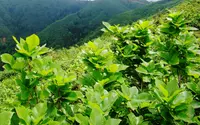
Russian oak, Quercus pontica, is a deciduous shrub or small tree valued for its large, leathery leaves and strong architectural form. It tends to grow with a broad, spreading habit rather than a tall, towering trunk.
This species is native to the Caucasus region, where it grows in cool, mountainous forests and woodland edges. In gardens, it is mainly used as a specimen plant or in naturalistic plantings.
Russian oak prefers reasonably moist, well-drained soil and benefits from a site with good light but some shelter from harsh conditions. Its moderate growth rate and preference for stable conditions mean it can be slightly challenging if you need to learn how to care for Russian oak in a warmer or drier climate.

Care Difficulty
Moderate Care

Light Preference
Full Sun

Water Requirements
Moderate Water

Temperature Preference
Cold Hardy

Hardiness Zone
6–8

Soil Texture
Loamy, Clay, Organic-rich

Soil pH
Acidic (5.5–6.5), Slightly acidic (6.5–7.0)

Soil Drainage
Moist but well-drained

Fertilization
Minimal (feed rarely)
Scan your plant to receive care tips personalized for your specific plant
Available on iOS and Android
Quercus pontica grows best in bright, open sites with some protection from harsh afternoon sun.
Quercus pontica prefers evenly moist, well-drained soil, especially while establishing.
This temperate-climate oak handles cold winters and mild to warm summers when temperature extremes are limited.
Quercus pontica manages well in typical outdoor humidity but benefits from moderately moist air in hotter, drier regions.
Quercus pontica prefers cool, moist, well-structured soil that drains freely yet holds consistent moisture.
This species can be grown in large containers for a limited period, mainly while young.
Quercus pontica grows slowly and usually needs only modest feeding in garden soils.
Pruning Quercus pontica focuses on safety, structure, and light management rather than heavy shaping.
This oak is usually grown in the ground, so focus on careful transplanting rather than frequent repotting.
Propagation of Quercus pontica is possible but slow and usually done from seed rather than vegetative methods.
Quercus pontica is generally cold hardy in temperate climates and needs limited winter intervention once established.

Plant Health Check
Not sure what's wrong with your plant? Check your plant's health inside the app.
This species is native to a small region in the western Caucasus, mainly in Georgia and northeastern Turkey, where it grows in cool, moist mountain forests and subalpine scrub.
Quercus pontica has unusually large, broad, serrated leaves for an oak, often resembling those of a chestnut, which turn yellow to brown in autumn and help distinguish it from other regional oaks.
Unlike many tall forest oaks, it often forms a multi-stemmed shrub or small tree, typically occupying forest edges, clearings, and landslide zones rather than dense, closed canopy stands.

Quercus pontica is considered a relict species from Tertiary-era broadleaf forests, meaning it survives today as a remnant of a once much more widespread ancient flora in the Caucasus region.
This species grows slowly to moderately, usually adding 15–30 cm of height per year once established. Growth is faster in deep, moist, well‑drained soil and cooler summer climates, and slower in exposed, dry, or compacted sites.
Keep your plants happy and healthy with plant identification, disease detection, and easy care guidance.