sweet acorn oak Care (Quercus rotundifolia)

Also known as: Ballota oak, fodder oak, pig oak, Belote oak, Belloot oak
sweet acorn oak

About sweet acorn oak

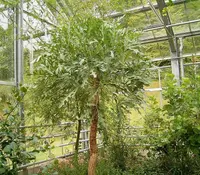
Sweet acorn oak, Quercus rotundifolia, is a slow-growing evergreen oak native to the western Mediterranean, especially Spain and Portugal. It forms a dense, rounded crown with thick, dark green leaves that have a leathery texture year-round.

This species often grows as a small to medium tree or large shrub, with a sturdy trunk and sweet, edible acorns valued for wildlife and traditional uses. Its natural adaptation to dry, sunny habitats and poor, rocky soils makes it relatively tough but slower to establish.

Gardeners who want to care for sweet acorn oak should allow for long-term growth, strong light, and well-drained soil, as it dislikes heavy, waterlogged conditions.

Main Plant Requirements

Care Difficulty

Moderate Care

Light Preference

Full Sun

Water Requirements

Low Water

Temperature Preference

Cold Hardy

Hardiness Zone

6–9

Soil Texture

Sandy, Loamy, Rocky

Soil pH

Slightly acidic (6.5–7.0), Slightly alkaline (7.0–7.5)

Soil Drainage

Well-drained

Fertilization

Minimal (feed rarely)

Get Personalized Care Plan

Scan your plant to receive care tips personalized for your specific plant

Available on iOS and Android

How to Care for the sweet acorn oak

Quercus rotundifolia prefers strong outdoor light and thrives in open, sunny positions.

  • Provide 6–8 hours of direct sun daily, with at least 3–4 hours of morning sun, which is less intense than late afternoon exposure.
  • Young trees tolerate light partial shade, but prolonged shade reduces growth density and can cause sparse, elongated shoots.
  • In very hot, dry climates, protect young sweet acorn oak plants from harsh late-afternoon sun to limit leaf scorch, especially in their first 2–3 summers.

This drought-tolerant oak prefers deep, infrequent watering once established.

  • For young trees, water when the top 5–8 cm of soil is dry, aiming for a slow, deep soak that moistens the root zone rather than frequent shallow watering.
  • Mature Quercus rotundifolia generally needs supplemental water only during extended droughts; look for dull, curling leaves as an early sign of water stress.
  • Ensure sharply drained soil; persistent puddling, sour smell, or blackened feeder roots indicate overwatering and risk of root rot.

This Mediterranean oak is adapted to warm summers and cool, relatively dry winters.

  • Optimal growth occurs around 65–80°F (18–27°C), with best establishment in mild spring and fall conditions.
  • Mature trees tolerate winter lows near 10–15°F (-12 to -9°C), but young plants benefit from protection during hard frosts.
  • The species handles dry heat up to about 100°F (38°C) if soil is not waterlogged; avoid sudden irrigation with very cold water during heatwaves to reduce stress cracking.

This species is adapted to dry Mediterranean air and usually does not need special humidity control.

Quercus rotundifolia prefers mineral, free-draining soil that mimics its native rocky habitats.

  • Use a sandy or sandy-loam mix with 20–30% coarse sand or fine gravel to keep the structure open.
  • Aim for slightly alkaline to neutral pH (7.0–8.0), avoiding strongly acidic mixes designed for ericaceous plants.
  • Incorporate modest amounts of well-decomposed compost, keeping organic matter under ~30% to prevent waterlogging.
  • Avoid compacted, heavy clay or peat-heavy substrates; improve aeration with grit or perlite wherever drainage is slow.

This oak can be grown in containers for many years, though it eventually prefers open ground.

  • Choose a deep, heavy pot to anchor the slowly developing but strong taproot and prevent wind tipping.
  • Select thick-walled terracotta or concrete if outdoor temperatures fluctuate, as they buffer root-zone temperature and moisture swings.
  • Position the container where it will not be shaded by nearby objects, since reduced light slows woody root and trunk development.

This Mediterranean oak needs only modest feeding when grown in containers or poor soils; in the ground it often manages without fertilizer.

  • Use a balanced slow-release fertilizer (for example 10-10-10) or well-rotted compost in early spring for potted or newly established sweet acorn oak.
  • Apply at 1/2 recommended strength for container plants to avoid salt buildup and overly lush, weak growth.
  • Feed once in early spring and again in midsummer during active growth; skip if vigor and leaf color are already good.
  • Stop feeding in late summer so shoots harden before cold weather, and do not fertilize in winter dormancy.

Pruning Quercus rotundifolia is mainly structural and corrective rather than frequent shaping.

  • Carry out light pruning in late winter to very early spring, before strong new growth begins.
  • Remove dead, diseased, crossing, or storm-damaged branches first, cutting back to healthy wood without leaving stubs.
  • Thin crowded interior branches slightly to improve light and air flow, supporting a stable, well-spaced framework.
  • Use sharp, clean bypass pruners or a pruning saw, making small, precise cuts to reduce wound size and stress.

This oak is usually grown in the ground, so focus on careful transplanting and limited early container culture.

  • Transplant young trees in late fall or early spring, when soil is workable and the plant is semi-dormant.
  • Look for circling roots at drainage holes, slow growth, or quick drying soil as signs a container plant needs a 1–2 in wider pot.
  • Handle the root ball gently, loosening only the outer circling roots and keeping most soil intact to limit shock.
  • Water deeply after planting, then keep soil evenly moist but not waterlogged for several weeks to support new root establishment.

Propagation of Quercus rotundifolia is most reliable from seed rather than from cuttings.

  • Collect ripe acorns in fall, discard any that float in water, and sow promptly for best viability.
  • Stratify acorns at 35–40°F in slightly moist substrate for 6–8 weeks if immediate outdoor sowing is not possible.
  • Sow in deep containers with a well-drained, sandy mix, placing acorns on their side and covering lightly with soil.
  • Keep the medium just moist and provide cool to mild temperatures and good light to support steady seedling growth.

This evergreen oak is cold hardy in much of its suitable range and usually needs only minimal winter care.

  • Mature trees tolerate moderate frost once established, but young plants are more vulnerable to severe freezes.
  • Apply a 5–8 cm mulch layer around the root zone, keeping it away from the trunk, to buffer soil temperature swings.
  • For container plants in colder climates, move pots to a sheltered, unheated but frost-sheltered spot with good light.

Care Tips

Root flare check

When planting or repotting, ensure the top of the main root flare sits at or just above the soil surface, as burying it encourages rot and weak anchoring over time.

Early structural training

In the first 3–5 years, select a single strong central leader and remove or shorten competing uprights during late winter to build a stable, wind-resistant crown.

Wind acclimation

For young trees grown in sheltered spots or containers, gradually expose them to stronger wind over several weeks to promote thicker trunks and better root anchorage.

Mulch ring management

Maintain a 5–10 cm deep, weed-free mulch ring extending at least 30–60 cm from the trunk, but always keep mulch pulled back 5–8 cm from the bark to prevent moisture damage and pests.

Drought hardening

Once well established, slowly extend the interval between deep waterings over 1–2 seasons to encourage deeper rooting and better resilience when growing sweet acorn oak in dry climates.

Common Pests and Diseases

Oak leaf gall wasps

These insects induce rounded or irregular galls on leaves and young twigs, which can cause local distortion but rarely kill established trees. Symptoms include small marble-like or spiky growths on the foliage of holm oaks.

Solution

Prune and dispose of heavily infested twigs during dormancy to reduce the wasp population, and avoid composting galled material. Maintain tree vigor through proper watering and mulching so it tolerates damage, and only in severe, repeated outbreaks consider consulting a local arborist about timing-specific biological or targeted insecticidal treatments.

Oak processionary moth

This pest defoliates branches and carries irritating hairs that pose a health risk to people and animals. Symptoms include thinning canopies, skeletonized leaves, and visible caterpillar processions or webbed nests on trunks and main branches.

Solution

Do not touch caterpillars or nests; contact local tree or public health authorities where this species is established. Small trees may benefit from professionally removed nests and targeted biological insecticides (such as Bacillus thuringiensis) applied at the young larval stage, combined with monitoring for reinfestation as part of long-term Quercus rotundifolia care.

Powdery mildew

This disease causes a white, powdery film on the upper leaf surface, often leading to reduced vigor and premature leaf drop, especially on shaded or crowded trees. Symptoms include white patches that may coalesce, followed by yellowing or browning.

Solution

Improve light and airflow around the canopy through careful pruning and by avoiding dense underplanting. Remove and discard heavily infected leaves or shoots, and in repeated cases apply a registered fungicide such as sulfur, potassium bicarbonate, or horticultural oil according to label directions during early symptom development.

Phytophthora crown and collar canker

This disease affects the root collar and lower trunk, leading to cankers, oozing sap, sparse foliage, and gradual decline, especially in poorly drained soils or overwatered sites. Symptoms include dieback of branches and dark, sunken lesions near soil level.

Solution

Improve site drainage, avoid trunk injury, and reduce excess irrigation to limit waterlogging. Remove severely affected young trees, dispose of infected material, and consider phosphonate (phosphite) trunk or soil treatments under guidance from a local arborist or extension service to slow disease progression in valuable specimens.

Armillaria root disease

This fungus attacks roots and lower stems, causing progressive decline, yellowing foliage, dieback, and eventual tree death in stressed or compacted sites. Symptoms include white mycelial fans under the bark near the base and clusters of honey-colored mushrooms at the trunk base in damp seasons.

Solution

Remove heavily infected trees and as much of the major root system as practical to reduce inoculum, and do not replant oaks immediately on the same spot. Improve soil drainage, avoid overwatering, and plant new trees slightly away from old stumps or known infection centers, choosing healthy nursery stock and maintaining good long-term growing conditions.

Interesting Facts

Evergreen Mediterranean oak

This species is an evergreen oak native to the western Mediterranean Basin, forming dense woodlands and open dehesa systems that stay green year-round in climates with hot, dry summers.

Acorns prized for livestock

Its relatively sweet, energy-rich acorns have long been used as an important seasonal feed for Iberian pigs and other grazing livestock, contributing to traditional high-quality cured meat production.

Adapted to arid soils

The tree tolerates poor, rocky, and lime-rich soils and copes well with drought thanks to deep root systems and tough, small leaves with a thick cuticle that reduces water loss.

Botan icon

Did you know?

This oak often hybridizes with closely related species such as Quercus ilex subsp. ilex and Quercus suber in overlapping ranges, creating complex hybrid swarms that make field identification and taxonomic classification challenging even for specialists.

FAQs about sweet acorn oak

This species is broadly evergreen in mild climates, keeping most foliage year-round. In colder or very dry conditions it may shed some older leaves, but new growth replaces them and the canopy generally stays dense and leafy.

Grow Healthy Plants with Botan Care

Keep your plants happy and healthy with plant identification, disease detection, and easy care guidance.

Botan plant care app — identify plants on mobile

Explore More Plants