Deep root training
During the first 3–5 years, water slowly but thoroughly in a wide basin around the tree every 2–4 weeks in dry seasons to encourage deep roots that anchor the tree and improve drought resilience.

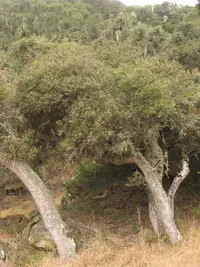
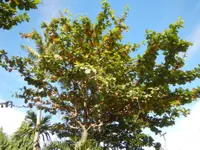
Island live oak (Quercus tomentella) is a broadleaf evergreen tree native to the Channel Islands off the coast of California and Guadalupe Island in Mexico. It forms a dense, rounded canopy with stiff, leathery leaves that stay on the tree year-round.
In gardens and larger landscapes it is usually grown as a long-lived shade or habitat tree. Growth is moderate when young and becomes slower and more conservative with age.
This species prefers sun, good air circulation, and sharply draining soil, which can make how to care for island live oak slightly more demanding in humid or poorly drained sites.

Care Difficulty
Moderate Care

Light Preference
Full Sun

Water Requirements
Low Water

Temperature Preference
Warm Climate

Hardiness Zone
8–10

Soil Texture
Sandy, Loamy, Rocky

Soil pH
Slightly acidic (6.5–7.0), Neutral (7.0)

Soil Drainage
Well-drained

Fertilization
Minimal (feed rarely)
Scan your plant to receive care tips personalized for your specific plant
Available on iOS and Android
This slow-growing evergreen oak prefers bright, open exposure similar to its native island habitats.
This drought-tolerant oak prefers deep, infrequent watering once established.
This coastal oak thrives in mild, Mediterranean-style climates with moderate seasonal changes.
This oak tolerates a wide humidity range and rarely needs special humidity management outdoors.
Quercus tomentella prefers well-drained, moderately fertile mineral soils that do not stay waterlogged.
This species can be grown in containers only on a short- to medium-term basis, as it eventually becomes too large for pots.
This slow-growing island live oak benefits from light, targeted feeding in poor or disturbed soils.
Pruning Quercus tomentella is mainly structural and corrective rather than cosmetic.
This oak is usually grown in the ground, with transplanting done thoughtfully while trees are young.
Quercus tomentella is usually propagated from seed, with success depending on fresh acorns and patient aftercare.
This evergreen oak prefers mild, coastal-type climates and is not suited to very cold regions.

Plant Health Check
Not sure what's wrong with your plant? Check your plant's health inside the app.
This oak is naturally restricted to a few of California’s Channel Islands and Guadalupe Island off Baja California, where it represents a relict population from cooler, wetter climates in the past.
In the wild it frequently hybridizes with other island oaks, such as Quercus chrysolepis and Quercus pacifica, creating complex hybrid swarms that make species boundaries in these island woodlands difficult to interpret.
The species grows slowly but forms very dense, hard wood and can persist for centuries on exposed island ridges and canyons, contributing long-term structural stability to these isolated ecosystems.

Fossil and subfossil evidence indicates that this species once had a much wider distribution on the mainland of California, and its current confinement to oceanic islands makes it one of the clearest modern examples of a relict oak surviving in climatic refugia.
This species is slow to moderate growing, typically adding 20–30 cm of height per year in good conditions. Growth is faster in deep, well-drained soil with regular moisture and slower in exposed or compacted sites.
Keep your plants happy and healthy with plant identification, disease detection, and easy care guidance.