Deep root establishment
In the first 2–3 years, water less often but for longer durations to encourage deep root growth, then gradually extend the interval between irrigations as the tree establishes and becomes more drought resilient.

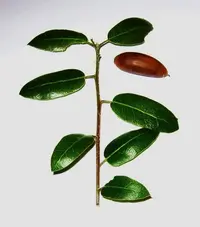
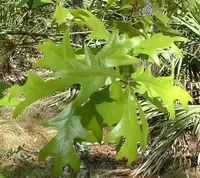
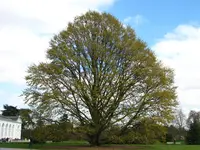
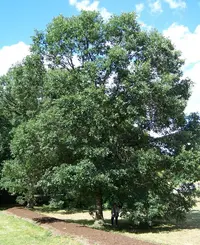
Interior live oak, Quercus wislizeni, is an evergreen oak tree native to California and parts of southwestern Oregon. It usually forms a dense, rounded crown with small, tough, dark green leaves.
In nature it grows on dry hillsides and foothills, often in woodlands and mixed chaparral. Mature trees can become quite large and develop deep roots, so they are better suited to spacious landscapes than small gardens.
This species is adapted to hot, dry summers and mild, wet winters, which influences how to care for interior live oak. It prefers full sun, well-drained soil, and low to moderate supplemental watering once established.

Care Difficulty
Moderate Care

Light Preference
Full Sun

Water Requirements
Low Water

Temperature Preference
Warm Climate

Hardiness Zone
7–10

Soil Texture
Sandy, Loamy, Clay

Soil pH
Slightly acidic (6.5–7.0), Slightly alkaline (7.0–7.5)

Soil Drainage
Well-drained

Fertilization
Minimal (feed rarely)
Scan your plant to receive care tips personalized for your specific plant
Available on iOS and Android
This evergreen oak thrives in full sun but handles some shade, especially in hotter regions.
This drought-tolerant oak prefers deep, infrequent watering that encourages a strong root system.
This oak is adapted to warm, dry climates with cool to mild winters and hot summers.
Humidity is usually not a limiting factor for Quercus wislizeni in cultivation.
Quercus wislizeni prefers sharply drained, mineral-based soil that mimics dry, rocky woodland conditions.
This species can be grown in containers for a limited time, mainly as a young specimen or bonsai-style tree.
Quercus wislizeni usually grows well in average soil and needs only modest fertilization when young or container grown.
Pruning helps maintain structure and safety in Quercus wislizeni while respecting its natural form.
This oak is usually landscape-grown, so focus on careful transplanting of young trees rather than frequent repotting.
Quercus wislizeni is mainly propagated from acorns rather than cuttings, and success depends on fresh, viable seed.
Mature Quercus wislizeni is generally cold hardy in its suitable climate range and needs minimal winter care.

Plant Health Check
Not sure what's wrong with your plant? Check your plant's health inside the app.
Interior live oak keeps its small, thick leaves year-round and can maintain green foliage through long Mediterranean dry seasons, an adaptation supported by tough leaf cuticles and deep roots that tap subsurface moisture.
This oak is a dominant tree in many California foothill woodlands and chaparral margins, providing shade, nest sites, and acorns for birds, deer, and small mammals, and acting as a structural backbone in these ecosystems.
In cooler, moister habitats it often grows as a medium-sized tree with a defined trunk, but on hotter, drier slopes it tends to form a shorter, multi-stemmed shrub-like form, reflecting strong local adaptation to site conditions.

Genetic and field studies show that interior live oak frequently hybridizes with closely related California oaks such as coast live oak and Kellogg oak, creating complex hybrid swarms that can make species identification in the field challenging and blur the boundaries between distinct oak species.
This tree typically grows at a moderate rate, about 30–60 cm per year in favorable conditions. Growth is slower in dry, shallow, or compacted soils. Young trees establish slowly, then growth becomes steadier after several years.
Keep your plants happy and healthy with plant identification, disease detection, and easy care guidance.