Quesnelia quesneliana Care

Quesnelia quesneliana

About Quesnelia quesneliana

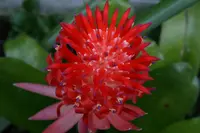
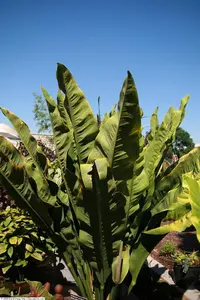
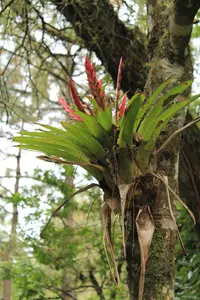
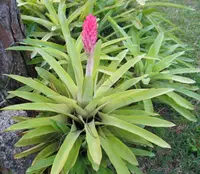
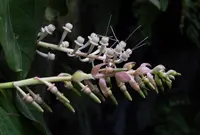
Quesnelia quesneliana is an epiphytic bromeliad, often grown as an ornamental plant for its striking rosette of stiff leaves and tall, colorful flower spike. It forms a vase-like center that can hold water, a typical trait of many bromeliads.

This species is native to the Atlantic coastal forests of Brazil, where it grows on trees or in well-drained leaf litter with high humidity. Its compact size and slow growth make it suitable for containers and indoor displays.

Light to bright shade, moderate warmth, and good air movement generally support healthy growth. Understanding how to care for Quesnelia quesneliana mainly involves providing stable moisture without waterlogging and avoiding harsh, direct midday sun.

Main Plant Requirements

Care Difficulty

Moderate Care

Light Preference

Partial Shade

Water Requirements

Keep Soil Moist

Temperature Preference

Tropical / Frost Sensitive

Hardiness Zone

11–12

Soil Texture

Sandy, Loamy, Organic-rich

Soil pH

Acidic (5.5–6.5)

Soil Drainage

Moist but well-drained

Fertilization

Light (every 4–6 weeks)

Get Personalized Care Plan

Scan your plant to receive care tips personalized for your specific plant

Available on iOS and Android

How to Care for the Quesnelia quesneliana

This bromeliad prefers bright, filtered light that mimics dappled forest conditions.

  • Provide 4–6 hours of bright, indirect light daily, such as under a light tree canopy or on an east-facing patio with morning sun and afternoon shade.
  • It tolerates partial shade but flowering may decrease if light drops below roughly 3–4 hours of bright conditions per day.
  • Protect Quesnelia quesneliana from harsh midday sun, which can scorch leaves; in summer, use shade cloth or move it where light is filtered.

Watering should keep the tank and root zone moist but never stagnant.

  • During active growth, refill the central rosette cup with fresh water every 3–7 days and flush it weekly to prevent salt and algae buildup.
  • Water the soil when the top 2–4 cm feels dry; allow excess to drain freely to avoid root rot in this bromeliad.
  • Reduce watering in cooler months, watching for slight leaf curl (thirst) or soft, browning bases (overwatering) as key adjustment signals.

This species favors warm, frost-free conditions similar to tropical understory habitats.

  • Aim for 65–80°F (18–27°C) for steady growth, with brief peaks to 85°F (29°C) tolerated if humidity and airflow are good.
  • Avoid temperatures below 50°F (10°C); foliage damage and decline increase as readings approach 40°F (4°C), especially in damp, windy spots.
  • Protect from frost at all times, and in hot spells above 90°F (32°C), give extra shade and avoid placing near heat-reflective surfaces.

This bromeliad prefers moderate to high humidity but tolerates typical indoor levels if not kept too hot.

  • Aim for 50–70% humidity to support firm leaves and long-lasting blooms.
  • It tolerates short dry spells, but very dry air combined with heat can cause brown leaf tips and curling.
  • Increase humidity with a nearby tray of damp pebbles, grouping plants, or a small room humidifier rather than misting the rosette directly.

This species prefers a loose, airy, fast-draining mix similar to epiphytic bromeliads.

  • Use a blend of fine orchid bark, coarse perlite or pumice, and a small amount of peat or coco coir to retain light moisture.
  • Target a slightly acidic to neutral pH around 5.5–7.0, which suits the roots and supports nutrient uptake.
  • Keep the mix chunky so water drains within seconds while roots still contact moist particles, preventing rot.
  • Avoid dense garden soil, heavy peat-only mixes, or anything that compacts, since this restricts aeration and traps water.

This species grows well in containers, including as part of Quesnelia quesneliana indoor care in bright, warm spots.

  • Choose a wide, low pot with drainage holes to support the rosette without tipping and to prevent water pooling in the base.
  • Select a heavier pot material like ceramic if the rosette becomes tall or offsets heavily so the container stays stable.
  • Elevate the pot slightly on feet or mesh so drainage holes remain clear and excess water leaves quickly after watering.

This bromeliad benefits from light feeding during active growth but does not need heavy fertilization.

  • Use a balanced liquid fertilizer (around 10-10-10) diluted to 1/4–1/2 strength, suitable for bromeliads.
  • Feed every 4–6 weeks in spring and summer, applying to the soil or lightly to the leaf tank, then flush with plain water monthly.
  • Skip or reduce feeding to 1 light application in fall and stop in winter dormancy.
  • Avoid slow-release granules sitting in the central cup, which can burn sensitive tissues.

Pruning needs for Quesnelia quesneliana are minimal and mostly hygienic.

  • In late winter or after flowering, remove spent flower stalks at the base with clean, sharp pruners.
  • Trim dead, damaged, or rotting leaves close to the stem to limit fungal issues and keep a tidy rosette.
  • Cut away completely brown outer leaves to maintain shape, but leave healthy green foliage for photosynthesis.
  • Disinfect tools with alcohol before and after use to reduce disease transmission.

This species prefers snug containers and only occasional repotting or transplanting.

  • Check for roots circling the pot, pushing through drainage holes, or growth slowing despite good care as signs to move Quesnelia quesneliana.
  • Repot every 2–3 years in spring, or once the plant becomes unstable or top-heavy.
  • Shift to a container only 2–5 cm wider, using a very free-draining mix such as orchid bark with coarse perlite.
  • Handle the root ball gently, keeping roots largely intact, water lightly afterward, and keep shaded for 3–5 days to reduce stress.

Propagation is most practical by division of offsets rather than by seed.

  • In late spring or early summer, separate well-developed pups that are at least 1/3–1/2 the size of the mother plant.
  • Use a sterile knife to cut pups away with a small portion of stem and roots attached where possible.
  • Plant divisions in a coarse, fast-draining mix, then keep warm (70–80°F), bright, and slightly moist, not wet.
  • For seed, surface-sow on moist, sterile medium, keep at 75–80°F with high humidity and bright indirect light until germination.

This bromeliad is frost-sensitive and needs protection in cooler climates.

  • Keep temperatures above 45–50°F; prolonged exposure near freezing can damage foliage and roots.
  • Move container plants indoors or into a heated greenhouse before first frost, in bright, indirect light.
  • Reduce watering in winter so the medium dries slightly between waterings, and avoid waterlogged conditions.
  • In mild climates, use a light mulch around the root zone of outdoor plants to buffer short cool spells.

Care Tips

Tank water management

Keep the central cup filled with non-chlorinated water and flush it out completely every 2–4 weeks to prevent salt buildup, mosquito larvae, and fungal issues.

Offset selection timing

Wait to separate pups until they reach about one-third to one-half the height of the mother plant so they have enough stored energy to root and establish quickly.

Clump renewal strategy

After flowering, leave the spent rosette in place until at least 2–3 healthy pups are visible, then gradually remove only the brown, declining foliage to keep the clump vigorous and tidy.

Epiphytic mounting approach

For more natural growth, mount the plant on cork or hardwood using sphagnum moss around the roots, then secure it firmly so it cannot wobble while new roots attach.

Outdoor summer acclimation

If moving the plant outdoors for summer, transition it over 7–10 days from indoors to bright shade to avoid sun scorch and wind stress, an approach that often improves color when growing Quesnelia quesneliana.

Common Pests and Diseases

Scale insects

This pest feeds on leaf bases and along the rosette, sucking sap and weakening the plant over time. Symptoms include sticky honeydew, sooty mold growth, and small brown or tan bumps that are hard to the touch.

Solution

Remove heavily infested leaves if feasible, then manually wipe remaining scales with cotton pads dipped in 70% isopropyl alcohol, taking care to reach into leaf axils. Improve air movement around the plant and repeat treatments every 7–10 days until no new insects appear; a light application of a ready-to-use horticultural oil is suitable for Quesnelia quesneliana care instructions in most indoor settings.

Mealybugs

These insects hide in leaf axils and at the base of the rosette, appearing as white cottony clusters. This pest weakens the plant by sucking sap and may deform new growth or reduce flowering.

Solution

Flush the rosette and leaf bases with a strong, lukewarm water stream and physically remove visible clusters with a soft brush or cotton swab dipped in alcohol. After cleaning, monitor closely and use an insecticidal soap spray labeled for bromeliads, making sure to reach hidden spots while allowing the plant to dry quickly.

Bromeliad mites

This pest is microscopic and tends to colonize leaf axils and inner rosette areas, especially in warm, humid conditions. Symptoms include distorted new leaves, dull or roughened leaf surfaces, and stunted growth despite adequate light and water.

Solution

Rinse the plant thoroughly under lukewarm water, directing the spray into the rosette and between leaves, then allow it to dry in bright, indirect light. If symptoms persist, use a miticide or sulfur-based product labeled for ornamental bromeliads and increase air circulation to reduce mite-friendly microclimates.

Leaf spot

This disease causes small water-soaked spots that turn brown or tan, sometimes with a darker edge, often starting on older leaves. Symptoms include scattered lesions that may merge into larger patches under persistently wet conditions or poor air circulation.

Solution

Remove and discard affected leaves, then avoid water sitting on foliage for long periods by watering early in the day and keeping the central cup fresh but not overflowing. Improve airflow, reduce overhead misting, and, if needed, apply a copper-based fungicide or bactericide labeled for ornamental foliage plants according to package directions.

Cup water rot

This disease develops when stagnant water remains in the central tank for too long, especially in low light or cool conditions, leading to foul odor, soft tissue, and collapse of inner leaves. Symptoms include blackened or mushy leaf bases starting from the rosette center while outer leaves may still look relatively healthy at first.

Solution

Immediately flush out all old water, trim away rotten inner leaves, and let the rosette dry partially before refilling with a small amount of fresh, non-chlorinated water. Going forward, empty and refill the cup every 3–5 days, keep the plant in brighter light with good airflow, and avoid overfertilizing, which can speed up decay in the tank water.

Interesting Facts

Atlantic forest endemic

This bromeliad is naturally restricted to Brazil’s Atlantic coastal forest, where it grows as both an epiphyte on tree trunks and a lithophyte on rocky outcrops in humid, lowland habitats.

Striking winter inflorescence

In its native range it typically produces its bright red to orange flower spikes in the cooler season, attracting hummingbirds that act as primary pollinators.

Water-holding leaf rosette

Its tubular leaf rosette forms a small reservoir that traps rainwater, which in nature hosts micro-organisms and small invertebrates that contribute nutrients as they decompose.

Botan icon

Did you know?

This species contributed to early botanical understanding of bromeliad diversity in the Atlantic forest, having been described in the 19th century and later used as a reference taxon in studies of how closely related bromeliads diversified into different microhabitats such as trees, rocks, and forest floor sites.

FAQs about Quesnelia quesneliana

This bromeliad usually blooms once when the rosette is mature, often in warmer months. The colorful bracts can remain attractive for 4–8 weeks, while individual flowers are shorter lived, typically a few days each.

Grow Healthy Plants with Botan Care

Keep your plants happy and healthy with plant identification, disease detection, and easy care guidance.

Botan plant care app — identify plants on mobile

Explore More Plants